
Yogveda Journal Vol. 40: Rhomboids & Trapezius Biomechanics
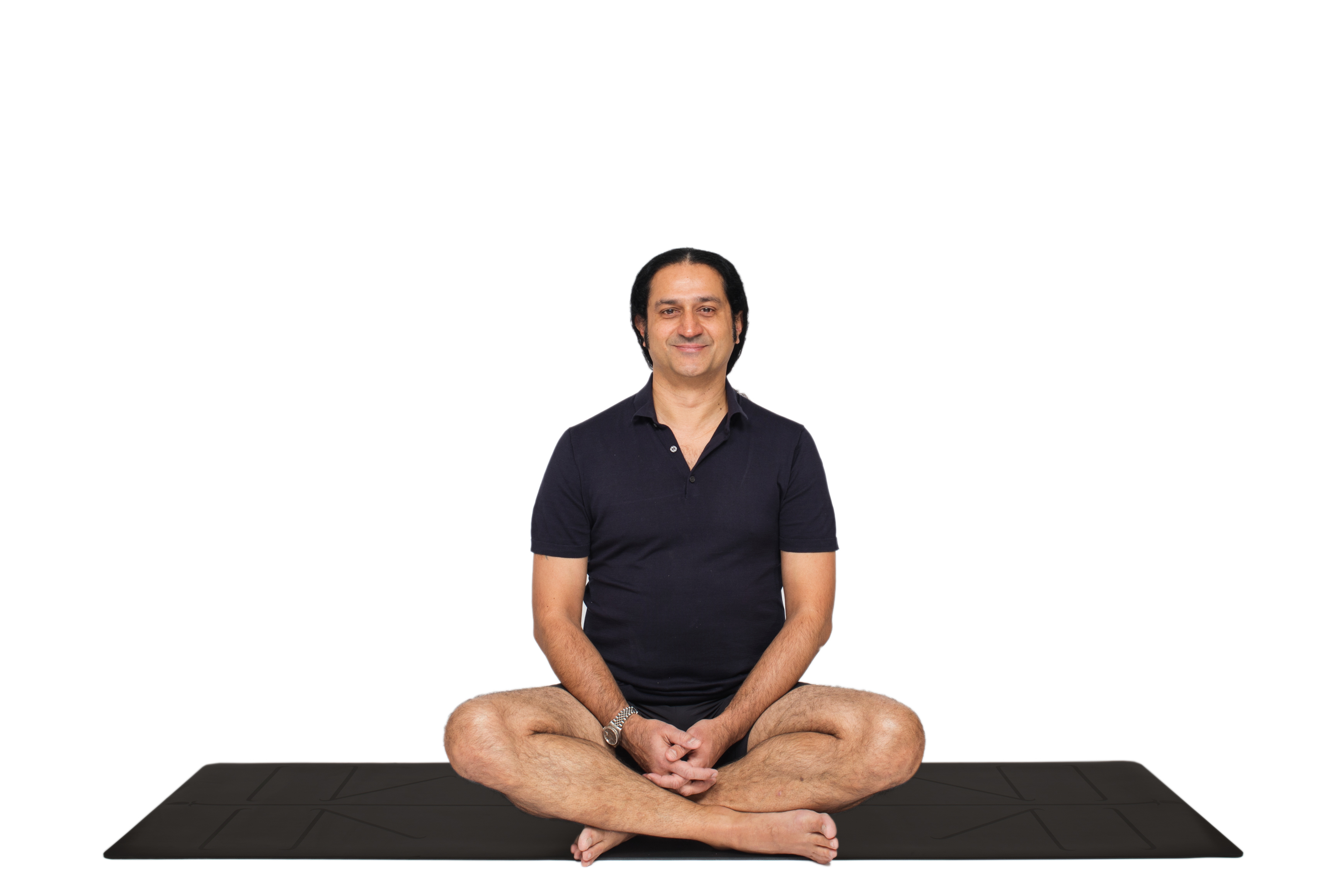

Welcome to the Yogveda Journal, Vol. 40. 2026.
Have you ever questioned the precise biomechanical cause of chronic cervical and thoracic tension following standard yoga practices?
Commercial yoga systems frequently prioritize aesthetic concepts—such as "heart opening" or "shoulder stretching"—while fundamentally bypassing the clinical biomechanics of load transfer. By instructing practitioners to rely on passive joint laxity or to forcefully leverage themselves into extreme ranges of motion, these methods override the nervous system's protective mechanisms. Rather than inducing structural integration, this approach systematically degrades fascial integrity and destabilizes both the cervical and thoracic segments of the spinal column.
Do you actively destroy your own spine every time you step on a yoga mat?
When you blindly yank your arms in forward extensions or collapse your lower back in backward extensions, you deactivate the critical muscular anchors of the upper back—specifically the rhomboids and the trapezius. These are not just superficial muscles to be stretched; they are the primary biomechanical stabilizers that dictate the safety, alignment, and neurological health of your entire spinal column.
Have you ever asked yourself how to stop the damage and rebuild your structural integrity?
Through applied biomechanics. Classical yoga is a precise mechanical intervention, not a stretching routine. By mastering the scapular anchor and engaging the rhomboids and trapezius correctly, I teach the exact mechanics to decompress the intervertebral discs, stabilize the rib cage, and restore functional movement.
In this edition, I deconstruct the clinical anatomy of the upper back and provide the uncompromising biomechanical blueprints for forward extensions, backward extensions, twists, and standing postures.
Author: Master Shahid Khan
The Masterclass Editorial Articles

What Are the Rhomboids and Trapezius? Stop Destroying Them
Have you ever truly understood the anatomy of your own upper back? I deconstruct the clinical mechanics of the rhomboids and trapezius, proving why the commercial "McYoga" approach of endlessly stretching these muscles leads directly to chronic instability and pain. Click on the image or here to read the blog.

Forward Extensions: Stop Pulling, Start Stabilizing Your Rhomboids
Do you actively crush your lumbar discs by pulling yourself into forward bends? Learn the precise applied biomechanics required to stop pulling with your arms and start using your rhomboids to create a safe, compression-free forward extension.
Click on the image or here to read the blog.

Backward Extensions: The Biomechanics of a Compression-Free Spine
Have you ever felt a sharp, dangerous pinch in your lower back during a backbend? I analyze the exact structural mechanics of backward extensions, explaining how engaging the trapezius and rhomboids is the only way to lift the thoracic spine and protect the lower back from severe compression.
Click on the image or here to read the blog.
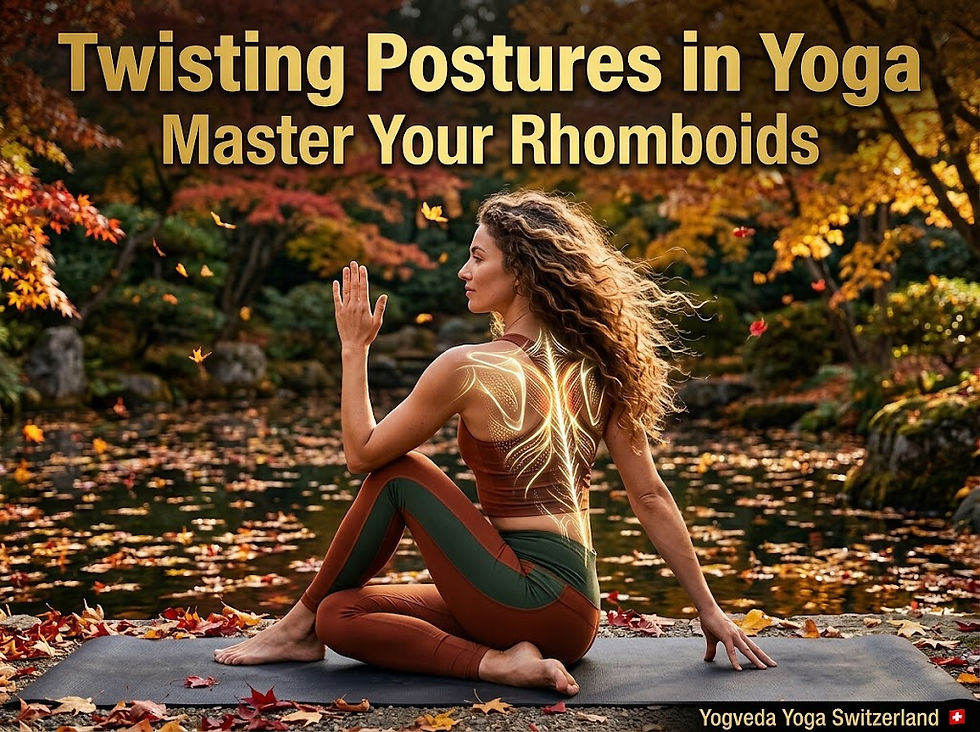
Twisting Postures in Yoga: Master Your Rhomboids
Do you ever use your hands to forcefully crank your spine into a twist? Stop treating your spine like a wet towel. Discover the neuro-anatomical rules of twisting postures and how the rhomboids act as the primary engine to safely rotate the rib cage without destroying your spinal discs.
Click on the image or here to read the blog.

Rhomboids and Trapezius in Standing Yoga Postures: Master the Scapular Anchor
Have you ever felt weak, disconnected, or fatigued in standing postures? The power of your legs means nothing if your upper body is unstable. Learn how to set the scapular anchor using your rhomboids and trapezius to create structural dominance in every standing pose.
Click on the image or here to read the blog.

Yoga Sutra 1.39 Meaning: Love = Meditation
Do you ever struggle to force your mind into a state of meditation? An uncompromising examination of Patanjali’s Yoga Sutra 1.39. I explore the cognitive science behind bypassing mental resistance by anchoring your focus on an object or concept that you naturally and deeply love.
Click on the image or here to read the blog.
Comments