
Yoga Sutra 1.39 Meaning: Meditating on What You Truly Love (Yathābhimata-Dhyānāt)

यथाभिमतध्यानाद्वा ॥ १.३९ ॥
Transliteration: yathābhimata-dhyānād-vā
The Direct Translation: "Or [the mind becomes steady] by meditating on any chosen object that you love enough to become entirely absorbed in."
1. The Core Meaning of the Words
In Yoga Sutra 1.39, Patanjali presents the most flexible and profound instruction for mental stability (Sthiti). He acknowledges that human brains are wired differently:
Yathā (यथा): As, according to, or whichever.
Abhimata (अभिमत): Deeply desired, beloved, or captivating. It does not just mean "agreeable"—it means an object that naturally commands your total affection and fascination.
Dhyānāt (ध्यानात्): Through meditation; the uninterrupted flow of attention toward an object.
Vā (वा): Or (the final option in Patanjali’s list of concentration techniques).
2. The Myth of the "One Right Way" to Meditate
In modern commercial yoga, students are often forced into rigid, cookie-cutter meditation styles. You might be told you must chant a specific secret mantra, stare at a candle flame, or visualize your chakras. If you get bored or distracted, you are told you aren't trying hard enough.
Patanjali shatters this dogmatic approach in Sutra 1.39.
After giving highly specific techniques in the previous sutras, Patanjali essentially says:
"If none of those work for you, pick something you absolutely love."
This is the ultimate acknowledgment of neurological diversity. You cannot force the mind into stillness. But when you focus on something you genuinely love—a breathtaking sunset, a masterful painting, a piece of music, or the intricate details of a lifelong hobby—you do not need willpower. The mind effortlessly drowns in the details. You lose your sense of time, your worries fade, and you become one with the experience.
3. Sage Vyāsa on the Freedom of the Mind
Because Patanjali’s sutra is so open-ended, Sage Vyāsa provides the framework in his classical commentary (Vyāsa Bhāṣya).
Vyāsa explains a simple rule: The mind will naturally stay only where it is captivated.
If you force your mind to focus on an object it hates or finds boring, you create internal warfare. Your willpower fights against your natural attention, creating stress instead of stillness.
Vyāsa states: "Let him meditate on whatever appeals to him." Whether it is a beautiful tree, a peaceful memory, or the precision of a physical movement—if the object naturally draws your deep affection, your mind will effortlessly lock onto it. Once the mind learns how to merge with an object it loves (Samādhi), it gains the neurological blueprint to remain stable anywhere.
4. The Brain Science: Transient Hypofrontality and the Flow State
┌──────────────────────────────────────────────────┐
│  1. THE BELOVED ANCHOR (Yathābhimata)            │
│  - An object the brain naturally loves           │
│  - Captivates attention without willpower        │
└────────────────────────┬─────────────────────────┘
                         │
             [ Dopamine & Serotonin Release ]
            [ Reduced Cognitive Friction ]
                         ▼
┌──────────────────────────────────────────────────┐
│  2. CALMING THE NERVOUS SYSTEM                   │
│  - The Prefrontal Cortex deactivates (Ego-loss)  │
│  - The Amygdala (Threat Center) goes quiet       │
└────────────────────────┬─────────────────────────┘
                         │
                         ▼
┌──────────────────────────────────────────────────┐
│  3. THE RESULT: Sthiti & Samādhi                 │
│  - Total Absorption (The "Flow State")           │
└──────────────────────────────────────────────────┘
Modern cognitive neuroscience perfectly explains why Patanjali’s flexible approach works better than forced concentration:
1. The Cost of Forced Attention
When you force your brain to focus on a boring object, your Prefrontal Cortex (PFC) has to exert massive metabolic energy to suppress distractions. This top-down attention is exhausting. Cortisol (stress) rises, and your mind rebels.
2. The Power of Captivation
When you choose an object you truly love, the dynamic flips to "bottom-up attention." Because the brain likes the object, it releases a continuous stream of dopamine. This neurochemical reward makes focusing feel effortless. You do not have to trap the mind; the mind stays because it wants to.
3. Entering the Flow State (Transient Hypofrontality)
As you become completely absorbed in the object you love, the brain undergoes Transient Hypofrontality—parts of the prefrontal cortex temporarily shut down. Your inner critic goes quiet. You lose your sense of time, your ego dissolves, and the boundary between you and the object vanishes. Modern psychology calls this a "Flow State." Classical yoga calls it Samādhi.
5. The Dialogue: Master Khan on Drowning in the Details
Student: "Master Khan, my previous teacher gave me a specific Sanskrit mantra and told me it was the only way to meditate. But I find it incredibly boring. Am I failing?"
Master Khan: "You are not failing; your teacher failed to understand how the human mind works. Patanjali was a scientist. If repeating a sound makes you frustrated, you are creating mental friction. You are fighting your own brain. How can a mind at war with itself ever find stillness?"
Student: "So Sutra 1.39 means I can choose whatever I want?"
Master Khan: "That is the toxic conditioning of modern culture—the idea that growth requires suffering. True meditation is not a punishment. You must choose an object that you love so totally that you can get completely lost in it. It could be a sunset, a masterful painting, a piece of music, or a motorcycle ride in the Alps as I do. When you look at something you love, you don't need discipline to pay attention. You drown in the details. The ego disappears, and you become one with the experience. Once your nervous system tastes that absolute stillness, you will never be the same."
Scientific Studies & Classical References
Dietrich, A. (2003). Transient hypofrontality as a mechanism for the psychological effects of exercise. Psychiatry Research, 116(1-2), 1-16.
Scientific Proof: Explains the neurological mechanism of ego-loss and timelessness during deep absorption (transient hypofrontality), matching the classical definition of dissolving into an object of focus.
Csikszentmihalyi, M. (1990). Flow: The Psychology of Optimal Experience. Harper & Row.
Scientific Proof: Defines the "flow state" where the brain achieves effortless, sustained attention because the task naturally aligns with the individual's intrinsic love and motivation (matching Patanjali's concept of Abhimata).
Tang, Y. Y., et al. (2015). The neuroscience of mindfulness meditation. Nature Reviews Neuroscience, 16(4), 213-225.
Scientific Proof: Demonstrates that effortless concentration lowers sympathetic nervous system arousal significantly faster than forceful, frustrating mental effort.
Bryant, E. F. (2009). The Yoga Sūtras of Patañjali: A New Edition. North Point Press.
Classical Proof: Contains Sage Vyāsa’s authoritative commentary (Vyāsa Bhāṣya) on Sutra 1.39, confirming that practitioners have the absolute freedom to select an object of meditation that naturally captivates their mind.
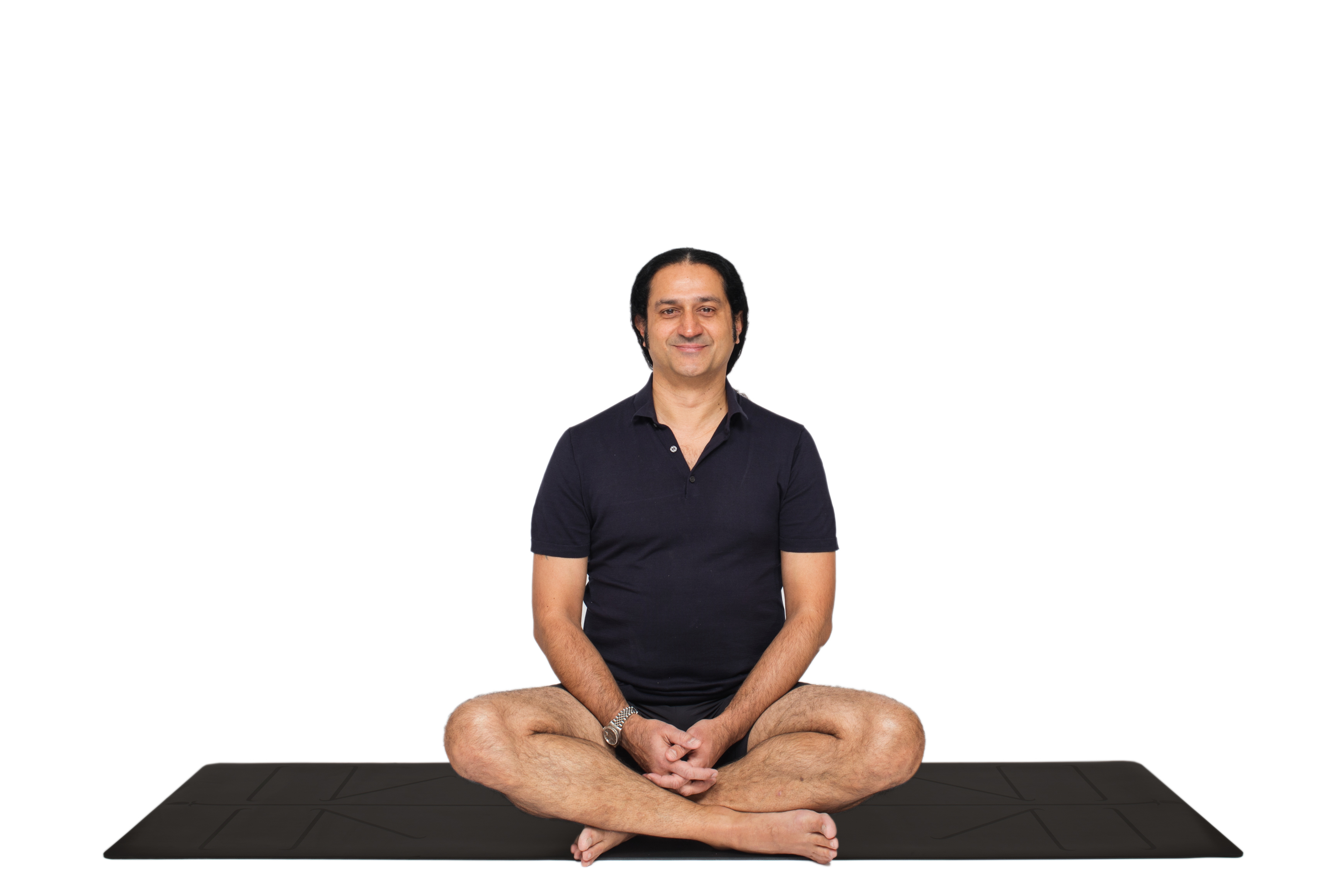
About the Author: Master Shahid Khan is the founder of Yogveda Yoga Switzerland, lead educator for academic yoga teacher certifications, and designer of The Yoga Mat for injury-free joint alignment.
Yogveda Manifesto
Yogveda Yoga is a compiled applied science. We do not follow "isms," dogmas, or blind beliefs. Rooted strictly in the classical Darśanas and Ayurveda, we dictate no human morality and teach no god worship. We simply provide the exact tools to study your own biological engine. Freedom is absolute self-knowledge. Study yourself to be free.
👉 Yogveda Asana Lesson : Build the physical presence to distinguish between what is real in the body and what is just a feeling.
👉Yogveda Yoga Teacher Training in Bern: Deepen your understanding of Patanjali's philosophy of mind and truth.
Author, Master Shahid Khan
Yogveda Yoga Switzerland 🇨🇭


Comments