
Forward Extensions: Stop Pulling, Start Stabilizing Your Rhomboids
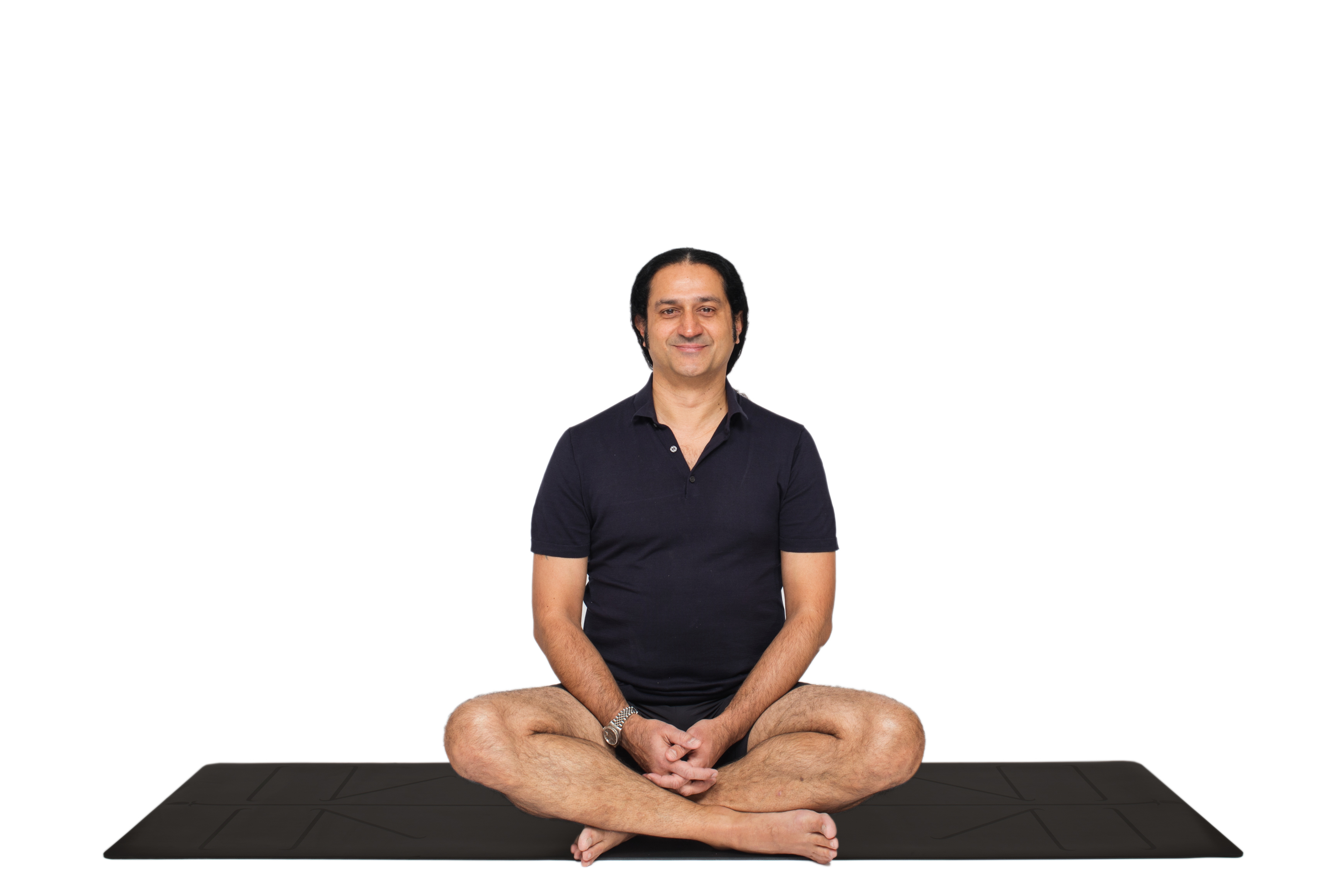

Have you ever watched someone force themselves into what modern commercial studios lazily call a "forward fold," or what Iyengar yoga categorizes as "forward bends"?
Let us establish the clinical ground truth immediately: in classical biomechanical science, there is no such thing as a "bend" or a "fold."
A fold is an uncontrolled structural collapse. A bend is a passive, gravity-driven distortion. Neither belongs in an intelligent practice.
What you are executing is an active Forward Extension—classically defined as Paścima Pratāna Sthiti.
Yet, whether standing in Uttānāsana or seated in Paścimottānāsana, walk into nearly any studio and the dysfunction is identical. Practitioners grab their feet, shins, or the floor, flare their elbows outward, wrench their cervical spine into hyperextension, and violently pull their torso toward their legs. Their upper back humps into a rounded dome, their shoulder blades peel off their ribs, and their breath turns into shallow, strangled gasps.
They call this "stretching." In clinical biomechanics, we call it self-inflicted spinal destruction. Untrained instructors and bad yoga actors have destroyed countless necks and lives simply because they completely lack anatomical knowledge.
In Part 2 of our 5-day biomechanical series, I am deconstructing how to correctly operate the Rhomboids and Trapezius across Forward Extensions. If you do not understand the eccentric mechanics of your scapular anchors, you are not lengthening your spine; you are tearing your upper back apart.
What is Paścima Pratāna Sthiti?
The commercial fitness world reduced an architectural discipline to a mindless test of hamstring flexibility. In classical Sanskrit science, it is defined with rigorous precision as Paścima Pratāna Sthiti:
Paścima: The posterior aspect—the entire back side of the human organism, tracing from the soles of the heels, along the calves, hamstrings, and spine, up to the crown of the head.
Pratāna: Continuous, unbroken extension and axial elongation.
Sthiti: Stable equilibrium, structural composure, and anatomical steadiness.
Notice the word is Pratāna (extension), not flexion, folding, or bending. A Forward Extension is not designed to roll you into a passive ball; it is an active mechanical lengthening of the entire posterior myofascial chain (Superficial Back Line).
The moment your thoracic spine bows into excessive kyphosis and your shoulder blades wing off your ribs, Pratāna ceases to exist. You have traded axial elongation for destructive shearing force.
The Fatal Error: Why Pulling Destroys Your Rhomboids
What actually happens inside your shoulder girdle when you grab your legs or the floor and pull?
Whether fighting gravity in a standing extension or pulling against fixed feet on the floor, using arm leverage to force depth triggers an immediate kinetic failure:
The Bicep-Lat Overload
The Latissimus Dorsi originates broadly across the thoracolumbar fascia, lower thoracic spine, and iliac crest, inserting directly into the intertubercular groove of the humerus. When you grab a fixed point (feet, strap, or floor) and yank your torso downward, the lats and biceps overpower the deep spinal extensors.
Pathological Anterior Scapular Tipping
As your arms drag your torso forward, your shoulder blades are pulled outward into extreme protraction. Without muscular anchoring, the scapulae tip forward (anterior tilt), causing the inferior angle and medial border to peel completely away from your posterior rib cage.
Acute Eccentric Microtrauma & Tendinopathy
Your Rhomboid Major and Minor are dragged into maximum elongation under a violent external mechanical load. They are forced into an acute state of "locked long" failure.
When you yank your body forward with your hands, you override the protective Golgi Tendon Organ (GTO) reflexes and stretch the myotendinous junctions of the Rhomboids past their functional elastic threshold. You do not strengthen the back; you micro-tear the muscular anchors that hold your upper body together. You leave the mat with a chronic burning ache between your shoulder blades because you have mechanically destabilized your own spine.
The Two Laws: Working ON vs. Working WITH the Rhomboids
To operate your shoulder girdle with clinical mastery, you must understand a critical dividing line: there is an absolute difference between working ON your muscles and working WITH them.
Step 1: Work ON the Rhomboids (Neuromotor Awakening)
When tissue has spent decades in a "locked long," sedentary state, its cortical map in the brain is blurred. It cannot stabilize you because your nervous system cannot even locate it.
The Execution: You must first activate the shoulder blades to deliberately move toward the medial border—drawing them toward the spine to wake up the Rhomboid fibers.
This is working ON the Rhomboids. You are breaking reciprocal inhibition from a tight chest, firing dormant motor units, and proving to your brain that these anchors exist.
Step 2: Work WITH the Rhomboids (Dynamic Kinetic Transmission)
Once the Rhomboids possess tonic integrity and strength, their functional role shifts completely.
The Execution: As you extend forward into Paścima Pratāna Sthiti, you do not merely pinch your shoulder blades together. You work WITH the Rhomboids as high-tensile cables. You use their strength to eccentrically brake the forward pull of the torso, hold the medial edges of the blades flush against the posterior ribs, and prevent the upper spine from collapsing into kyphosis.
Step 1 awakens the tool; Step 2 uses the tool to engineer physical sovereignty.
The Uncompromising Law of the Trapezius: Zero Cervical Compression
Operating the Rhomboids is useless if your neck is jammed. As you transition from working on to working with your Rhomboids, the Trapezius and shoulder blades have one absolute, non-negotiable directive: they must uncompromisingly move downwards.
The Lower Trapezius (Pars ascendens) must actively contract to slide the entire scapular apparatus down your rib cage toward your pelvis, anchoring it away from the skull.
Under no circumstances should the cervical spine be compressed. When bad actors instruct students to look up or crane their necks while pulling forward, they jam the suboccipital junctions, compress the vertebral arteries, and compromise the cervical nerve roots. If your shoulder blades elevate toward your ears even by millimeters, Cranial Nerve XI (the Spinal Accessory Nerve) fires into a sympathetic alarm loop, freezing your breath and triggering neurological fight-or-flight.
Technical Yogveda Asana Protocols: Re-Engineering the Forward Extension
How do we break the habit of using our hands as winches? By removing the ability to cheat.
1. Standing Extensions: Uttānāsana, Pārśvottānāsana, Prasārita Pādottānāsana
To stop pulling with the biceps and lats, you must completely strip away the crutch of grabbing the floor or the legs:
The Protocol: Practice Uttānāsana, Pārśvottānāsana, and Prasārita Pādottānāsana with your arms behind your back and your palms firmly locked.
The Mechanics: Interlocking the fingers and closing the heels of the palms behind the sacrum forces external rotation of the humerus. It mechanically disallows anterior scapular tipping. In this closed kinetic chain, you physically cannot use your arms to yank yourself down.
Your shoulder blades are forced to retract (working ON the Rhomboids). As your torso hinges forward into gravity, you must recruit the Rhomboids and Lower Trapezius eccentrically (working WITH them) to stabilize your descent, brake your mass, and keep your collarbones wide.
2. Weight-Bearing & Inversions: Adho Mukha Śvānāsana, Adho Mukha Vṛkṣāsana, Śīrṣāsana
The exact same scapular anchor laws dictate your inverted postures, but they must now operate against inverted gravitational loading:
The Directive: In Adho Mukha Śvānāsana (Downward-Facing Dog), Adho Mukha Vṛkṣāsana (Handstand), and Śīrṣāsana (Headstand), you must work actively WITH the Trapezius to press the shoulder blades forcefully away from the ears.
The Danger in Śīrṣāsana: In Headstand, allowing the shoulder blades to collapse toward the ears dumps direct axial bodyweight into the fragile cervical vertebrae (C3–C7). Scientific testing demonstrates that poor shoulder stabilization forces up to 40% to 48% of total body weight directly onto the head and cervical spine. This is exactly how unqualified teachers cause chronic disc herniations, cervical listhesis, and permanent nerve impingement.
You must recruit the Lower Trapezius and Serratus Anterior to press the floor away, creating a massive muscular bridge that absorbs the load. This leaves the neck entirely tractioned, free, and completely uncompressed.
Neurological & Respiratory Consequences of the Pull
When you wrench your body forward using limb leverage instead of scapular anchors:
Diaphragmatic Compression: Pulling collapses your anterior thoracic cage and drives the xiphoid process into the abdominal organs. This physically locks the respiratory diaphragm, making full 360-degree diaphragmatic expansion impossible.
Sympathetic Hijack: To extract oxygen while collapsed, your brainstem recruits your scalenes, sternocleidomastoids, and upper trapezius as emergency accessory breathers. You entered the posture seeking restorative decompression; you exit trapped in physiological panic.
True Paścima Pratāna Sthiti creates an immediate parasympathetic drop. By working with the Rhomboids and driving the Trapezius down, the chest remains open, intra-abdominal pressure stays balanced, and your heart rate decelerates naturally.
The Yogveda Prescription
In our current 4-week cycle at Yogveda Yoga, we are drilling the precise eccentric activation of the Rhomboids across all forward extension vectors. You cannot rewire decades of structural collapse by following unscientific fitness cues. You need exact biomechanical re-education.
Tomorrow, in Part 3 of this series, I will deconstruct the opposing mechanical vector: Backbends (Backward Extensions). I will expose why squeezing your shoulder blades incorrectly during backward extensions compresses your lumbar spine, and how to recruit the Rhomboids and Lower Trapezius to create a compression-free upward arch.
Scientific References & Academic Grounding
Eccentric Scapular Control & Deceleration: Cools, A. M., et al. (2002). Scapular muscle recruitment patterns: An electromyographic study of eccentric and concentric contractions. Journal of Athletic Training, 37(4), 384–390. (Proves that the scapular retractors and depressors must maintain active eccentric motor control to stabilize the shoulder girdle during forward limb reaching).
Lumbar & Thoracic Flexion Shear Forces: McGill, S. M. (2007). Low Back Disorders: Evidence-Based Prevention and Rehabilitation. Human Kinetics. (Documents that combining spinal flexion with active tensile pulling forces exponentially multiplies intervertebral shear stresses, leading to disc herniation).
Cervical Spine Axial Loading in Inversions: Hector, R., & Jensen, J. L. (2015). Sirsasana (headstand) technique alters head/neck loading: Considerations for safety. Journal of Bodywork and Movement Therapies, 19(3), 434–441. (Demonstrates that flawed upper body stabilization subjects the cervical spine to up to 48% of total body weight, creating critical risks for cervical failure).
Thoracic Kyphosis & Diaphragmatic Restriction: Kera, T., & Ji, K. H. (2005). The effect of thoracic kyphosis and posture on breathing movements and pulmonary function. Journal of Physical Therapy Science, 17(2), 113–118. (Confirms that thoracic collapse mechanically immobilizes diaphragmatic excursion and severely reduces vital respiratory capacity).
Your Applied Science Reflection: Stand in Tāḍāsana. Reach your arms behind your back, interlock your fingers, and squeeze the heels of your palms completely together. Notice how your shoulder blades instantly retract toward your spine—you are working ON your Rhomboids.
Now, hinge forward from the hips halfway into Uttānāsana. Do not let your shoulders drop toward your ears. Actively draw your shoulder blades down your back toward your waist, working WITH your Rhomboids to keep your collarbones open. Take a slow, full breath.
Feel the zero pressure in your throat and the open expansion in your lower ribs. That is the difference between blindly stretching and applied biomechanics.
Yogveda Manifesto
Yogveda Yoga is a compiled applied science. We do not follow "isms," dogmas, or blind beliefs. Rooted strictly in the classical Darśanas and Ayurveda, we dictate no human morality and teach no god worship. We simply provide the exact tools to study your own biological engine. Freedom is absolute self-knowledge. Study yourself to be free.
👉 Yogveda Asana Lesson : Build the physical presence to distinguish between what is real in the body and what is just a feeling.
👉Yogveda Yoga Teacher Training in Bern: Deepen your understanding of Patanjali's philosophy of mind and truth.
Author, Master Shahid Khan
Yogveda Yoga Switzerland 🇨🇭



Comments