
Neuroplasticity and Yoga Part 4 - The Central Nervous System: Silencing the Default Mode Network
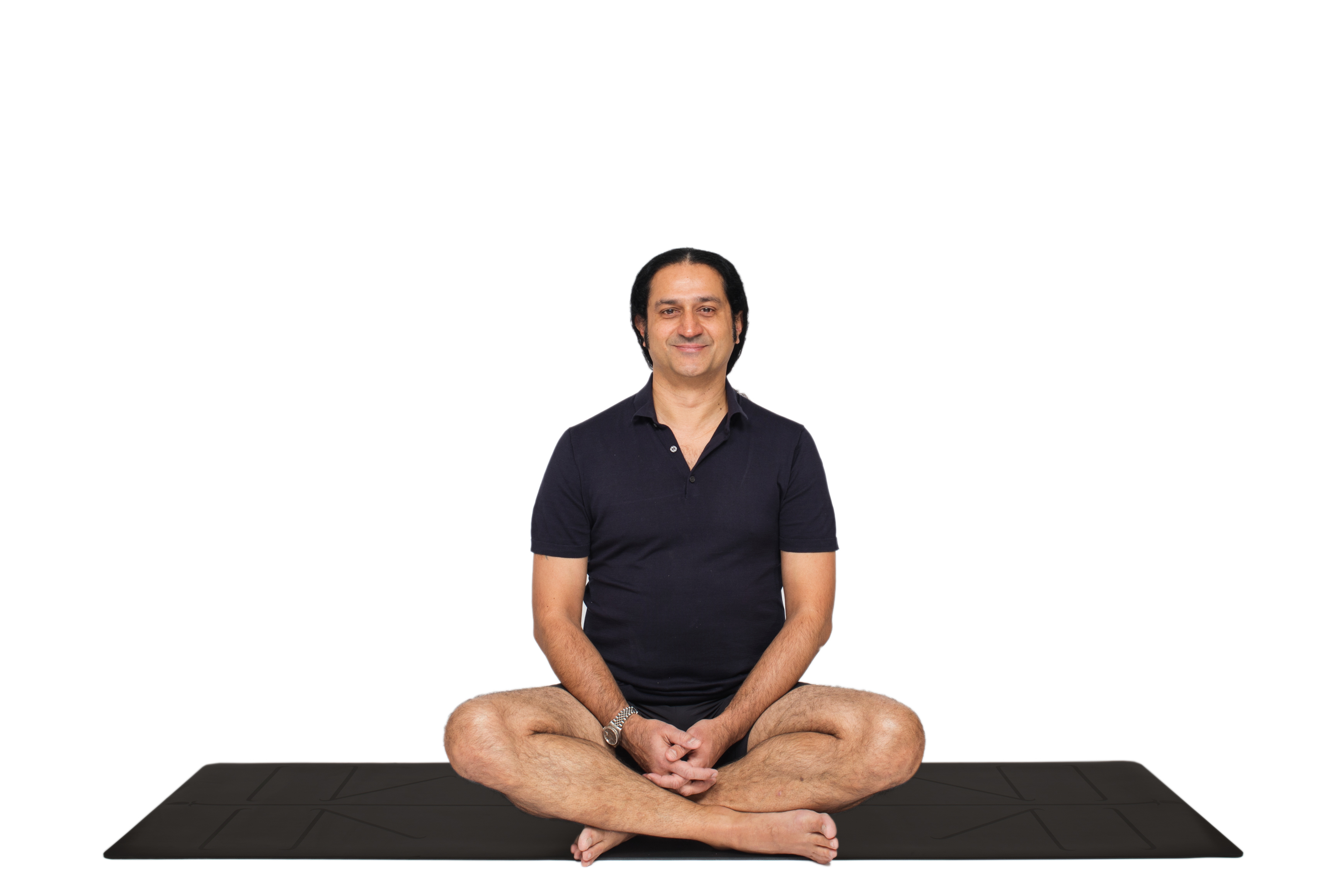

Why is it biologically impossible to simply "empty your mind"?
What happens once you have stabilized the musculoskeletal framework, regulated the autonomic nervous system, and flushed the endocrine toxicity?
Through the rigorous practice of Pranayama, the biological covering is destroyed, and the inner light of the physical framework is revealed (Yoga Sutra 2.52). As detailed in Part 3 of this series, once this visceral toxicity is purged, you are finally ready to confront the final frontier: the brain itself.
The modern approach to meditation often treats it as a passive relaxation technique—a forced attempt to "empty the mind." Clinically and anatomically, this is impossible. The brain is an incredibly dense, highly active metabolic organ. In Part 4 of our series on Neuroplasticity, we examine the Central Nervous System (CNS). We will map the neurology of rumination, how the revealed inner light naturally triggers sensory withdrawal (Pratyāhāra), and how concentration (Dhāraṇā) functions as a biological intervention to physically silence the brain's Default Mode Network.
1. Pratyāhāra: The Natural Inward Shift
Before you can concentrate, you must stop the brain from processing the external world. Every second, millions of bits of sensory data travel up your afferent neural pathways (primarily via the vagus nerve and spinal cord) to the thalamus—the brain’s sensory relay station. As long as the thalamus is heavily gating external data into the cerebral cortex, the brain’s metabolic resources are scattered.
However, because the advanced practice of Pranayama has already purged the visceral toxicity and lifted the biological veil, the mind no longer needs to frantically search the external environment for threats or distractions. As the inner light is revealed, the senses naturally and effortlessly withdraw from the external world and turn inwards towards this light.
This is the exact clinical function of Pratyāhāra (sensory withdrawal). It is not a mystical retreat; it is a deliberate biological intervention where the thalamic gates close, cutting off the afferent neural loop and leaving the central nervous system completely inward-facing.
2. The Neurological Noise: The Default Mode Network (DMN)
Once the senses are turned inward, you are immediately confronted with the brain's internal baseline of activity: the Default Mode Network (DMN).
In clinical neurology, the DMN is recognized as the biological seat of the ego. It is the network responsible for self-referential thought, analyzing the past, and anticipating the future. In a state of chronic stress, the DMN becomes hyperactive, generating endless loops of anxiety and obsessive rumination.
When the DMN is dominant, your brain operates in high-frequency Beta brainwaves—a chaotic, rapid electrical state associated with hyper-vigilance. You cannot "talk" your way out of a hyperactive DMN. You must neurologically starve it of blood flow.
3. Dhāraṇā: The Metabolic Load of Concentration
Because Pratyāhāra has successfully cut off external sensory noise, Dhāraṇā (concentration) is no longer a forced struggle; it becomes a natural, seamless biological step.
When you concentrate the brain on a single, continuous internal focal point—the inner light—you activate the Task-Positive Network (TPN), heavily engaging the prefrontal cortex. The human brain cannot sustain high activity in both the TPN and the DMN simultaneously; they are functionally anti-correlated.
           [ THE ARCHITECTURE OF CONCENTRATION ]
                                  │
           ┌──────────────────────┴──────────────────────┐
           ▼                                             ▼
[ DEFAULT MODE NETWORK (DMN) ]              [ TASK-POSITIVE NETWORK (TPN) ]
Self-referential thought and ego.           Singular focus and objective observation.
Untrained Mind / Chronic Stress.            Dhāraṇā (Clinical Concentration).
Scattered metabolic resources.              Redirects cerebral blood flow.
High-frequency Beta wave dominance.         Starves the DMN of oxygen and glucose.
By sustaining Dhāraṇā, you physically redirect cerebral blood flow away from the Default Mode Network and into the prefrontal cortex. You are literally starving the neurological centers of anxiety and rumination of the oxygen and glucose they need to function. The psychological noise stops because the biological framework generating it has been taken offline.
4. Dhyāna: Altering the Electrical Baseline and Biochemistry
Prolonging the unbroken concentration of Dhāraṇā naturally leads the brain into Dhyāna (meditative absorption). This is a measurable physiological event with two major clinical outcomes:
Electrical Shift: As cerebral blood flow remains shifted and the DMN is profoundly suppressed, the central nervous system alters its electrical frequency. The chaotic, high-frequency Beta brainwaves smooth out into coherent Alpha waves (relaxed alertness) and eventually into Theta waves (deep, integrated cognitive processing).
Biochemical Shift (GABA Release): As the brain enters this Alpha/Theta coherence, the central nervous system stimulates the production of GABA (Gamma-Aminobutyric Acid). GABA is the brain's primary inhibitory neurotransmitter. It acts as a chemical brake, actively suppressing fear-based signaling in the amygdala and inducing profound neurochemical stillness.
5. The Neuroplastic Result: Structural Stillness and Hebb's Law
Why is this step-by-step electrical and chemical shift so critical? Because temporary relaxation does not change the brain; sustained neurological resistance does. This is governed by a foundational rule of neuroplasticity known as Hebb's Law: "Neurons that fire together, wire together." Conversely, neural circuits that are ignored will physically degrade.
           [ THE NEUROPLASTICITY OF STRUCTURAL STILLNESS ]
                                  │
           ┌──────────────────────┴──────────────────────┐
           ▼                                             ▼
[ THE ANXIOUS BASELINE (Default) ]          [ THE MYELINATED OBSERVER (Yogveda) ]
Hyperactive Default Mode Network.           Pratyāhāra cuts sensory afferent loops.
Beta brainwaves dominate.                   Dhāraṇā heavily loads the prefrontal cortex.
Low GABA production.                        Dhyāna triggers Alpha/Theta & GABA release.
Anxiety loops are heavily myelinated.       Synaptic pruning dismantles chronic rumination.
By repeatedly forcing the brain out of the DMN and holding it in the Alpha/Theta coherence of Dhyāna, you trigger synaptic pruning—the physical dismantling and weakening of the neural circuits that generate chronic anxiety, fear, and egoic rumination. Simultaneously, the brain heavily myelinates the pathways of the Task-Positive Network and the prefrontal cortex, structurally reinforcing emotional resilience and autonomic control. You are not just experiencing a fleeting moment of peace; you are physically reconstructing the architecture of your brain to make stillness its permanent, unshakeable biological default.
6. The Sāṃkhya Epistemology: Yoga Sutra 1.2
Why do we undergo this intense biological rewiring? Patanjali defines the exact clinical and epistemological goal of this process in the second line of the Yoga Sutras:
Yogaś citta-vṛtti-nirodhaḥ (Yoga Sutra 1.2). "Yoga is the cessation of the fluctuations of the mind."
Classical Yoga (Sāṃkhya philosophy) explicitly recognizes that the mind (citta) and its electrical fluctuations (vṛtti) belong entirely to the physical framework (Prakṛti). Your thoughts, your anxieties, and your self-referential identity generated by the DMN are just biology. They are not who you are.
By applying the strict sequence of Pranayama, Pratyahara, and Dharana, we force the biological intervention that silences the DMN. When the neurological noise finally ceases, the true Observer (Puruṣa) is left standing alone. Disidentified from the physical framework, the Observer can finally experience unconditioned reality.
Academic References & Clinical Foundations
Patanjali. Yoga Sutras. (Classical text explicitly defining the cessation of mental fluctuations as the prerequisite for objective reality).
Brewer, J. A., et al. (2011). Meditation experience is associated with differences in default mode network activity and connectivity. Proceedings of the National Academy of Sciences, 108(50), 20254-20259. [Clinical data proving that meditation physically suppresses the Default Mode Network].
Fox, M. D., et al. (2005). The human brain is intrinsically organized into dynamic, anticorrelated functional networks. Proceedings of the National Academy of Sciences, 102(27), 9673-9678. [Biological evidence of the anti-correlation between the Task-Positive Network and the DMN].
Streeter, C. C., et al. (2010). Effects of yoga versus walking on mood, anxiety, and brain GABA levels: a randomized controlled MRS study. The Journal of Alternative and Complementary Medicine, 16(11), 1145-1152. [Clinical data proving Yoga's direct intervention in increasing inhibitory GABA neurotransmitters].
Austin, J. H. (2006). Zen-Brain Reflections. MIT Press. [Neurobiological examination of thalamic gating and sensory withdrawal mechanisms corresponding to Pratyahara].
Yogveda Yoga strictly follows the science of the Darshanas: no morality, no god worship, study yourself to be free.
👉 Yogveda Asana Lesson : Build the physical presence to distinguish between what is real in the body and what is just a feeling.
👉Yogveda Yoga Teacher Training in Bern: Deepen your understanding of Patanjali's philosophy of mind and truth.
Author, Master Shahid Khan
Yogveda Yoga Switzerland 🇨🇭


Comments