
The Clinical Architecture of the Brain: Neuroplasticity and Yoga (Part 1) — The Myth of "Muscle Memory" and the Science of Myelination
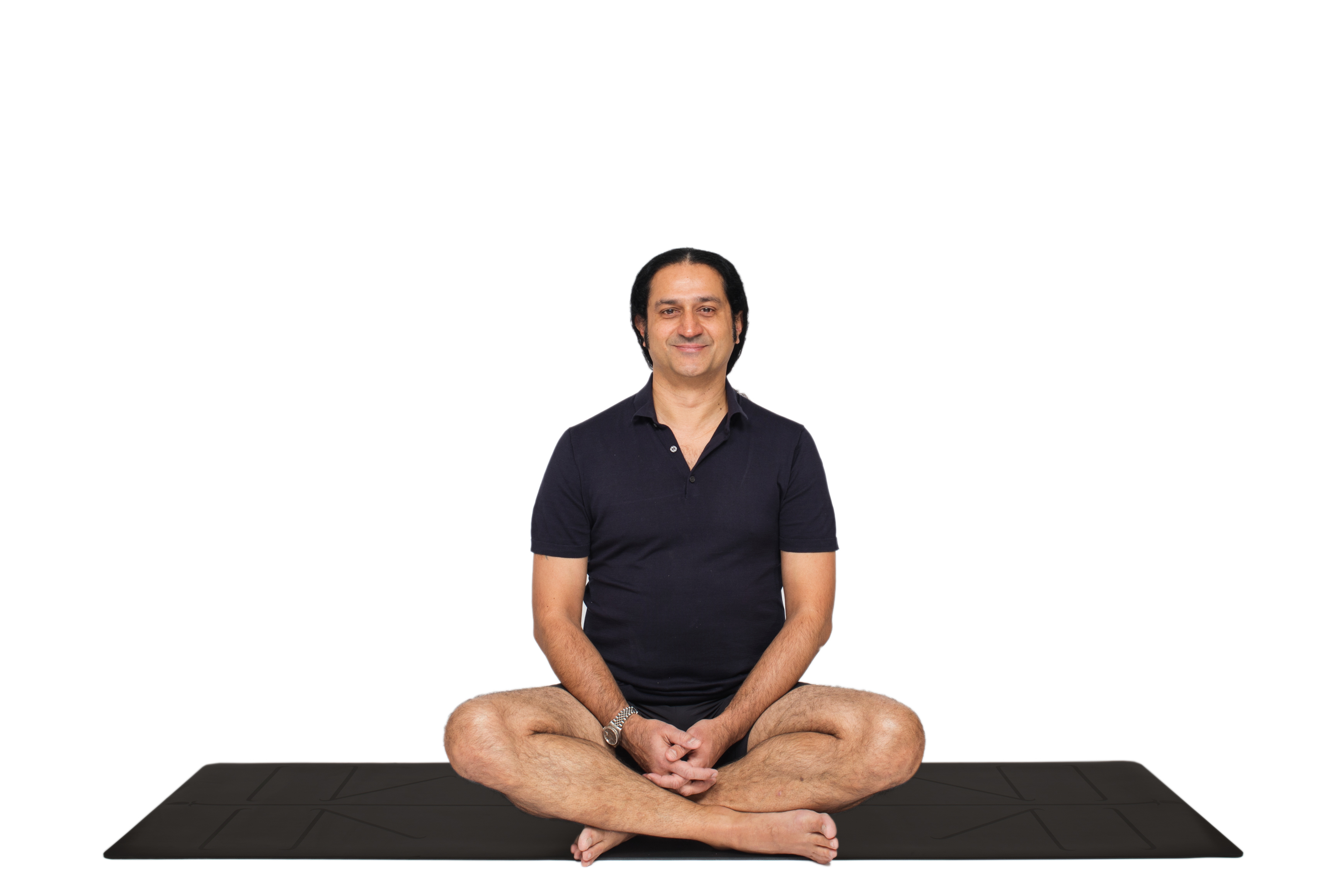

Do you actually believe your hamstrings have a brain?
The modern commercial wellness industry loves to throw around the phrase "muscle memory." When a practitioner finally achieves a difficult physical posture or stops reacting to a physiological trigger, instructors will confidently claim that their muscles have "remembered" the movement.
This is a biological impossibility. Muscles do not have memory. Muscles are simply biological motors; they are dumb, obedient slaves to the central nervous system. A muscle cannot contract, lengthen, or release without a direct electrical command from the brain.
When you practice Yoga, you are not training your muscles. You are conducting highly complex, localized surgery on your brain.
In this new 5-Part Series, The Clinical Architecture of the Brain, we will permanently discard the romanticized jargon of the modern yoga industry and map the ancient mechanics of yoga directly to modern neuroscience. We begin in Part 1 by deconstructing the actual mechanism behind physical practice (Asana): the science of neuroplasticity and myelination.
1. Defining Neuroplasticity: The Brain is Not Fixed
For decades, the medical community believed that the adult human brain was a static organ—that once you reached adulthood, your neurological hardwiring was permanently fixed. Modern neuroscience has completely shattered this assumption through the discovery of neuroplasticity.
Neuroplasticity is the central nervous system's biological ability to physically reorganize its structure, function, and synaptic connections in response to repeated experience. It proves that your brain is highly malleable. Every specific movement you repeat, every breath pattern you sustain, and every psychological reaction you indulge literally reshapes the architecture of your brain at the cellular level.
Neuroplasticity and yoga are deeply intertwined. When you engage in clinical physical practice, you are actively triggering this neuroplastic adaptation.
2. Neuroplasticity and the Neuromuscular Command Center
To understand what actually happens when you trigger neuroplasticity through physical practice, you must first understand the neuromuscular junction.
Your brain communicates with your body via electrical impulses that travel down the spinal cord and through the peripheral nerves. When you attempt to align your skeletal structure in a complex posture—such as Trikonasana (Triangle Pose)—your brain must calculate spatial awareness, joint torque, and gravitational pull, and then fire a highly specific sequence of electrical signals to tell certain muscles to contract and others to release.
In the beginning, this requires immense cognitive effort. You shake, you lose your balance, and your breath becomes erratic. This happens because the neural pathway executing this specific command is weak, uninsulated, and inefficient. The electricity is "leaking" out along the pathway.
It is not your muscles that are weak; it is your neurological blueprint that is incomplete.
3. The Science of Myelination: Why "Practice Makes Perfect" is a Dangerous Lie
How does a clumsy, high-effort movement eventually become a flawless, autonomic reflex? It happens through a specific mechanism of neuroplasticity called myelination.
In strict biology, true "muscle memory" only refers to myonuclei retention—how muscle cells remember to grow back after atrophy. It has absolutely nothing to do with movement. What the wellness industry incorrectly calls muscle memory is actually procedural memory, a process governed entirely by the brain.
Every time you repeat a physical action, your brain sends a signal down the exact same neural pathway. Recognizing this repetition, the brain deploys specialized cells (oligodendrocytes) to wrap that specific neural pathway in a fatty, insulating layer called myelin.
                       [ THE BIOLOGY OF PROCEDURAL MEMORY ]
                                      │
               ┌──────────────────────┴──────────────────────┐
               ▼                                             ▼
    [ CONSCIOUS EFFORT ]                          [ AUTONOMIC HABIT (MYELINATION) ]
 Uninsulated neural pathways.                 Oligodendrocytes wrap the neural pathway in
 High cognitive load, erratic breath,         myelin. The signal becomes lightning-fast,
 unstable skeletal alignment.                 subconscious, and highly efficient.
Think of myelin like the rubber insulation around a copper electrical wire. The thicker the myelin sheath, the faster, stronger, and more automatic the electrical signal becomes. Highly myelinated pathways operate at lightning speed with zero conscious effort. This is neurological hardwiring.
But here is the critical, uncompromising truth: your brain does not judge the quality of your movement. It only responds to repetition.
If you perform 500 repetitions of a posture with catastrophic skeletal alignment, shallow chest breathing, and a panicked nervous system, your brain will dutifully myelinate that exact dysfunctional pattern. You have not achieved mastery; you have permanently hardwired biological dysfunction. This is why the cliché "practice makes perfect" is neurologically false. Practice only makes permanent.
4. The Yogveda Protocol: Systematically Forcing Neuroplasticity in Yoga
This is why the Yogveda methodology demands uncompromising clinical precision. If your physical practice lacks systematic structure, your brain simply falls back on its old, highly myelinated compensatory habits.
To actively force the brain to lay down new, healthy neural pathways, Master Shahid Khan designed a meticulous, multi-tiered neurological audit. We do not stretch randomly; we systematically remap the central nervous system through three distinct clinical protocols:
A. The Yogveda Kriya: The Neurological Primer
Starting a deep physical practice with a cold, stiff body is not just a biomechanical risk; it is a neurological failure. The Yogveda Kriya is a strict 45-minute preparatory sequence designed to clear neurological noise before the main practice begins.
Joints & Mobility (The Lubrication): Precise rotations stimulate synovial fluid in the ankles, knees, hips, and shoulders, communicating safety to the nervous system.
Full-Body Release: Targeted movements dismantle the muscular stiffness accumulated from a sedentary lifestyle, removing physical resistance.
The Eye Series (Netra Vyayam): This is a unique clinical feature. By systematically training the eye muscles, we directly stimulate the cranial nerves, increasing light intake to the brain. This creates immediate cortical arousal, enhancing mental clarity and forcing the brain to focus its neuroplastic capabilities on the present moment.
B. The 48-Week Asana Program: Systematic Neural Mapping
To prevent the brain from over-myelinating one specific movement pattern (which leads to injury and imbalance), the Yogveda Asana system is divided into 12 anatomical cycles. By rotating focus areas—such as Feet Alignment, Hip Mobility, the Psoas, and the Cervical Spine—we ensure every neurological blind spot is audited.
Within each cycle, the nervous system is subjected to a strict 4-Week Rhythm, systematically applying different functional loads:
Week 1: Forward Bends (Extension): Triggers a profound parasympathetic shift, calming the nervous system and relieving spinal compression.
Week 2: Backbends (Opening): Corrects the heavily myelinated, hunched posture of desk work, stimulating sympathetic arousal and building spinal strength.
Week 3: Twists (Detoxification): Restores mobility and forces the brain to remap the complex neurology of the deep spinal rotators.
Week 4: Standing Poses (Strength): Demands high-level proprioception, stabilizing the skeletal foundation and enhancing cognitive concentration.
C. Yogveda Pranayama: Myelinating the Vagal Brake
Breath is the only autonomic function you can consciously control. Yogveda Pranayama is not a relaxation exercise; it is a clinical, 4-part progressive overload system designed to hyper-myelinate the Vagal Brake:
Part 1: Open the Airway: Using a bridge under the lower back and a neck support, we mechanically release the cervical and lumbar spine, forcing the airway open.
Part 2: Neurological Loading: We place four 4-kilo weights directly on the abdomen. This forces the brain to recruit massive electrical power to fire the diaphragm under physical resistance.
Part 3: Enhanced Exhalation: Using a clinical breath trainer in the mouth, we apply resistance to the exhalation. This myelinates the precise neural pathways required to slow the breath, the direct mechanical trigger for parasympathetic calm.
Part 4: Targeted Pranayama: With the pathways now open, loaded, and highly conductive, specific techniques are applied to permanently upgrade respiratory health.
               [ THE PEDAGOGIC ARCHITECTURE OF YOGVEDA NEUROPLASTICITY ]
                                           │
         ┌─────────────────────────────────┼─────────────────────────────────┐
         ▼                                 ▼                                 ▼
  [ YOGVEDA KRIYA ]               [ 48-WEEK ASANA SYSTEM ]            [ 4-PART PRANAYAMA ]
    (45-Min Prep)                  (12 Anatomical Cycles)             (Vagal Brake Loading)

Joint lubrication, physical    Rotates through a 4-week rhythm.   Mechanical airway opening,
release, & cranial nerve       Prevents over-myelination and      4kg abdominal weights, and
stimulation (Eye Series).      audits every neuromuscular         exhalation resistance.
Clears neurological noise      blind spot. Systematically         Hyper-myelinates the Vagal
and forces cortical arousal.   rewires the central nervous        Brake for deep, automatic
Prepares the CNS for load.     system without imbalance.          parasympathetic stability.
Through this relentless, systematic practice (Abhyāsa), your brain has no choice but to myelinate this new Yogveda pattern.
5. The Epistemological Reality: The Brain is Still Just Prakṛti
Why does any of this matter in the context of classical yoga philosophy? Because we must strictly maintain our Sāṃkhya epistemology.
Your brain, your myelin sheaths, and your neuroplasticity are magnificent, but they are entirely physical. They belong to Prakṛti (the mechanical, changing realm of nature). The brain is not the Self. The central nervous system is not the Witness (Puruṣa).
The Witness is always perfect, silent, and stable. It does not need to be rewired. It is your biological machine that vibrates violently, driven by heavily myelinated patterns of fear and trauma.
The goal of clinical yoga is not just to have a healthy brain. The goal is to use the science of neuroplasticity to completely stabilize the biological machine. We rewire the nervous system so that it stops generating neurological noise. Only when the machine is perfectly still can it act as a flawless mirror, finally reflecting the immutable, unconditioned presence of the Witness.
Academic References & Clinical Foundations
Hebb, D. O. (1949). The Organization of Behavior: A Neuropsychological Theory. John Wiley & Sons. [The foundational text on synaptic plasticity and habit formation].
Fields, R. D. (2008). White matter in learning, cognition and psychiatric disorders. Trends in Neurosciences, 31(7), 361-370. [The neurobiology of myelination and its role in making behaviors automatic].
Zatorre, R. J., Fields, R. D., & Johansen-Berg, H. (2012). Plasticity in gray and white: neuroimaging changes in brain structure during learning. Nature Neuroscience, 15(4), 528-536. [How physical training and repetition physically alter brain architecture].
Gundersen, K. (2016). Muscle memory and a new cellular model for muscle atrophy and hypertrophy. Journal of Experimental Biology, 219(2), 235-242. [The biological proof that true muscle memory is myonuclear, not procedural].
Step Into Clinical Practice
You cannot rewire your central nervous system by passively reading articles. Are you ready to conduct a clinical audit of your own biological blueprint?
Master Shahid Khan leads intensive, university-grade teacher trainings and masterclasses dedicated to the applied biomechanics, cognitive neurobiology, and classical epistemology of Yoga in Switzerland.
Learn how to uncouple highly myelinated dysfunctional patterns, realign your neuromuscular communication, and anchor the mind.
Secure your registration for upcoming workshops and teacher trainings:
Yogveda Yoga follows the science of the darshanas strictly: no morality, no god worship, study yourself to be free.
👉 Yogveda Asana Lesson : Build the physical presence to distinguish between what is real in the body and what is just a feeling.
👉Yogveda Yoga Teacher Training in Bern: Deepen your understanding of Patanjali's philosophy of mind and truth.
Author, Master Shahid Khan
Yogveda Yoga Switzerland 🇨🇭


Comments