
The Science of Kriyā Yoga: Īśvarapraṇidhāna — The Observer Dissolves, Neuro-Cognitive Collapse & The Sovereign Witness
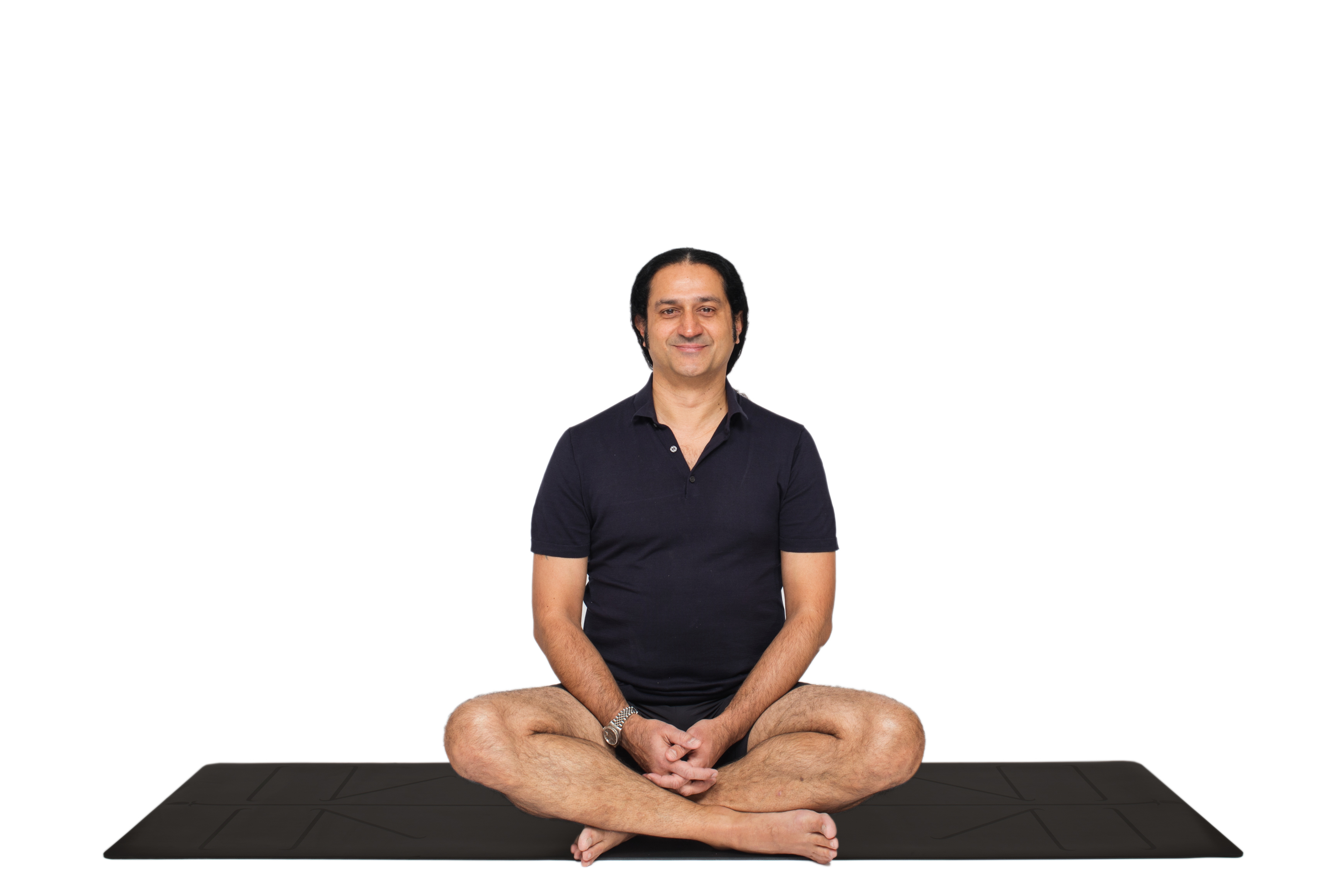

You cannot practice surrender, because the "doer" is the ego. Any deliberate attempt to let go is just the ego (Ahaṃkāra) rebranding its desperate need for control.
In classical Kriyā Yoga, Īśvarapraṇidhāna is not a technique you apply. It is the terminal limit of observation. It is the biological collapse of the actor, leaving only the pure, unconditioned witness (Īśvara) behind.
It is critical to clarify that the framework decoded in this series has absolutely nothing to do with "Babaji's Kriya Yoga" or the mystical, guru-bestowed lineages popularized in the 20th century. The Kriyā Yoga of Patañjali (Yoga Sūtra 2.1) requires no secretive esoteric initiation, no mystical devotion to a master, and no magical thinking. It is a transparent, rigorous, and uncompromising neuro-cognitive science.
Through Tapas (Post 1), we applied the uncompromising furnace of biomechanical and autonomic pressure, trapping the mind's escape routes to cure the body, mind, and breath as one indivisible entity. Through Svādhyāya (Post 2), we held up the clinical, interoceptive mirror, utilizing the Quantum Observer Effect to alter our mechanical loops simply by watching them.
But observation has a terminal limit. When the conditioned self is perfectly mirrored by pure observation, a neuro-cognitive threshold is reached. What happens when the witness turns the microscope upon the witnessing apparatus itself? The mirror reflects the mirror. The illusion of the "doer" recognizes its own mechanical nature. There is no deliberate self-surrender; the self simply dissolves into itself. The panicked nervous system collapses into absolute stillness, and what remains standing is the sovereign, unconditioned inner baseline: Īśvara.
As the third and final limb of the Kriyā Yoga triad (Yoga Sūtra 2.45), this clinical guide deconstructs how systematic self-study forces the ultimate dissolution of the ego, shifting the nervous system from executive control into the pure, merged witnessing baseline of reality.
1. The Quantum Limit of Svādhyāya: When the Observer Observes Itself
In our previous post on Svādhyāya, we established the Quantum Observer Effect: subatomic particles behave as infinite waves of probability until they are measured. The act of observation forces the wave to collapse into a single reality.
Neurologically, when you observe your own autonomic panic or anger, your automated behavioral loop breaks. But at this stage of clinical practice, there is still a subtle duality—a separation—in the brain:
The Object: The physiological sensation (the racing heart, the angry thought).
The Subject: The "I" who is doing the observing.
This separation is exactly where Svādhyāya ends and Īśvarapraṇidhāna takes over.
If you continue to track the observer—if the witness turns its attention back onto the witnessing consciousness itself—this separation shatters. The observer and the observed are realized to be the exact same continuous field of consciousness. The wave does not just collapse into a particle; the particle dissolves back into the infinite field.
The Evolution of the Witnessing Consciousness
Cognitive Phase | Kriyā Yoga Limb | The Quantum State | Neurological Reality | Resulting State of Mind |
1. Unconscious Reaction | Pre-Practice (Avidyā) | Unmeasured Wave: Automated, blind behavioral probability. | Amygdala hijacked; sympathetic overdrive (Fight or Flight). | Hyper-identification with the emotion. "I am angry." |
2. Dualistic Observation | Svādhyāya (Self-Study) | Wave Collapse: The observer measures the system, altering its behavior. | Salience Network active; objective monitoring of the body's output. | Subject/Object separation. "I am observing the anger in my body." |
3. The Absolute Merge | Īśvarapraṇidhāna | Field Dissolution: The observer observes itself. Duality collapses. | Frontal lobe quiets (Hypofrontality); Default Mode Network shuts down. | The self dissolves into itself. Pure unconditioned presence (Īśvara). |
2. The Myth of the "Doer" (Ahaṃkāra) and the Neurological Cost of Control
To understand why this collapse is biologically necessary, we must understand the pathology of the modern ego. The evolutionary function of your ego (in Sanskrit, Ahaṃkāra, literally "The I-Maker") is not to make you happy. Its sole operational mandate is survival.
To ensure survival, the ego continuously scans the future for potential threats and attempts to manipulate the environment through executive control. We bring this exact pathology to the modern yoga mat: we weaponize asana to force the body into submission and use prāṇāyāma to "hack" the nervous system.
This relentless compulsion to control comes with a massive physiological cost known as Allostatic Load—the biological wear and tear of constantly being on high alert.
When you try to control the uncontrollable—your partner's behavior, your biological aging, or the outcome of a crisis—your central nervous system is locked in chronic warfare. The adrenal glands pump cortisol into the bloodstream, and the diaphragm locks into a shallow, armored survival pattern.
Īśvarapraṇidhāna is the radical clinical realization that your attempts to control the situation are what cause the biological suffering in the first place. It is the absolute resignation of executive authority.
3. Īśvara in the Darśanas: The Unconditioned Baseline, Not a Man in the Sky
Who or what is Īśvara? Patañjali defines it unequivocally in Yoga Sūtra 1.24:
Kleśa-karma-vipākāśayair aparāmṛṣṭaḥ puruṣa-viśeṣa īśvaraḥ"Īśvara is a special center of consciousness (Puruṣa-viśeṣa), completely untouched by psychological afflictions (Kleśas), actions (Karma), and the subconscious residue of those actions."
The modern commercial wellness industry has routinely misinterpreted Īśvarapraṇidhāna as religious submission or praying to a deity. In the strict, atheistic science of classical Sāṃkhya-Yoga, Īśvara is not a bearded father figure in the clouds who you beg for an easy life.
Īśvara is the ultimate state of biological and neurological equilibrium. It is the pure, unconditioned, non-reactive consciousness that remains when the neurotic noise of the ego dissolves. Praṇidhāna translates to "lay down." Therefore, Īśvarapraṇidhāna means laying down the limited, trauma-driven logic of the "doer," allowing the nervous system to seamlessly synchronize with the infinite, undisturbed baseline of reality.
4. The Kriyā Yoga Chain Reaction
Kriyā Yoga (Yoga Sūtra 2.1) is not a list of three separate tasks you perform on different days. It is an inevitable, neuro-cognitive chain reaction. You cannot jump straight to surrender without passing through the furnace of practice and the mirror of observation.
The Mechanics of the Neuro-Cognitive Collapse
Step | Kriyā Yoga Operation | The Biomechanical & Neurological Mechanism | The Outcome |
1. The Furnace | Tapaḥ (Friction / Heat) | Applying strict biomechanical load and breath resistance. The ego is placed under controlled stress. Escape routes are blocked. | The automated survival loops and physical defenses are forced to the surface. |
2. The Mirror | Svādhyāya (Clinical Study) | The brain's Insula maps the biological distress. The mind watches its own panic and bargaining without reacting. | The Quantum Observer Effect: The mechanical loop is exposed, measured, and loses power. |
3. The Collapse | Īśvarapraṇidhāna (The Merge) | The witness observes the witnessing. The illusion of the "doer" realizes it cannot control the system. Deliberate effort ceases. | The self dissolves into itself. The nervous system shifts into profound, unconditioned stillness. |
5. The Biomechanics of Surrender: Gravity and the Vagus Nerve
Because the body, breath, and mind operate as one indivisible entity (Prakṛti), this cognitive collapse must occur in the physical tissues. Surrender is a measurable biological release, heavily mediated by the Vagus Nerve.
The mind's attempt to control the uncontrollable is stored in your fascia as physical tension. Chronically elevated shoulders, a locked psoas, and a cemented pelvic floor are somatic manifestations of the ego's refusal to let go. You grip your own bones because you do not trust the world to hold you.
In the Yogveda methodology, genuine Asana practice teaches Īśvarapraṇidhāna through gravity and the nervous system. If you attempt to force yourself down in a forward fold (Paścimottānāsana) using sheer willpower, the stretch reflex of the hamstrings fires, the tissue microscopically tears, and your fight-or-flight response activates.
If, instead, you utilize skeletal leverage, find structural alignment, and stop doing, the parasympathetic nervous system (via the vagus nerve) takes over. The muscle spindles relax, the tissues yield, and gravity does the work that the ego thought it had to force. The posture deepens not through effort, but through absolute somatic capitulation.
6. The Bridge to Abhyāsa (Post 4)
In Post 4, we will explore the clinical science of Abhyāsa—the rigorous, systematic repetition required to stabilize this unconditioned witness and prevent the brain from reverting to its exhausted micromanagement of reality.
Academic References & Clinical Foundations
Carhart-Harris, R. L., et al. (2014). The entropic brain: a theory of conscious states informed by neuroimaging research with psychedelic drugs. Frontiers in Human Neuroscience, 8, 20. [Mapping the downregulation of ego-control (Ahaṃkāra) and the collapse of the Default Mode Network into unitive states].
Dietrich, A. (2003). Transient hypofrontality as a mechanism for the psychological effects of exercise. Psychiatry Research, 116(1-2), 79-92. [The neurology of ego-dissolution and executive surrender in flow states].
Porges, S. W. (2001). The polyvagal theory: phylogenetic substrates of a social nervous system. International Journal of Psychophysiology, 42(2), 123-146. [The biological shift from sympathetic executive control to ventro-vagal safety and surrender].
McEwen, B. S. (1998). Stress, adaptation, and disease: Allostasis and allostatic load. Annals of the New York Academy of Sciences, 840, 33-44. [The biological overhead and physical cost of chronic cognitive hyper-vigilance].
Schleip, R. (2003). Fascial plasticity – a new neurobiological explanation: Part 1. Journal of Bodywork and Movement Therapies, 7(1), 11-19. [How chronic psychological control and startle reflexes are stored as myofascial armoring].
Benson, H., Beary, J. F., & Carol, M. P. (1974). The relaxation response. Psychiatry, 37(1), 37-46. [The foundational clinical mechanism of stopping active "doing" to trigger parasympathetic healing].
Goleman, D., & Davidson, R. J. (2017). Altered Traits: Science Reveals How Meditation Changes Your Mind, Brain, and Body. Avery. [How temporary states of surrender (Īśvarapraṇidhāna) permanently rewire the baseline traits of the nervous system].
Stapp, H. P. (2007). Mindful Universe: Quantum Mechanics and the Participating Observer. Springer. [Exploring the physical role of conscious attention and the eventual collapse of dualistic probability states].
Step Into Clinical Practice: The Kriya Yoga Master Workshop
The dissolution of the ego is not an intellectual concept; it is a profound neurological shift. On Friday, October 30th, 2026, Master Shahid Khan will lead an intensive, university-grade masterclass dedicated to the applied biomechanics and cognitive neurobiology of Kriyā Yoga.
In this clinical immersion, you will learn how to break neuromuscular armoring, engage the Vagal Brake, and practice the genuine biological collapse of Īśvarapraṇidhāna.
Class capacity is strictly limited. Secure your registration for the masterclass: Kriya Yoga Master Workshop at Yogveda Yoga Switzerland
Yogveda Yoga follows the science of the darshanas strictly: no morality, no god worship, study yourself to be free.
👉 Yogveda Asana Lesson : Build the physical presence to distinguish between what is real in the body and what is just a feeling.
👉Yogveda Yoga Teacher Training in Bern: Deepen your understanding of Patanjali's philosophy of mind and truth.
Author, Master Shahid Khan
Yogveda Yoga Switzerland 🇨🇭


Comments