
The Science of Kriyā Yoga: Svādhyāya — The Observer is the Observed, Clinical Self-Study & Cognitive Neuroplasticity
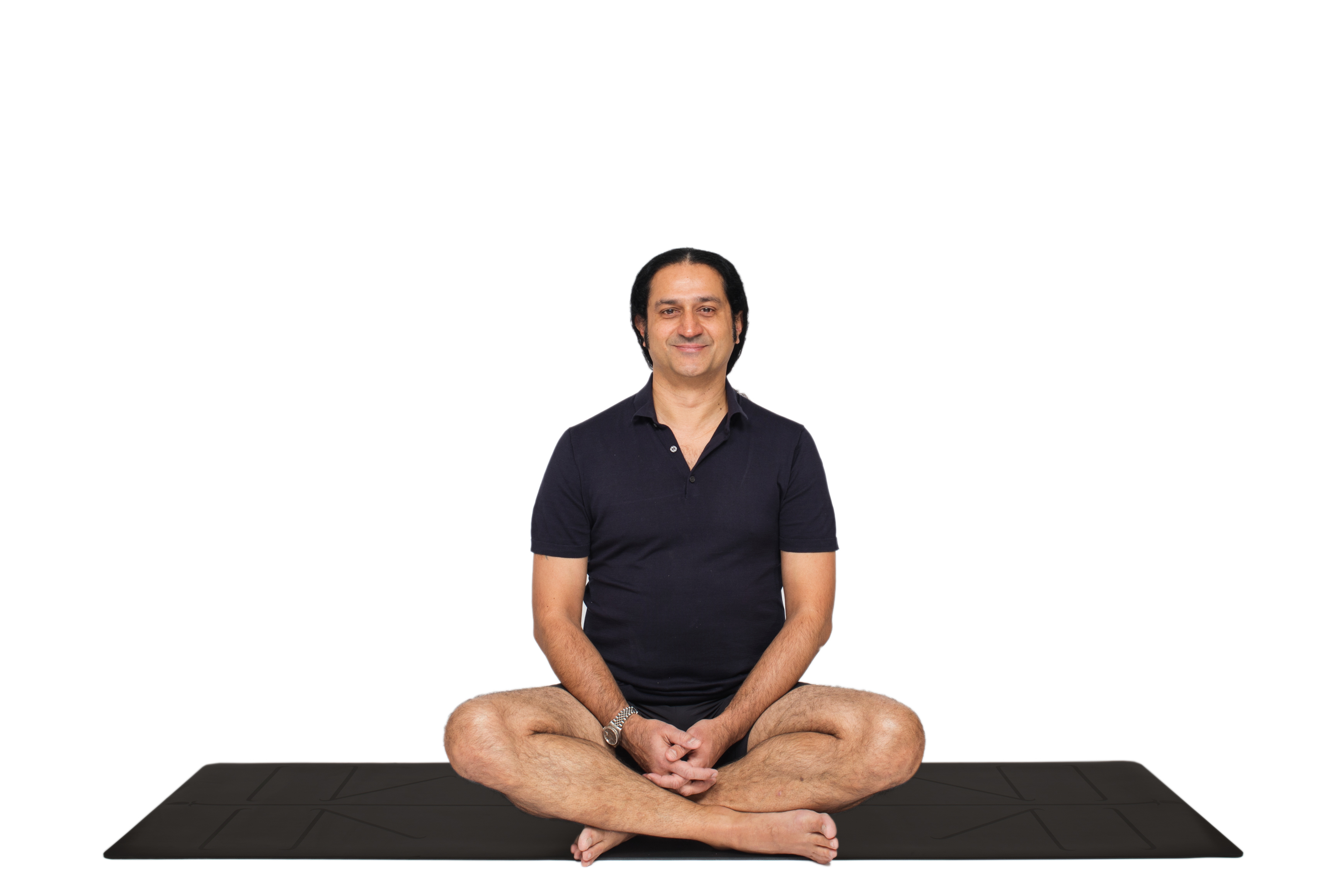

Why does intellectual insight fail to prevent an emotional breakdown under acute stress?
You can spend years in conventional talk therapy, memorize every cognitive distortion from psychology textbooks, and understand precisely why you choose the wrong partners, react with chronic defensiveness, or sabotage your professional stability. Yet, the instant autonomic arousal spikes—your heart rate accelerating, your throat constricting, your gut clenching—the cognitive mind is hijacked. Your nervous system defaults to the exact conditioned loop it has run for decades.
Reading about your neuroses does not rewrite neural architecture. Thinking about thinking merely traps you in a recursive cognitive loop.
In the second limb of the Kriyā Yoga triad (Yoga Sūtra 2.1), Patañjali provides the antidote to this intellectual trap:
Yoga Sūtra 2.1:Tapaḥ-svādhyāya-īśvarapraṇidhānāni kriyā-yogaḥ"The practical Yoga of Action (Kriyā Yoga) consists of three inseparable operations: Practice That Generates Heat (Tapas), Clinical Self-Study (Svādhyāya), and Resting in the Unconditioned Inner Witness (Īśvarapraṇidhāna)."
In modern yoga culture, Svādhyāya has been trivialized into journaling, reading mythology, or reciting affirmations. In the classical science of the darśanas and Master Shahid Khan's Yogveda methodology, Svādhyāya is an exacting cognitive and epistemological science: the clinical, real-time dissection of conditioned neuro-behavioral loops (saṃskāras) using your somatic state as biofeedback.
As Post 2 of our 5-Part Kriyā Yoga Series, this clinical draft demonstrates how the Science of Kriyā Yoga: Svādhyāya systematically maps the brain's default operating system, uncouples conditioned motor-cognitive loops, and bridges somatic discipline to liberation.
1. The Anatomy of Self-Study: Interoception vs. Metacognition in the Science of Kriyā Yoga: Svādhyāya
What does it actually mean to study oneself scientifically?
The Sanskrit compound svādhyāya consists of two root terms:
Sva: The self, the subjective observer, the baseline consciousness.
Adhyāya: Close investigation, clinical reading, deep inquiry into a structure.
In classical Sāṃkhya-Yoga epistemology, Svādhyāya is not navel-gazing. It is the rigorous separation of two distinct entities that the untrained mind constantly confuses:
Prakṛti / Citta: The biological instrument—the nervous system, autonomic reflexes, emotional charges, and thought streams.
Puruṣa: The silent, unconditioned witness that observes the biological instrument.
Plaintext
                  [ THE ARCHITECTURE OF SVĀDHYĀYA ]
                                  │
       ┌──────────────────────────┴──────────────────────────┐
       ▼                                                     ▼
 [ THE PHENOMENON (PRAKṚTI / CITTA) ]              [ THE WITNESS (PURUṢA) ]
 Conditioned neural firing, autonomic arousal,     Unmoving, non-reactive consciousness;
 muscular tension, bargaining thoughts.           the scientist conducting the inquiry.
       │                                                     │
       └──────────────────────────┬──────────────────────────┘
                                  │
                                  ▼
           [ COGNITIVE UNCOUPLING: SŪTRA 2.44 ]
       "Svādhyāyād iṣṭa-devatā-saṃprayogaḥ"
       Deconstructs the reflexive loop (Saṃskāra) to align
       with the highest functional ideal of pure clarity.
Western psychology relies predominantly on Metacognition (top-down analysis: thinking about your thoughts). When you analyze why you are angry or anxious, the prefrontal cortex attempts to police the rest of the brain using abstract language.
Svādhyāya, however, operates via Interoception (bottom-up somatic tracking: monitoring the physiological shifts that precede and generate cognitive thoughts).
When you look through a microscope, you do not identify with the bacteria on the slide. You observe their behaviors, life cycles, and reactions to stimuli with detached precision. Svādhyāya is turning the microscope inward onto your own central nervous system.
Instead of saying, "I am anxious," the practitioner of Svādhyāya observes: "My heart rate has accelerated to 110 bpm, the serratus anterior has lost engagement, breathing has migrated entirely to the apical scalene chain, and the linguistic center is generating catastrophic predictions."
This shift from narrative identification to objective somatic readout is the core functional mechanism defined in Yoga Sūtra 2.44:
Svādhyāyād iṣṭa-devatā-saṃprayogaḥ"From systematic self-study (Svādhyāya) arises direct alignment and communion with the highest unconditioned ideal of consciousness."
2. The Quantum Observer Effect: "The Observer is the Observed"
In quantum mechanics, the Observer Effect fundamentally altered classical physics: subatomic particles (such as electrons or photons) exist as infinite waves of probability until the exact moment of measurement or observation. The act of observation alters the physical system, forcing the probability wave to collapse into a single, localized particle state.
Plaintext
[ UNCONSCIOUS STATE (WITHOUT SVĀDHYĀYA) ]
Automated probability waves: The mind runs blind behavioral loops
(toxic relationship patterns, emotional eating, chronic panic).
                    │
                    ▼
[ INTRODUCTION OF THE WITNESS (PURUṢA) ]
The beam of objective, non-judgmental observation is applied.
                    │
                    ▼
[ COLLAPSE OF THE WAVE FUNCTION ]
The automated behavioral script freezes; the mechanical momentum
breaks, and conscious neuroplastic reorganization begins.
The exact same operational law governs human neurobiology and behavioral psychology.
When you are lost in a state of blind panic, chronic defensiveness, or relationship sabotage, there is an artificial duality: you feel like a helpless victim attacked by your own unruly emotions. But the moment you introduce genuine Svādhyāya—pure, non-reactive observation—this psychological separation collapses: The observer is the observed.
You realize the anger or fear is not an external force invading your mind; it is a temporary neurochemical fluctuation (a vṛtti) taking place entirely within your own biological field (Prakṛti).
You can spend decades trapped in destructive relationship patterns—consistently selecting partners who trigger your childhood attachment wounds, invalidate your boundaries, or mirror past emotional neglect. On an automated level, your nervous system is simply executing an unobserved probability algorithm: seeking the familiarity of past trauma because it is biologically predictable.
As long as this behavior remains unobserved, it acts like an unmeasured quantum wave: an automated, deterministic reflex that controls your life.
The moment you introduce Svādhyāya, the illusion shatters:
You observe the exact constriction in your chest when an emotionally unavailable partner withdraws.
You identify the ego’s urge to manufacture an argument just to feel a familiar adrenaline spike.
You catch the biochemical craving for external reassurance before sending the impulsive message.
By observing the behavioral impulse without executing the motor command, the automated program collapses. Consciousness ceases to be an involuntary passenger and becomes the active measuring apparatus. The loop loses its mechanical momentum, opening the biological window for permanent neuroplastic reorganization.
3. Uncoupling the Default Mode Network (DMN) & Saṃskāras
Modern cognitive neuroscience has mapped what Patañjali termed Saṃskāras (subconscious impression grooves) and Vṛttis (neuro-cognitive fluctuations). When the brain is left to wander without active somatic demand, it does not settle into silence; it activates the Default Mode Network (DMN).
The DMN—anchored primarily in the Medial Prefrontal Cortex (mPFC), the Posterior Cingulate Cortex (PCC), and the Inferior Parietal Lobule—is the neural engine of the ego (Asmitā). It manufactures continuous autobiographical narratives, rumbles through past regrets, projects future anxieties, and defends social status.
Cognitive State | Neural Network | Neurochemistry | Sāṃkhya-Yoga Equivalent | Functional State |
Mind-Wandering / Anxiety | Default Mode Network (mPFC, PCC) | Elevated Cortisol, baseline Norepinephrine | Kṣipta / Mūḍha (Agitated, Deluded) | Hyper-identification with self-narrative (Asmitā). |
Intellectual Analysis | Central Executive Network (dlPFC) | Dopamine, moderate Acetylcholine | Vikṣipta (Distracted / Trying) | Fragmented top-down study; detached from the body. |
Clinical Svādhyāya | Salience Network & Anterior Insular Cortex | Balanced GABA, Endocannabinoids, Vagal Acetylcholine | Ekāgra (Single-pointed Observation) | Real-time interoception; observing neural firing without reacting. |
Unconditioned Witnessing | Downregulated DMN, Synchronized Alpha/Theta | Steady Endorphins, suppressed Amygdala reactivity | Nirodha / Puruṣa Realization | Complete cessation of narrative loops (Yoga Sūtra 1.2). |
Svādhyāya as DMN Downregulation
Clinical neuroimaging demonstrates that long-term contemplative and somatic self-investigation selectively downregulates the PCC and mPFC (Brewer et al., 2011).
When you practice Svādhyāya, you deliberately inhibit the DMN. Instead of being carried away by the mental movie of your life, you activate the Salience Network and the Anterior Insular Cortex—the neurological structures responsible for raw, real-time interoceptive monitoring. You stop living in autobiographical time and anchor the nervous system in immediate biological reality.
Uncoupling Hebbian Conditioning
In neuroscience, Hebb's Law states that "neurons that fire together, wire together." A trauma loop or stress response is an automated Hebbian circuit:
Sensory Trigger ⟶ Amygdala Surge ⟶ Autonomic Panic ⟶ Compulsive Behavioral Habit
In classical Yoga, this unbroken loop is a Saṃskāra-Vāsanā cycle.
Svādhyāya interrupts this circuit by inserting a conscious wedge of objective observation between the physiological sensation and the behavioral reaction. You feel the adrenaline surge, you recognize the neurological impulse to abandon a difficult posture or reach for emotional comfort, and you simply observe it without executing the motor command. By withholding the reaction, the Hebbian circuit begins to uncouple. The neural groove weakens and eventually atrophies.
4. The Psychosomatic Continuum: Why Body, Breath & Food Are Inseparable in Svādhyāya
Western philosophy spent centuries crippled by Cartesian dualism—the false assumption that the mind is an immaterial ghost floating inside a mechanical, biological body.
In the classical science of the darśanas and modern psychoneuroimmunology, body and mind are not two separate entities. They are the gross (sthūla) and subtle (sūkṣma) expressions of the exact same continuous biological substrate: Prakṛti.
Every thought is an electro-chemical event. Every emotional suppression is a chronic muscular contracture. Every metabolic imbalance in your gut alters the synaptic firing of your prefrontal cortex.
Plaintext
               [ THE PSYCHOSOMATIC CONTINUUM ]
                              │
       ┌──────────────────────┼──────────────────────┐
       ▼                      ▼                      ▼
  [ ASANA ]             [ PRĀṆĀYĀMA ]            [ FOOD / ĀHĀRA ]
Biomechanical tension   Autonomic bridge        Biochemical substrate
& neuromuscular holding (vagal tone & brainstem (gut-brain axis & neuro-
patterns.               coherence).             transmitter balance).
       │                      │                      │
       └──────────────────────┬──────────────────────┘
                              │
                              ▼
            [ UNIFIED DIAGNOSTIC & THERAPEUTIC FIELD ]
       You cannot fix a cognitive pattern without adjusting
       the somatic and metabolic baseline that feeds it.
If your nervous system is bathed in systemic inflammation, no amount of positive thinking will cure your anxiety. If your psoas is chronically locked in a subcortical startle reflex, your brain will continue to manufacture narrative threats to justify the somatic tension.
Therefore, Svādhyāya cannot be an exclusively mental exercise. The study—and its permanent solution—demands a unified biological audit across three primary modalities:
1. Asana: The Neuromuscular Audit
Muscular bracing is frozen psychology. When an unprocessed threat occurs, the autonomic nervous system organizes a motor defense (fight, flight, or freeze). If that energy is not resolved, the tension is stored as chronic myofascial tone—most notably in the pelvic floor, hip flexors, diaphragm, and cervical spine.
In Kriyā Yoga, asana is an empirical investigation into where your biography has become your biology. As you hold strict architectural alignment under the load of gravity, you do not just work muscles; you map the nervous system's defense armoring. By restoring biomechanical symmetry and decompressing the neuro-axis, you liberate trapped somatic charge.
2. Prāṇāyāma: The Autonomic Steering Wheel & The Neutral Breath
Respiration is the only physiological function that is simultaneously automated by the brainstem and accessible to voluntary motor control. It is the direct control interface of the Autonomic Nervous System (ANS).
When you study your breath, you are studying the balance between the sympathetic and parasympathetic branches of the vagus nerve.
Every single psychological and emotional state has a distinct, mandatory respiratory signature:
Anger and rage: Rapid, sharp, high-velocity thoracic gasping driven by sympathetic catecholamines.
Grief and sadness: Irregular, spasmodic, incomplete inhalations collapsed into prolonged, shivering sighs.
Depression and despair: Chronic sub-clinical hypoventilation, shallow tidal volume, and collapsed diaphragmatic excursion that starves cerebral tissue of oxygen and reinforces biological lethargy (tamas).
Manic excitement and panic: Apical, tachypneic hyperventilation that purges carbon dioxide, causes cerebral vasoconstriction, and triggers acute alarm in the amygdala.
Sleep transition: Slowed rhythmic pacing with a prolonged, passive expiratory phase and reduced respiratory drive.
       [ THE MOOD-BREATH REVERBERATION LOOP ]
    Emotional State  ──►  Specific Breath Signature
           ▲                         │
           │                         ▼
    Amplified Affect  ◄──  Amygdala & Vagal Afferents
 (The distorted breath continuously feeds the mood back to the brain)
                              │
                              ▼
    [ THE EXIT RAMP: CALM NEUTRAL BREATHING ]
  Unconditioned, quiet, diaphragmatic tidal ventilation.
  It generates ZERO neuro-affective distortion.
  It starves the emotion of its somatic fuel and resets
  the autonomic nervous system back to biological neutrality.
As long as an emotion dictates your respiratory pattern, the breath acts as an amplifier, continuously signaling back to the brainstem to keep the mood alive. You cannot think your way out of anger or depression while breathing the exact physiological pattern that manufactures it.
Only your pure breath—calm, neutral diaphragmatic breathing—carries zero emotional distortion.
Neutral breathing engages the "Vagal Brake" (via the myelinated vagus nerve), providing zero somatic fuel to the emotional narrative. By applying Svādhyāya to catch the breath signature of an emerging mood and deliberately replacing it with smooth, unlabored, neutral tidal respiration, the feedback loop to the amygdala is severed.
Calm neutral breathing is the only physiological exit ramp out of emotional hijack.
3. Food (Āhāra): The Metabolic & Neurochemical Substrate
The food you consume is the literal building material of your neurotransmitters, myelin sheaths, and cellular membranes. Through the gut-brain axis, the enteric nervous system communicates bidirectionally with the central nervous system via the vagus nerve.
Diets high in refined sugars, industrial seed oils, and chronic metabolic irritants create visceral dysbiosis and neuro-inflammation (tamas and rajas). When the gut is inflamed, the production of serotonin and GABA drops, driving chronic irritability, brain fog, and executive dysfunction.
Svādhyāya demands a clinical audit of your metabolic fuel: observing how specific foods alter your cognitive clarity, sleep architecture, and emotional reactivity. You cannot cultivate an unmoving witnessing consciousness (Puruṣa) while fueling the biological vehicle with metabolic poison.
5. The Somatic Mirror: Using Tapas to Expose Mental Sabotage in Real Time
You cannot conduct genuine Svādhyāya while relaxing comfortably on a sofa. Under comfortable conditions, your defenses are invisible. Your conditioned personality (asmitā) operates smoothly because nothing is demanding its dissolution.
This is why Patañjali placed Tapas (Heat/Austerity) immediately before Svādhyāya.
Tapas as the Stress Load, Svādhyāya as the Observer
Tapas provides the controlled, hormetic stress load:
You hold a biomechanically demanding posture (Vṛkṣāsana or Navāsana) with strict axial alignment and 360-degree intra-abdominal pressure.
You initiate the pulmonary resistance of Ujjāyī or the rapid metabolic fire of Bhastrikā.
You practice intermittent caloric restriction (fasting), denying the body its habitual hit of dopamine.
The moment this physiological load is applied, the mind's escape mechanisms deploy immediately:
The brain begins to negotiate: "This is bad for my joints," "I can do this tomorrow," "I've done enough today."
Autonomic agitation generates physical fidgeting, loss of eye focus (Dṛṣṭi), or shallow clavicular breathing.
Emotional irritation surfaces without any external cause.
This is the exact laboratory of Svādhyāya.
You do not fight the mental chatter. You do not force positive thoughts. You observe the mind's bargaining strategies with the dispassionate curiosity of a clinician. You watch your biological survival mechanisms manufacture lies to escape discomfort.
In that moment of pure witnessing, you realize: the voice negotiating in your head is an automated survival algorithm, not who you are.
The Insular Cortex: Real-Time Interoceptive Calibration
The primary biological instrument of Svādhyāya is the Anterior Insula.
While the thinking brain (dlPFC) constructs abstract stories, the insula receives continuous afferent signals from the viscera, the diaphragm, the heart, and arterial baroreceptors. It calculates the body's moment-to-moment metabolic and physiological state.
Most people suffer from profound interoceptive amnesia: they cannot feel their diaphragm moving, they have no awareness of pelvic floor tension, and they cannot detect an adrenaline spike until they are screaming in traffic.
Svādhyāya recalibrates the insular cortex. By tracking subtle internal shifts—the narrowing of the throat aperture, the shift from abdominal to thoracic breathing, the micro-contractions of the jaw—you detect stress loops at their biological inception, long before they metastasize into cognitive panic or irrational behaviors.
6. The Threshold of Freedom: What Remains When the Loop Stops
Why do we dissect the mind's loops so relentlessly?
Svādhyāya is not an intellectual pastime. If self-study stops at cognitive analysis, it degenerates into neurotic self-obsession. You become an expert in your trauma, your behavioral archetypes, and your relational triggers—yet remain completely bound by them.
The ultimate objective of Svādhyāya in Kriyā Yoga is not to psychoanalyze the conditioned self, but to reach the undeniable realization of who is watching:
If I can observe my thoughts, I cannot be my thoughts.
If I can observe my physiological fear, I cannot be fear.
If I can observe my narrative identity (Asmitā), I cannot be this manufactured persona.
When you observe the central nervous system under load, intervene in the breath, and refuse to execute automated escape behaviors, the mechanical loop collapses.
Every conditioned layer that you observe and uncouple strips away the illusion of the actor. What remains standing at that threshold is pure, unblemished awareness—the untouched witness that was never conditioned in the first place.
Once this witness is uncovered through the furnace of Tapas and the clinical dissection of Svādhyāya, only one question remains: how do you stop identifying with the conditioned machine altogether and rest permanently in that witness?
That exact transition is the final, crowning limb of Kriyā Yoga.
In Post 3, we dismantle the greatest misunderstanding in yoga philosophy: The Science of Kriyā Yoga: Īśvarapraṇidhāna — Surrendering the Illusion of Control & Resting in the Sovereign Witness.
Step Into Clinical Practice: The Kriya Yoga Master Workshop
Intellectual understanding clarifies the philosophy; direct physical and neurological application changes your living biology.
On Friday, October 30th, 2026, Master Shahid Khan will lead an intensive, university-grade masterclass dedicated to the applied biomechanics and cognitive neurobiology of Kriyā Yoga.
In this clinical immersion in Bern, you will study and apply:
The precise biomechanical stabilizations and breath resistance techniques that force the mind's automated escape loops to the surface.
Systematic interoceptive training via the insular cortex to detect and arrest autonomic panic loops before they reach conscious expression.
The living application of Svādhyāya and Hebbian uncoupling: learning to witness the nervous system's reactivity under load without executing conditioned motor commands.
The somatic-metabolic triad (Asana, Prāṇāyāma, and Nutrition) to resolve deep-seated neuromuscular armoring and restore gut-brain balance.
Advanced breath diagnostics: mapping emotional respiratory signatures and deploying the "Vagal Brake" via calm neutral breathing to instantly dismantle affective hijacking.
The direct bridge to Īśvarapraṇidhāna: resting directly in the unconditioned witness (Puruṣa-viśeṣa).
Class capacity is strictly limited to ensure rigorous individual biomechanical correction and personalized guidance.
Secure your registration for the masterclass:
Academic References & Clinical Foundations
Farb, N. A., et al. (2007). Attending to the present: mindfulness meditation reveals distinct neural modes of self-reflection. Social Cognitive and Affective Neuroscience, 2(4), 313–322. [Documenting the neural shift from top-down narrative self-reference to bottom-up experiential interoception via the insula].
Brewer, J. A., et al. (2011). Meditation experience is associated with differences in default mode network activity and connectivity. NeuroImage, 58(2), 540–547. [Demonstrating suppression of the Default Mode Network during non-judgmental witnessing].
Philippot, P., Chapelle, G., & Blairy, S. (2002). Respiratory feedback in the generation of emotion. Cognition & Emotion, 16(5), 605–627. [Demonstrating that specific breathing patterns generate distinct emotional states, and neutral breathing eliminates affective arousal].
Porges, S. W. (2011). The Polyvagal Theory: Neurophysiological Foundations of Emotions, Attachment, Communication, and Self-regulation. W. W. Norton & Company. [Defining the "Vagal Brake" mechanism in respiratory sinus arrhythmia and emotional regulation].
Payne, P., Levine, P. A., & Crane-Godiseau, M. A. (2015). Somatic experiencing: using interoception and proprioception as core elements of trauma therapy. Frontiers in Psychology, 6, 93. [Validating bottom-up somatic auditing (Asana/Interoception) in uncoupling frozen biological trauma responses].
Stapp, H. P. (2007). Mindful Universe: Quantum Mechanics and the Participating Observer. Springer. [Exploring the physical role of conscious attention in collapsing neurological probability states].
Craig, A. D. (2009). How do you feel—now? The anterior insula and human awareness. Nature Reviews Neuroscience, 10(1), 59–70. [Mapping the insular cortex as the neurobiological hub of interoceptive consciousness].
Mayer, E. A. (2011). Gut feelings: the emerging biology of gut–brain communication. Nature Reviews Neuroscience, 12(8), 453–466. [Demonstrating bidirectional communication across the microbiome-gut-vagal-brain axis].
Cryan, J. F., & Dinan, T. G. (2012). Mind-altering microorganisms: the impact of the gut microbiota on brain and behaviour. Nature Reviews Neuroscience, 13(10), 701–712.
Hebb, D. O. (1949). The Organization of Behavior: A Neuropsychological Theory. John Wiley & Sons. [Foundational principles of synaptic plasticity and associative learning circuits].
Homma, I., & Masaoka, Y. (2008). Breathing rhythms and emotions. Experimental Physiology, 93(9), 1011–1021. [Mapping the bidirectional neural coupling between respiratory centers in the brainstem and the amygdala].
Critchley, H. D., et al. (2004). Neural systems supporting interoceptive awareness. Nature Neuroscience, 7(2), 189–195. [Correlating visceral awareness, autonomic control, and gray matter volume in the anterior insula].
Bernardi, L., et al. (2001). Modulatory effects of respiration on autonomic nervous system activity and arterial baroreflex sensitivity during rhythmic breathing. Circulation, 104(24), 3011–3016. [Validating somatic biofeedback through breath resistance].
Hodges, P. W., & Richardson, C. A. (1996). Inefficient muscular stabilization of the lumbar spine associated with low back pain: A motor control evaluation of Transversus Abdominis. Spine, 21(22), 2640–2650.
Yogveda Yoga follows the science of the darshanas strictly: no morality, no god worship, study yourself to be free.
👉 Yogveda Asana Lesson : Build the physical presence to distinguish between what is real in the body and what is just a feeling.
👉Learn more Yoga philosophy at Yogveda Yoga Workshops in Bern
👉Yogveda Yoga Teacher Training in Bern: Deepen your understanding of Patanjali's philosophy of mind and truth.
Author, Master Shahid Khan
Yogveda Yoga Switzerland 🇨🇭

Comments