
Yoga Biomechanics: How to Stretch Glute Muscles in Forward Bends
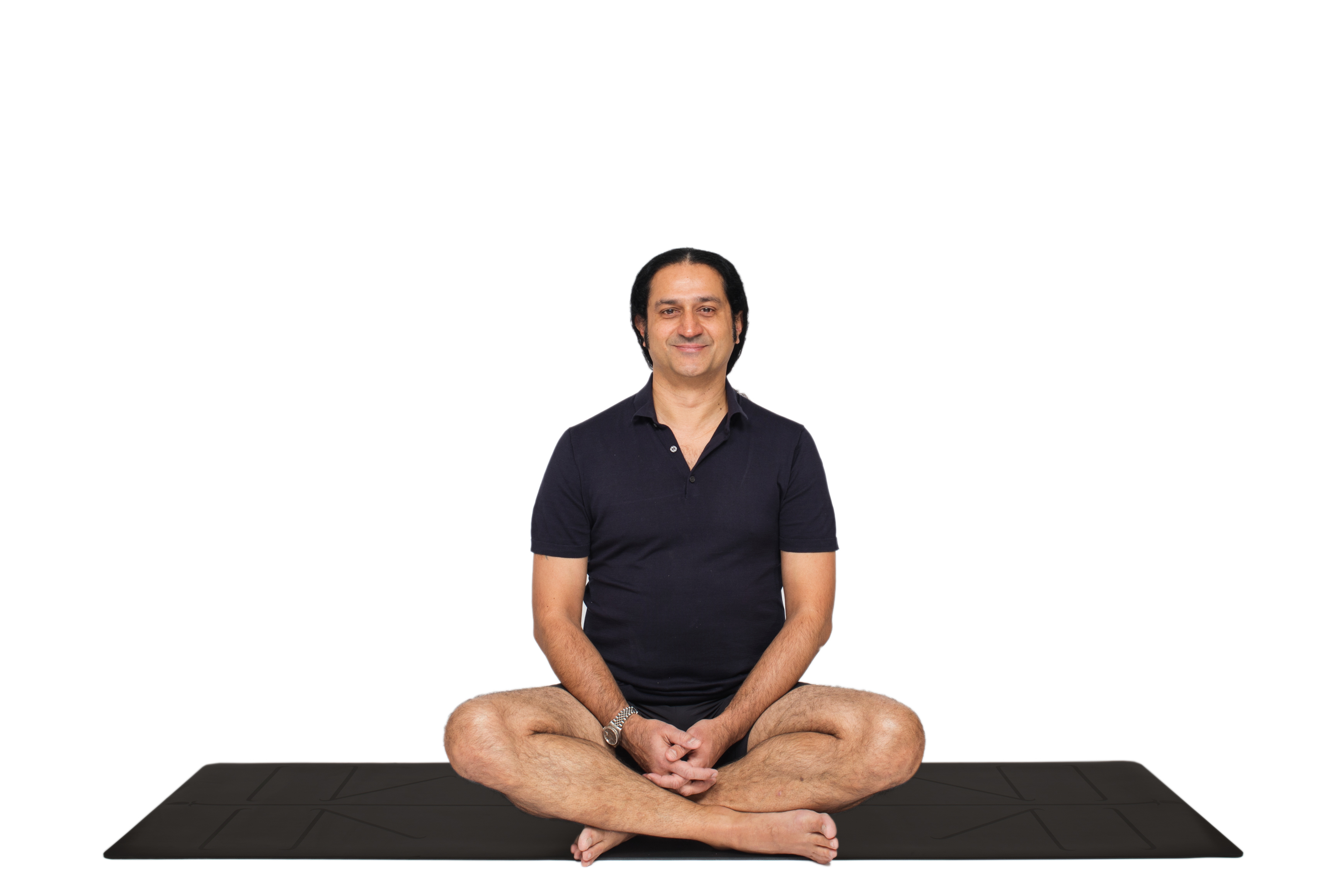

The modern wellness paradigm frequently misinterprets the purpose of forward bending. It treats forward folds as simple, passive hamstring stretches designed purely to achieve superficial flexibility. In the disciplined reality of applied biomechanics and Yoga Psychology, a forward stretch is a sophisticated architectural reorganization of the entire posterior chain.
When a practitioner experiences restriction, pulling sensations in the lower back, or an inability to fold fluidly at the hips during a forward fold, the hamstrings are rarely the sole culprit. The true limitation often resides higher up, within the primary structural stabilizers of the pelvis: the gluteal complex. Understanding how to dynamically lengthen and integrate these tissues is the key to transforming a collapse of posture into an intentional, stabilizing stretch.
The Yogveda 4-Week Rhythm: Week 1 – Forward Bends (Extension)
At Yogveda Yoga Switzerland, our training is systematically organized around the 12 anatomical focus areas of the body. To ensure perfect balance for your nervous system, each anatomical focus area is taught through our signature 4-Week Rhythm.
This training focus marks the absolute foundation of our current cycle: Week 1: Forward Bends (Extension).
The primary nervous system need this week is spine relief and calming. In modern life, constant micro-stressors keep your body’s emergency responses on high alert. Week 1 is specifically designed to give your spine physical relief, reduce lower back pain, and help you truly "arrive" in your body. By combining precise asana alignment with purposeful pranayama, we teach you how to consciously work with your anatomy to quiet a racing mind and clear stored physical tension.
Anatomy of the Glutes: Gluteus Maximus, Medius, and Minimus Functions
To re-establish balance in the posterior chain, we must first map the underlying anatomical blueprint of the glutes. The gluteal complex is comprised of three distinct muscular layers, each playing a critical role in pelvic stabilization, hip movement, and upright posture.
Gluteus Maximus: Balancing Elongation and Postural Activation
The Gluteus Maximus is the largest muscle on the back of the hip. It runs from your pelvic crest and tailbone down to your thigh bone and the IT band. While its main job is to push your leg back and rotate it outward, its role in yoga poses requires a careful balance between stretching and active engagement.
In forward stretches, the Gluteus Maximus must safely transition from being tense to stretching open under control. If it is completely stiff, it locks the pelvis in place, preventing you from bending from the hips and forcing your lower back to take all the strain.
However, flexibility without control is dangerous. The Gluteus Maximus cannot just relax completely or go limp when you bend forward. Intentionally engaging and firming the muscle is absolutely necessary to keep your posture steady. This active engagement protects the lower back, stabilizes the pelvis against uneven pressure, and safely governs your descent. Without this conscious activation, your alignment fails, putting too much stress on your joints and tendons. A safe practice means keeping the muscle firm and active to support your body even while it stretches.
Gluteus Medius and Lateral Pelvic Stabilization
The Gluteus Medius sits directly underneath the Gluteus Maximus on the outer side of your hip. It connects the outer surface of your pelvis to the top of your thigh bone. Its main job is to move your leg out to the side and keep your pelvis steady when you stand on one leg or shift your weight.
During forward stretches, the Gluteus Medius acts as a structural outer anchor. It keeps your thighs tracking in a straight line, preventing your hips from splaying outward or collapsing inward. Remarkably, activating this muscle creates a powerful chain reaction that helps open your chest and shoulders. When the Gluteus Medius stabilizes the pelvis, it provides a solid foundation that allows your spine to lift and expand the upper body freely.
Unfortunately, sitting too much completely deactivates the Gluteus Medius. Spending hours in a chair causes this vital anchor to weaken. When it becomes inactive, your pelvic foundation drops, which immediately ripples upward—causing your lower back to strain, your chest to flatten, and your shoulders to round forward.
Gluteus Minimus and Deep Hip Joint Alignment
The Gluteus Minimus is the smallest and deepest of the three muscles, positioned directly underneath the Medius. It shares similar attachment points, running from the lower ilium to the front of the greater trochanter. Functionally, it works in tandem with the Gluteus Medius to support and internally rotate the hip, while dynamically securing the head of the femur inside the hip socket. In deep forward folds, the Gluteus Minimus provides the structural awareness required to maintain precise joint alignment at the deepest point of hip flexion.
Why Firming Your Glutes Transforms Your Forward Bends
Most people think bending forward is just a passive stretch where you collapse your upper body toward your toes. They let their hips go completely limp, drop their chest, and round their lower back. This passive collapsing is exactly why people get hurt. When the hips go limp, the lower back is forced to take all the strain, and the hamstrings get pulled painfully at the sit bones.
By intentionally keeping your glutes active and firm as you fold, you completely transform the posture in three ways:
1. It Forces You to Bend from the Hips, Not the Back
Think of your pelvis as a steering wheel. If your glutes are completely stiff or totally asleep, that wheel is locked. Your pelvis cannot rotate forward, so your lower back has to round out to let you bend down. When you intentionally firm the glutes, you wake up the hip joint. This allows your pelvis to cleanly roll forward over your thigh bones. The bend safely happens at the hips, keeping your lower back long and pain-free.
2. It Acts as a Safety Signal for Your Nervous System
Your brain has a built-in survival reflex: if you try to stretch a muscle that is completely loose and unsupported, the brain panics. It fears the muscle will tear, so it automatically clamps it shut, making you feel tight and blocked. When you gently squeeze and engage your glutes as you lower into a fold, you send a safety signal to your nervous system. The brain sees that the joint is supported and safe, so it releases its defensive grip. An active, engaged muscle relaxes into a stretch much deeper than a limp one.
3. It Shields Your Lower Back and Tendons
When you fold with limp hips, gravity just pulls your body weight down, putting immense pressure on your lower back discs and hamstring tendons. Keeping your glutes firm creates a solid foundation. It anchors your tailbone and acts like a physical shield, distributing the weight safely across the large muscle bellies instead of overloading your delicate joints and ligaments.
Limp Hips = A rounded back, strained hamstrings, and a panicked nervous system.Firm Hips = A long spine, a deep hip hinge, and a safe, effective stretch.
Gluteal Amnesia: How Sitting Causes Weak Glutes
In modern daily life, the gluteal complex is subjected to chronic neurological down-regulation. The primary cause of this weakness is prolonged positional compression—otherwise known as sitting.
When you sit at a desk for hours, the glutes are placed in a continuous state of passive stretch while simultaneously being compressed by body weight. Over time, this alters the neural pathways between the central nervous system and the muscle fibers, leading to sensory-motor dissociation (often termed "gluteal amnesia"). The brain literally loses its ability to efficiently recruit the glutes.
Additionally, chronic stress causes a habitual tightening of the opposing hip flexors (such as the Psoas Major). Through the laws of reciprocal inhibition, chronically short and hypertonic hip flexors send continuous neurological signals to the glutes to relax and release, leaving them structurally inactive even when you stand or practice asana.
Consequences of Weak Glutes: Lower Back Pain and Hamstring Strains
When the gluteal complex loses its functional strength and neural drive, the human body adapts through painful compensation. The structural collapse manifests across three primary areas:
Target Area | Consequence of Gluteal Weakness |
The Lumbar Spine | Without gluteal support to stabilize the sacrum, the lower back muscles are overworked to keep the torso upright, leading to chronic lumbar spasms and disc compression. |
The Hamstrings | The hamstrings are forced to take over the work of the inactive glutes. This chronic overwork leaves the hamstrings perpetually tight, strained, and prone to micro-tearing at the sit bones. |
The Hip Joints | A weak Gluteus Medius and Minimus allow the femur to shift unsteadily within the socket, causing structural pinching (hip impingement) and lateral stability loss during movement. |
Yoga Anatomy Tips: How to Engage Weak Glutes in Forward Stretches
To rehabilitate weak, inactive glutes, you cannot rely on passive folding. Dropping your torso down by force will only strain the lower back and overstretch the hamstring tendons. Instead, forward stretches must be approached as an active, therapeutic protocol of eccentric elongation and intentional alignment.
Active Eccentric Elongation in Uttanasana and Paschimottanasana
An effective forward stretch requires the glutes to lengthen while under tension. As you move into a forward fold, you must actively resist gravity. Instead of relaxing the back of the body, imagine trying to push the floor away with your feet while lifting your sit bones upward and backward. This action forces the Gluteus Maximus to stretch under control, building structural resilience and unlocking the deep restriction that blocks the hip hinge.
Using Reciprocal Inhibition to Release Tight Glute Muscles
To release a rigid Gluteus Maximus, you must intentionally activate the muscles on the opposite side of the body: the quadriceps and the deep hip flexors. By firmly contracting the fronts of your thighs and pulling your lower abdomen toward your upper thighs as you fold, your nervous system automatically sends a reflex signal to the glutes to release their defensive grip. This allows for a deeper, safer fold without compressing the spine.
Activating the Gluteus Medius and Minimus for Pelvic Stability
To get the Gluteus Medius and Gluteus Minimus to work during a forward stretch, you need to steady the outer sides of your lower body. In a regular standing forward bend, start by making sure your feet are parallel and press down firmly through the outer edges of your heels.
Next, use this simple cue: without actually moving your feet, imagine gently pulling your outer shins away from each other. This hidden action instantly turns on the Gluteus Medius and Minimus. It steadies your pelvis from the sides and safely spreads the pulling force of the stretch into the actual muscles instead of compressing your hip joints.
Because the deep Gluteus Minimus is an abductor muscle—meaning its job is to move the leg away from the center of the body—it has to work even harder when your legs are wide apart. This makes it the ultimate stabilizer in wide-legged forward stretches like Prasarita Padottanasana (wide-legged standing forward fold) and Prasarita Paschimottanasana (wide-legged seated forward bend). Taking the legs wide and engaging the outer hips forces these deep muscles to keep your pelvis completely safe and balanced while you fold.
👉 Yogveda Asana Lesson : Build the physical presence to distinguish between what is real in the body and what is just a feeling.
👉Yogveda Yoga Teacher Training in Bern: Deepen your understanding of Patanjali's philosophy of mind and truth.
Author, Master Shahid Khan


Comments