
Bauddha Darshana: The Science of Dukkha, Nirvana, and the Deconditioning of Human Consciousness
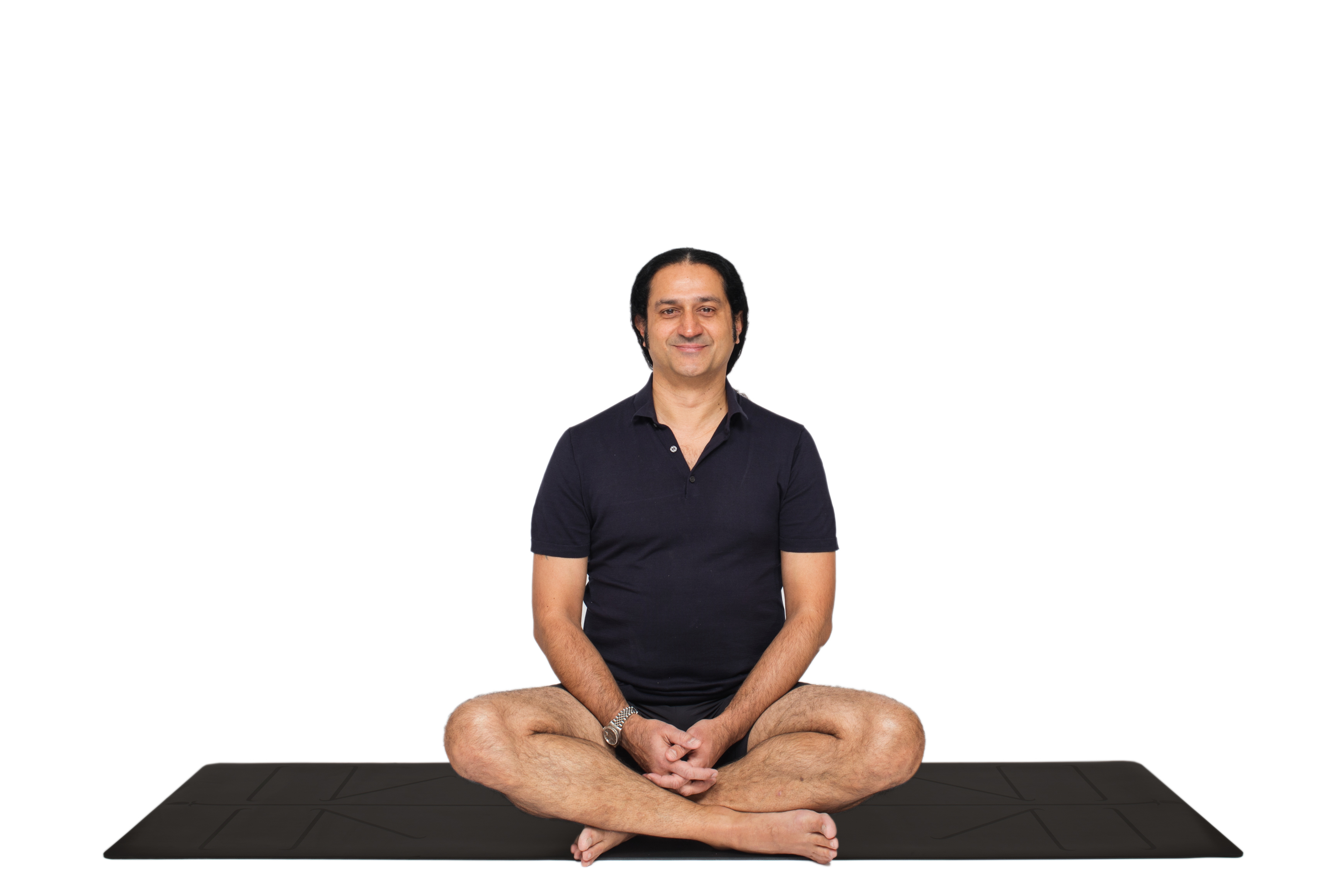

Bauddha Darshana (Buddhist Philosophy) is one of the most clinically precise, logical, and radical systems within classical Indian thought.
Categorized fundamentally as a Nastika Darshana—a heterodox system that explicitly rejects Veda-Pramanya (uncritical scriptural authority), dogmatic rituals, and the metaphysical construct of a static, unchangeable self (Atman)—Bauddha Darshana shifts the focus of human inquiry entirely toward observable cause-and-effect, neuro-cognitive deconditioning, and the complete elimination of existential and somatic friction (Dukkha).
Gautama Buddha's Core Axiom:"Life in the conditioned state is Dukkha (Pain, Stress, Friction). Nirvana (Unconditioned Liberation) is the Ultimate Answer."
In the academic curriculum of Master Shahid Khan’s Yogveda Yoga, Bauddha Darshana is not approached as a devotional religion, but as an empirical science of human consciousness, neuro-endocrine balance, and total freedom from subconscious reactivity.
What is "Buddha"? Understanding the Awakened State
A widespread misconception is that "Buddha" is exclusively the proper name of a single historical individual or a divine entity to be worshiped. In classical philosophy, Buddha is neither a personal name nor a religious deity.
The word Buddha is derived from the Sanskrit and Pali root Budh, which means "to wake up," "to awaken," "to perceive," or "to know."
Buddha ≡ An Awakened State of Unconditioned Consciousness & Biological Freedom
Siddhartha Gautama (Gautama Buddha): The historical master who systematically mapped, achieved, and taught the path to this state.
Buddhatva (Buddha-hood): The realized state where an individual has completely awakened from Avidya (cognitive illusion, subconscious conditioning, and false identification with temporary phenomena).
Universal Realization: Anyone who systematically deconditions the mind, regulates the autonomic nervous system, and sees reality through direct cause-and-effect can realize the Buddha State.
Phase | Cognitive & Biological State | Neurological Process |
1. Avidya | Reactivity, postural bracing & illusion | Bound in subconscious conditioning |
2. Saṁskāra Deconditioning | Mindful realignment & vagal regulation | Active central nervous system retraining |
3. Buddhatva | The awakened state & autonomic equilibrium | Unconditioned biological freedom |
The Central Message: Dukkha and the Absolute Answer of Nirvana
Gautama Buddha’s teaching begins with an unfiltered diagnostic of reality: every aspect of existence governed by ignorance (Avidya) and craving (Taṇhā) is inherently unstable, causing continuous psychological suffering, autonomic tension, and tissue degradation.
1. Dukkha (Life in Conditioned State as Pain)
Dukkha is not merely overt grief or severe injury. It is the pervasive, underlying friction that occurs when consciousness identifies with impermanent physical structures, transient thoughts, and fluctuating emotional states.
2. Nirvana (Extinction of the Three Fires)
Derived from Nir-Vā ("to blow out" or "extinguish"), Nirvana is the absolute answer to Dukkha. It is the total extinction of the three root fires of existence (Triviṣa):
Rāga (Craving / Attachment): Somatically expressed as chronic neuromuscular grasping.
Dveṣa (Aversion / Resistance): Somatically expressed as panic-bracing, defensive muscle guarding, and sympathetic overdrive.
Moha (Delusion / Ignorance): Somatically expressed as sensory-motor amnesia and identification with pain.
Nirvana ≡ Extinction of Rāga, Dveṣa, and Moha ⟹ Unconditioned Autonomic Baseline Peace
Nirvana is not an otherworldly afterlife; it is an accessible, unconditioned state of pure, undisturbed consciousness and vagal parasympathetic equilibrium realized in the present moment.
Foundational Sutras: The Textual Pillars of Bauddha Darshana
Master Shahid Khan integrates the three foundational pillars of Buddhist literature to map the complete deconditioning of mind and body: the Dhammapada, the Heart Sutra, and the Diamond Sutra.
1. The Dhammapada: Laws of Mind, Pain, and Nirvana
The Dhammapada maps the direct cause-and-effect relationship between cognitive conditioning and human suffering.
Sabbe saṅkhārā dukkhā'ti yadā paññāya passatiAtha nibbindati dukkhe esa maggo visuddhiyā(Dhammapada, Verse 278)"All conditioned phenomena are subject to pain and friction (Dukkha). When one sees this with direct wisdom, one turns away from suffering. This is the path to total purification."
2. The Heart Sutra (Prajñāpāramitā Hṛdaya): Form and Emptiness
The Heart Sutra delivers the ultimate non-dual insight, dismantling the false barrier between physical reality (Rūpa) and pure unconditioned potential (Śūnyatā).
Rūpaṁ śūnyatā śūnyataiva rūpam; rūpān na pṛthag śūnyatā śūnyatāyā na pṛthag rūpam"Form is emptiness, emptiness is form; form is not separate from emptiness, emptiness is not separate from form."
By realizing that physical form (Rūpa) and somatic pain have no fixed, independent existence outside of interconnected conditions, consciousness instantly loses its terror of physical limitation.
3. The Diamond Sutra (Vajracchedikā Prajñāpāramitā): Dismantling External Aesthetics
The Diamond Sutra provides the ultimate blade to cut through mental constructs (Saṁskāra) and superficial identifications.
Deconstructing the "32 Marks" (Chapter 26)
In one of the most crucial exchanges in classical philosophy, the Buddha directly challenges Subhuti’s tendency to measure spiritual realization through external physical features:
The Buddha: "What do you think, Subhuti? Can someone visualize the Tathagata by means of the thirty-two physical marks?"Subhuti: "Yes, World-Honored One. We should use the thirty-two marks to visualize the Tathagata."The Buddha: "Subhuti, if you say that you can use the thirty-two marks to visualize the Tathagata, then is a Cakravartin (a worldly monarch) also a Tathagata?"Subhuti: "World-Honored One, as I understand the meaning of what the Buddha has said, one should not visualize the Tathagata by means of the thirty-two marks."
The Buddha then reinforces this radical insight with the famous Four-Line Gatha:
Ye māṁ rūpeṇa cādrākṣur ye māṁ ghoṣeṇa cānvayuḥMithyāprahāṇa-prasṛtā na māṁ drakṣyanti te janāḥ"Whoever sees me by physical form, or seeks me by vocal sound, walks on a false path and cannot perceive the Tathagata."
Master Shahid Khan's Biomechanical & Somatic Critique
In modern fitness and aesthetic-driven yoga culture, practitioners regularly confuse extreme flexibility, aesthetic shapes, or superficial physical performance ("the 32 marks") with genuine physiological health or realization. Master Shahid Khan applies the Buddha's logic directly:
A worldly monarch (Cakravartin) possesses physical prestige, yet remains bound by ego, psychological turmoil, and stress.
Similarly, an athlete or practitioner may demonstrate extreme contortions, yet live in a state of severe autonomic dysregulation, tissue compression, and chronic anxiety.
Tathagatahood (The Awakened State) cannot be evaluated through external aesthetic poses. True realization is an unconditioned internal state of vagal regulation, emotional stability, and pure cognitive freedom.
The Diamond Sutra concludes with the ultimate formula for releasing attachment to conditioned states:
Tārakā timiraṁ dīpo māyā-budbuda-meva caSvapnaṁ ca vidyud-abhraṁ ca evaṁ draṣṭavya saṁskṛtam(Diamond Sutra, Verse 32)"So should you view all conditioned phenomena: like a shooting star, a defect of vision, a flickering lamp, a phantom, a dewdrop, a bubble, a dream, a flash of lightning, a cloud."
The Paradox of Buddha: From Radical Science to Commercial Idolatry
Here lies the greatest paradox in intellectual history: Gautama Buddha dedicated his entire life to teaching that there is no static Buddha, no eternal god to worship, no disembodied savior, and no permanent form to cling to (Anatta and Śūnyatā). He explicitly commanded his followers not to build idols of him, warning that seeking truth through external forms (Rūpa) or physical marks is a fundamental cognitive error.
Yet, a multi-billion-dollar commercial wellness industry has turned the ultimate anti-dogmatic scientist into the very thing he fought to destroy: a static god, a commercial icon, and a consumer commodity.
Buddha Statues in Wellness Spas: The Ultimate Absurdity
Nowhere is this paradox more evident than in modern wellness spas and luxury resorts. A severed stone Buddha head resting beside a heated jacuzzi or decorative sauna is the absolute antithesis of Bauddha Darshana:
Spiritual Bypassing: Soaking in a luxury spa surrounded by Buddha statues does zero work toward regulating your autonomic nervous system or eradicating your Saṁskāra holding patterns. It merely placates the ego with the illusion of peace.
Realizing Buddhatva is not achieved by buying statues or worshipping images. It is an unconditioned internal state of biological balance achieved through direct, empirical practice of biomechanics and neurology.
The Four Noble Truths as a Complete Diagnostic Protocol
In Master Shahid Khan’s Yogveda Yoga, the Four Noble Truths are applied as an exact diagnostic framework spanning consciousness, the neuro-endocrine axis, and somatic mechanics:
Four Noble Truths | Classical Philosophical Meaning | Applied Map of Consciousness & Physiology |
1. Dukkha (Friction/Pain) | Existential suffering, instability, and friction | Psychological anxiety, emotional turmoil, tissue compression, and sympathetic dominance |
2. Samudaya (Origin) | Root cause: ignorance (Avidya) and craving (Taṇhā) | Subconscious mental resistance, emotional attachment, and habitual neuromuscular bracing |
3. Nirodha (Cessation) | Absolute freedom: Nirvana | Dissolution of cognitive reactivity; extinction of the 3 fires (Triviṣa) and return to vagal peace |
4. Magga (The Path) | The Noble Eightfold Path | Systematic re-education of perception, breath control, structural alignment, and focused awareness |
Deconstruction of the Five Aggregates (Pancha Skandha)
To liberate consciousness from identifying with suffering, Bauddha Darshana deconstructs the human organism into five dynamic, impermanent layers (Pancha Skandha):
Rūpa (Physical Form): The anatomical matrix—skeleton, fascial webs, organs, and cells.
Vedanā (Sensory Feeling): Raw neurological signaling (pleasant, painful, or neutral).
Saṃjñā (Perception): Cognitive labeling and mental interpretation of sensory inputs.
Saṃskāra (Subconscious Conditioning): Deeply ingrained mental habits, emotional triggers, and automatic motor-memory stored in the nervous system.
Vijñāna (Core Consciousness): The baseline field of awareness that registers all experience.
Interconnected Cause and Effect: Pratītyasamutpāda
Nothing in human consciousness or physical existence happens in isolation. Pratītyasamutpāda (Dependent Origination) states that every event arises due to a network of connected conditions.
Cause ──(Interconnected Conditions)──► Effect
Anxiety, chronic fatigue, or back pain is never an isolated defect. It is the dependent result of improper respiratory mechanics, chronic sympathetic activation, unexpressed somatic trauma, and distorted cognitive perception working as a continuous loop.
Conclusion and Call to Action
Bauddha Darshana delivers the definitive blueprint for human freedom: Dukkha is the conditioned reality of ignorance, but Nirvana is the undeniable, accessible answer.
By integrating the radical wisdom of the Dhammapada, Heart Sutra, and Diamond Sutra with Master Shahid Khan's applied biomechanics, Yogveda Yoga provides the exact operational tools to cut through illusion, dismantle commercialized spiritual noise, decondition subconscious trauma, and realize the ultimate freedom of an awakened mind.
Nehmen Sie an Yogveda Asana-, Pranayama-Klassen und Yoga-Workshops teil, um zu heilen und mehr über Ihre einzigartige Biologie zu lernen. Experience human movement and consciousness as a measurable, empirical science of transformation.
👉 Yogveda Asana Lesson : Build the physical presence to distinguish between what is real in the body and what is just a feeling.
👉Yogveda Yoga Teacher Training in Bern: Deepen your understanding of Patanjali's philosophy of mind and truth.
Author, Master Shahid Khan
Yogveda Yoga Switzerland 🇨🇭


Comments