
Mastering Yoga Asanas: The Reality of Twists (Spiral Dynamics)
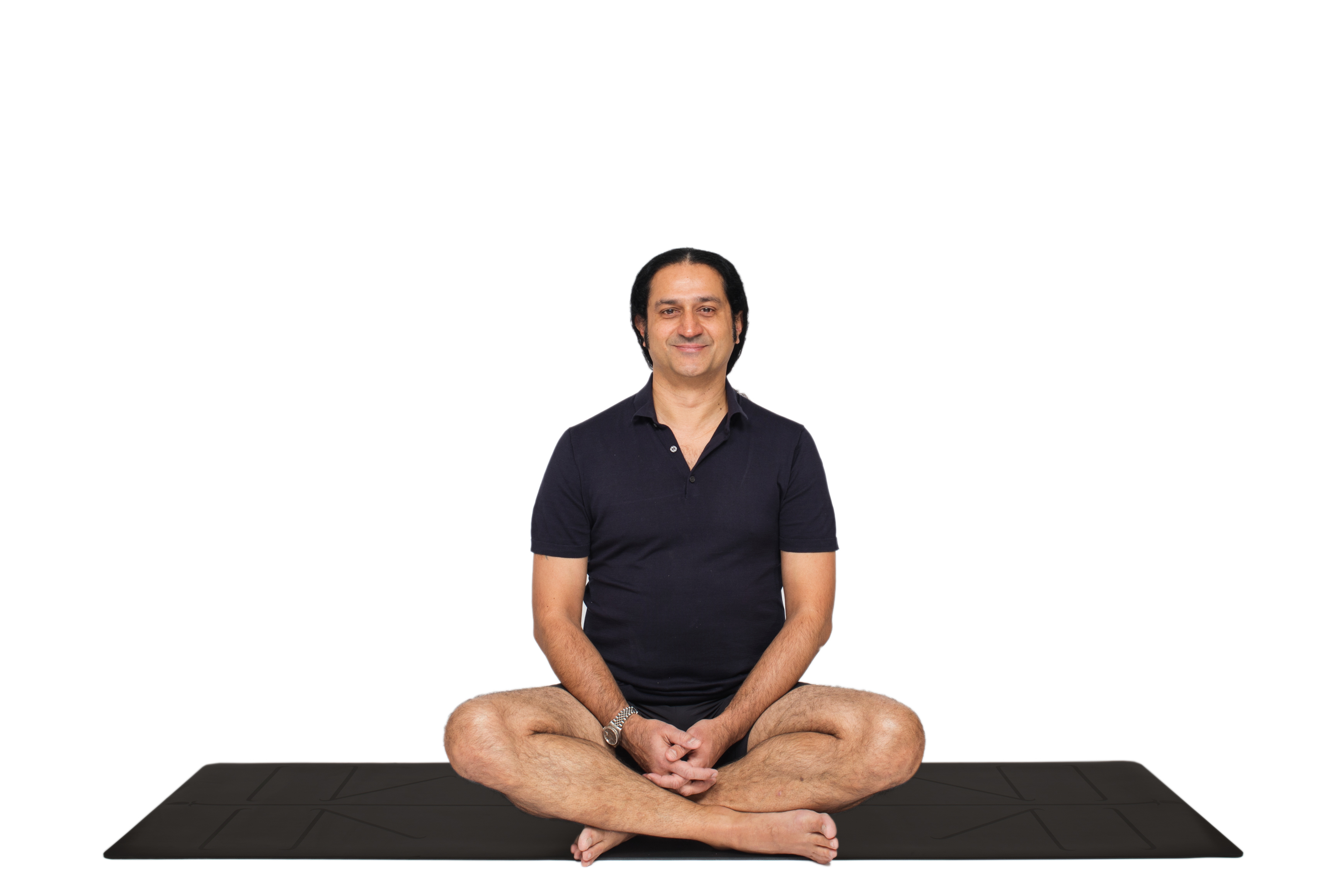

Are you twisting your spine to "wring out negative energy," or are you applying clinical torque to flush your organs and stimulate your Central Nervous System?
The modern wellness industry loves to market yoga twists as a way to "detox your soul." Master Shahid Khan calls this nonsense.
Your liver does not hold onto negative emotions; it holds onto stagnant blood. A spinal rotation is not a spiritual cleanse. It is the precise application of biomechanical torque. If you try to twist a slumped, collapsed spine, you are acting like a mortar and pestle, grinding your spinal discs together and actively inviting a herniation.
In the Yogveda Yoga 4-week cycle, we have systematically prepared the structure. Week 1 lengthened the posterior chain. Week 2 forced the anterior chain to expand. Now that the front and back of the body are equally stretched, the spine is ready for transverse movement.
Week 3 demands Spinal Rotations (Twists).
Spiral Dynamics and the "Dead Heel" Myth
A Yogveda twist does not start in the back; it starts in the feet.
Take standing twists like Parivrtta Trikonasana (Revolved Triangle) or Parivrtta Parsvakonasana (Revolved Side Angle). Most modern yoga classes will tell you to lift your back heel off the floor to get a "deeper" twist. Master Shahid Khan considers this a completely dead, biomechanically wrong posture.
When you lift the heel, you sever the structural connection to the ground. You might get a bigger turn in your shoulders, but you miss the entire point of the asana. In Yogveda, you must press the entire foot firmly into the ground. The rotation must initiate as a kinetic spiral—starting from the foot, transferring through the bones of the legs, locking into the pelvis, and finally rotating the spine. This extreme kinetic twist also physically straightens and realigns the bones of the legs. Axial extension (lifting upward against gravity) must happen simultaneously with this rotation.
The Biological Payload: The CNS and The Internal Flush
When you anchor the foot and apply this strict upward spiral dynamic, you are not just stretching muscles. You are physically squeezing the energy, blood, and lymphatic fluid from the periphery of the body directly toward the spine.
The Nervous System & Chakras: This intense structural twisting compresses the Central Nervous System (CNS). It forces kinetic energy upward through the physical, anatomical spaces of the chakras, driving it all the way to the crown of the head.
The Internal Flush: Simultaneously, the torque creates immense intra-abdominal pressure. We mechanically compress the liver, spleen, kidneys, and intestines, temporarily restricting local blood flow. The moment the twist is released, a massive surge of fresh, oxygen-rich blood forcefully floods back in, flushing out biological stagnation and metabolic waste. This is a hard physiological flush, not a magical cleanse.
The Week 3 Syllabus: Spinal Rotations
Here is the strict structural progression of Twists taught in Yogveda Yoga. Each level builds cumulatively on the last, engineered to safely apply spiral torque from the floor to the crown.
Level 1: The Foundation
Parivrtta Uttanasana (Revolved Forward Extension): Establishing rotational capacity while maintaining a deep stretch in the posterior chain.
Parivrtta Utkatasana (Revolved Chair Pose): Building deep pelvic stability and core rotation against gravity.
Parivrtta Trikonasana (Revolved Triangle Pose): The foundational standing spiral dynamic, maintaining strict ground connection without lifting the back heel.
Parivrtta Parsvakonasana (Revolved Side Angle Pose): Intense rotational torque combined with deep hip flexion and ground leverage.
Parivrtta Swastikasana: Foundational seated rotation, learning to rotate the spine upward from a stabilized, grounded pelvis.
Level 2: The Integration
Parivrtta Uttanasana & Parivrtta Utkatasana: Active rotational torque applied to standing and squatting structures.
Parivrtta Trikonasana & Parivrtta Parsvakonasana: Deepening the standing kinetic spiral and leg bone realignment.
Marichyasana: Utilizing the arm against the knee as a hard mechanical lever to force rotation through the entire spinal column while seated.
Level 3: The Mastery
Parivrtta Uttanasana & Parivrtta Utkatasana: Foundational rotational dynamics.
Parivrtta Trikonasana & Parivrtta Parsvakonasana: Advanced standing spirals demanding absolute structural integrity.
Marichyasana: Deep seated leverage and intense abdominal flushing.
Parivrtta Ardha Chandrasana (Revolved Half Moon Pose): Extreme rotational balance. Defying gravity and maintaining axial extension on a single leg.
Parivrtta Paschimottanasana (Revolved Seated Forward Extension): Extreme mechanical compression of the liver and spleen while laterally extending the spine.
Parivrtta Janu Sirsasana (Revolved Head-to-Knee Pose): Maximum lateral stretching combined with deep internal organ compression and rotational torque.
You cannot wring "bad vibes" out of your spine, but you can absolutely herniate a disc trying. Anchor your heel, engineer your spiral, and let your liver handle the detox. Master your biomechanics with the Yogveda 4-week cycle.
👉 Yogveda Asana Lesson : Build the physical presence to distinguish between what is real in the body and what is just a feeling.
👉Yogveda Yoga Teacher Training in Bern: Deepen your understanding of Patanjali's philosophy of mind and truth.
Author, Master Shahid Khan


Comments