
Mastering Yoga Asanas: Forward Extensions vs. The Forward Fold Myth
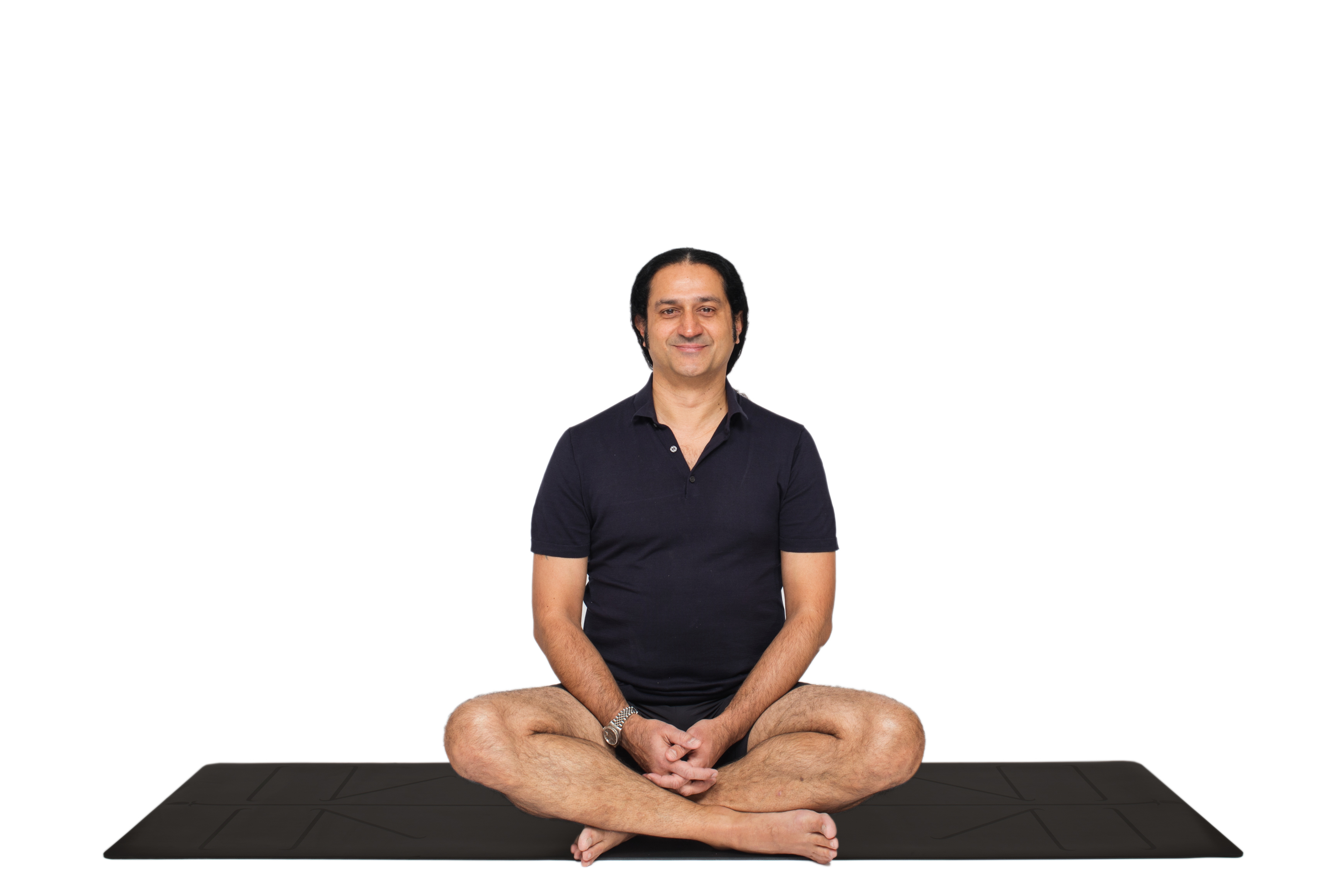

Are you trying to "surrender" into a forward fold, or are you just mechanically crushing your own diaphragm and lumbar spine?
The modern wellness industry calls it a "forward fold" or a "forward bend." Master Shahid Khan calls it a biomechanical disaster. When you simply collapse your torso forward to touch your toes, you are not practicing Yoga. You are actively closing the front of your body, compressing your abdominal organs, paralyzing your diaphragm, and crunching your neck and shoulders. Worse, this passive collapsing creates dangerous micro-tears in the lumbar vertebrae and hamstrings, while artificially dropping your blood pressure to leave you lightheaded. You cannot achieve health through structural collapse.
The ultimate purpose of a Yoga Asana in the Yogveda system is to make the human body gravity neutral. You should not feel the dragging, heavy burden of your own physical mass. To achieve this anti-gravity state, Yogveda Yoga classes operate on a strict 4-week mechanical rotation.
Week 1 is completely dedicated to Forward Extensions.
The Mechanical Rule: You Cannot Lift What is Locked
Why do we start here? Because biomechanically, if the posterior chain (the back body) is locked and shortened, it is physically impossible to lift and open the anterior chain (the front body). You cannot achieve a healthy posture or a deep backbend later in the cycle if your hamstrings and spinal erectors are permanently anchoring you to the floor.
Extension vs. Bending
The terminology is critical. A "bend" implies a structural collapse. A "fold" implies closing the front body. Yogveda demands a Forward Extension.
Even when you are moving forward, you must actively stretch the back and the front body together. You do not passively hang. Your core must act as a hydraulic stabilizer, remaining actively engaged to control the load while pulling you safely into the posture and driving you powerfully back out.
The Week 1 Syllabus: Forward Extensions
Here is the strict structural progression of Forward Extensions taught in Yogveda Yoga. Each level builds cumulatively on the last, engineered to make the body gravity neutral.
Level 1: The Foundation
Uttanasana 1: The fundamental standing extension, learning to hinge purely from the pelvis without rounding the lumbar spine.
Parsvottanasana (Intense Side Stretch) + Variations: Isolating the hamstrings and squaring the hips to correct asymmetrical pelvic imbalances.
Adho Mukha Svanasana (Downward-Facing Dog): The ultimate full-body extension to decompress the spine and establish active core engagement.
Paschimottanasana (Seated Forward Extension): The master seated posture. Extending the entire posterior chain while keeping the sternum lifted and the front body completely open.
Level 2: The Integration
Uttanasana 1, 2, 3: The fundamental standing extension, learning to hinge purely from the pelvis without rounding the lumbar spine.
Parsvottanasana (Intense Side Stretch) + Variations: Isolating the hamstrings and squaring the hips to correct asymmetrical pelvic imbalances.
Adho Mukha Svanasana (Downward-Facing Dog): The ultimate full-body extension to decompress the spine.
Paschimottanasana (Seated Forward Extension): Extending the entire posterior chain while keeping the sternum lifted.
Prasarita Padangusthasana (Wide-Legged Forward Extension): Introducing adductor flexibility while maintaining a gravity-neutral, extended spine.
Ubhaya Padangusthasana (Both Big Toe Pose): Defying gravity. Balancing on the sitting bones while actively extending the legs and spine upwards and forwards simultaneously.
Navasana (Boat Pose): Pure core integration. Demanding intense abdominal engagement to hold the structural V-shape against gravity.
Janu Sirsasana (Head-to-Knee Forward Extension): Unilateral hamstring extension while stabilizing the opposite hip joint.
Level 3: The Mastery
Uttanasana 1, 2, 3: The fundamental standing extension, hinging purely from the pelvis.
Parsvottanasana (Intense Side Stretch) + Variations: Isolating the hamstrings and squaring the hips.
Adho Mukha Svanasana (Downward-Facing Dog): Full-body extension to decompress the spine.
Paschimottanasana (Seated Forward Extension): Extending the entire posterior chain.
Prasarita Padangusthasana (Wide-Legged Forward Extension): Adductor flexibility with an extended spine.
Upavistha Konasana (Wide-Angle Seated Forward Extension): Extreme adductor and pelvic floor extension without sacrificing the lift of the chest.
Krounchasana (Heron Pose): Intense, asymmetrical posterior extension demanding perfect balance and structural alignment.
Ubhaya Padangusthasana (Both Big Toe Pose): Defying gravity, balancing on the sitting bones.
Hanumanasana (Monkey Pose / Front Splits): The ultimate test of extreme sagittal extension, demanding total opening of the front body (hip flexors) and back body (hamstrings) at the exact same time.
Navasana (Boat Pose): Pure core integration against gravity.
Janu Sirsasana (Head-to-Knee Forward Extension): Unilateral hamstring extension.
Stop collapsing into your joints. Start extending your structure. Master your biomechanics with the Yogveda 4-week cycle.
👉 Yogveda Asana Lesson : Build the physical presence to distinguish between what is real in the body and what is just a feeling.
👉Yogveda Yoga Teacher Training in Bern: Deepen your understanding of Patanjali's philosophy of mind and truth.
Author, Master Shahid Khan


Comments