
Yoga Darshana: The Science of Consciousness, Patanjali's Sutras, and Ultimate Liberation (Kaivalya)
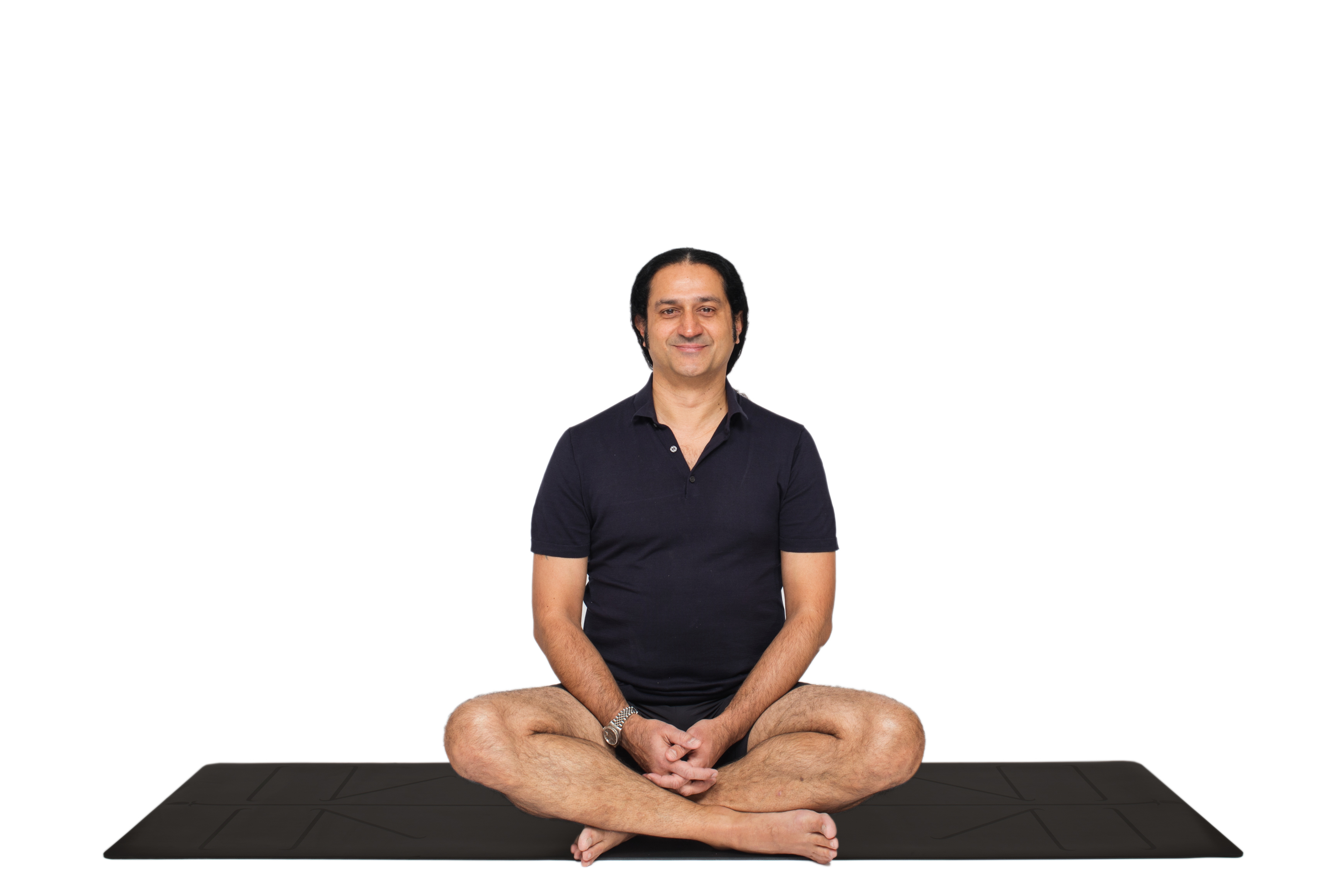

In the scientific framework of Master Shahid Khan’s Yogveda Yoga, Yoga Darshana is an exhaustive psychological, neurological, and biological blueprint for mastering human consciousness. Derived directly from the foundational Yoga Sutras of Patanjali, this classical science extends far beyond physical movement or posture.
While physical postures (Asana) and breath mechanics (Pranayama) serve as exact physiological entry points to regulate the nervous system, they represent only two limbs of an integrated eight-limbed protocol. Master Shahid Khan’s core teachings draw directly from Patanjali to address the complete human organism—using body and breath as structural tools to execute the total cessation of mental fluctuations (Vrittis), eradicate internal suffering (Kleshas), and achieve ultimate liberation (Kaivalya). If Samkhya Darshana provides the theoretical physics of existence—explaining how consciousness (Purusha) becomes entangled in physical matter (Prakriti)—its practical twin, Yoga Darshana, provides the action plan.
What is Yoga Darshana?
Sage Patanjali formulated Yoga Darshana in the Yoga Sutras as one of the six orthodox systems of classical Indian science. The word Yoga derives from the Sanskrit root Yuj, meaning "to join," "to yoke," or "to integrate."
While Samkhya provides the cosmological analysis explaining why matter and consciousness interact, Yoga Darshana provides the empirical methodology showing how to master that interaction. It uses physical postures (Asana), breath mechanics (Pranayama), and cognitive focus (Samyama) to halt internal mental noise and return human biology to its state of uncorrupted equilibrium (Sattva).
Patanjali’s Definition of Yoga: Yogas Chitta Vritti Nirodha
Sage Patanjali defines the primary objective of Yoga Darshana in the second sutra of Chapter 1: Yogas Chitta-Vritti-Nirodha
In plain language: Yoga is the conscious cessation and complete mastery of the fluctuations of the mind.
To understand this foundational law academically, we break down its three core components:
1. Chitta (The Mind Field)
Chitta is the total internal cognitive field (Antahkarana). In its natural, undisturbed state, it is pure, silent awareness. As codified in Samkhya-Yoga psychology, it operates through three functional layers:
Manas (Central Signal Processor): The sensory-motor processor that receives raw inputs from the external senses and executes motor commands.
Ahamkara (Ego / Identity Boundary): The principle of individuation that filters information through self-preservation and personal identity.
Buddhi (Higher Intellect): The faculty of discernment, judgment, memory retention, and deep structural awareness.
2. Vritti (Thoughts Arising from Vibration)
A Vritti is a thought, memory, or perception that comes about by a vibration (Spanda) in the quiet field of consciousness. Just as a wind gust creates ripples on a still lake, a Vritti is a wave that disturbs the inherent stillness of Chitta. Unregulated Vrittis pull awareness into constant mental turbulence, generating neurological fatigue and physical tension across body tissues.
3. Nirodha (Cessation and Mastery)
Nirodha is not gentle relaxation, passive calming, or hypnotic suppression. Derived from the Sanskrit root rudh (meaning "to restrain," "to lock," or "to halt"), Nirodha means the intentional restraint, total structural cessation, and complete mastery of these mental vibrations, returning the mind field to its naturally quiet, transparent state.
What is Kaivalya? (Ultimate Liberation)
In classical Yoga Darshana, Kaivalya is the ultimate goal. It translates to "absolute independence," "isolation," or "liberation."
When Chitta is constantly agitated by vibrating thoughts, stress, or emotional reactivity, pure consciousness (Purusha) becomes trapped in every physical and mental fluctuation of nature (Prakriti). Kaivalya is the state where this false identification is permanently severed. The practitioner realizes that Purusha is the immutable, unattached observer behind the mind-body complex, achieving total freedom from physical decay and mental suffering.
The 4 Chapters (Padas) of the Yoga Sutras Explained
Sage Patanjali organizes the Yoga Sutras into four distinct chapters (Padas), mapping the complete progression from cognitive disturbance to ultimate freedom.
Chapter 1: Samadhi Pada (The Chapter on Deep Absorption)
This opening chapter defines the ultimate state of mental quietness—Samadhi—and outlines the exact stages, tools, and spiritual mechanics needed to achieve it.
1. The 5 Vrittis (Types of Thoughts): Patanjali categorizes all mental vibrations into five distinct Vrittis (YS 1.5–1.11):
Pramana (Valid Knowledge): Accurate cognition gathered through direct perception (Pratyaksha), logical inference (Anumana), or verified testimony (Shabda).
Viparyaya (Misconception): False knowledge or distorted perception that does not correspond to actual reality.
Vikalpa (Imagination / Conceptualization): Thought constructs based purely on words with no underlying physical reality.
Nidra (Dreamless Sleep): The mental modification supported by the state of non-existence of conscious thoughts.
Smriti (Memory): The retention and recall of previously experienced objects without distortion.
2. The Dual Pillars (Abhyasa and Vairagya): Executing Nirodha over these five types of Vrittis requires two balanced practices (YS 1.12):
Abhyasa (Dedicated Practice): Persistent, uninterrupted effort applied over a long period with devotion and attention (YS 1.14).
Vairagya (Non-Attachment): The conscious mastery of desirelessness toward perceived or scriptural objects (YS 1.15).
3. Ishvara and the Primordial Cosmic Vibration of OM (Pranava): Patanjali introduces Ishvara not as an anthropomorphic deity, but as a unique, uncorrupted state of pure consciousness (Purusha-vishesha) that remains untouched by afflictions (Kleshas), actions (Karma), or latent impressions (YS 1.24).
The Cosmic Vibration (Pranava): Patanjali states that OM is the direct expression of Ishvara ($\text{Tasya vachakah pranavah}$, YS 1.27). OM is not a human vocal construct; it is the primordial cosmic vibration (Shabda / Spanda) that triggers the initial perturbation, structuring, and continuous expansion of the universe.
Overcoming Obstacles: Meditating upon and resonating with OM aligns human biology with this primordial frequency, quieting the nervous system and dissolving the nine structural obstacles (Antarayas, YS 1.30)—including disease (Vyadhi), mental inertia (Styana), doubt (Samshaya), and physical instability.
4. The Stages of Samadhi (Absorption): Patanjali maps Samadhi as a progressive deepening of cognitive focus:
Samprajnata Samadhi (Cognitive Absorption): Absorption using an object of focus, evolving through four distinct stages (YS 1.17): Vitarka (analytical focus on gross matter), Vichara (subtle reflection on subtle cause and space), Ananda (bliss arising as friction dissolves), and Asmita (pure self-awareness).
Asamprajnata or Nirbija Samadhi (Seedless Absorption): The highest state of absorption where all mental modifications dissolve. Latent impressions (Samskaras) are burned away, leaving unattached, pure consciousness (YS 1.51).
Chapter 2: Sadhana Pada (The Chapter on Practice and Method)
Written for individuals whose mind fields are too agitated by mental waves for immediate meditation, this chapter details practical daily disciplines to prepare the body and mind.
1. Kriya Yoga (The Action Plan of Yoga): Patanjali outlines a three-part practical protocol in Sutra 2.1 Tapas-svadhyayesvarapranidhanani kriya-yogah:
Tapas (Intense Practice / Friction): The intense, disciplined practice that generates physical and mental heat, burning away impurities (Tamas and Rajas) to refine physical tissues and nervous system tone.
Svadhyaya (Self-Study starting with the Kleshas): Direct, systematic self-inquiry that begins by observing the surface patterns of emotional reactivity and the five Kleshas, systematically moving deeper to investigate the true nature of the observer (Purusha).
Ishvarapranidhana (Discovery of the Inner Divine Consciousness): The technique of discovering the uncorrupted divine spark of consciousness (Ishvara) residing within the core of human awareness and surrendering the ego-driven self (Ahamkara) to its higher intelligence.
2. The 5 Kleshas (The Root Afflictions of Suffering): Patanjali identifies five root afflictions that cause human distress (YS 2.3):
Avidya (Ignorance): The foundational trap—mistaking the non-eternal for the eternal, the impure for the pure, the painful for the pleasurable, and the non-Self for the Self (YS 2.5).
Asmita (Egoism): The false identification of the power of the seer (Purusha) with the instrument of seeing (Buddhi/mind) (YS 2.6).
Raga (Attachment): The unconscious craving resting on remembered pleasure (YS 2.7).
Dvesha (Aversion): Resistance and repulsion resting on remembered pain (YS 2.8).
Abhinivesha (Clinging to Life / Fear of Death): The instinctual fear of physical decay and mortality flowing by its own potency even in the learned (YS 2.9).
3. The First 5 Limbs of Ashtanga Yoga: To eliminate these Kleshas, Sadhana Pada introduces the external limbs of the Eight-Limbed Path (Ashtanga Yoga): Yama, Niyama, Asana, Pranayama, and Pratyahara.
Chapter 3: Vibhuti Pada (The Chapter on Internal Focus and Mastery)
This chapter covers the advanced internal stages of Yoga and the extraordinary physiological and mental capabilities (Vibhuti or Siddhis) that emerge from deep mental control.
1. Samyama (Integrated Internal Focus): When Dharana (concentration), Dhyana (meditation), and Samadhi (absorption) are focused simultaneously on a single target, the practice is called Samyama (YS 3.4).
Crucial Distinction — Samadhi is NOT Kaivalya: It is vital to understand that Samadhi is not Kaivalya. Samadhi is an advanced state of deep mental concentration and absorption where the mind becomes still around an object. Kaivalya, however, is the final, permanent state of absolute liberation where consciousness (Purusha) is forever freed from material existence (Prakriti). Samadhi is the master tool; Kaivalya is the ultimate outcome.
2. Extraordinary Mastery (Siddhis): Through Samyama, a practitioner gains deep intuitive understanding of physical mechanics, biological systems, and natural forces (YS 3.29–3.38). Patanjali explicitly warns that these internal abilities (Siddhis) are merely secondary side effects that halt progress toward ultimate liberation (Kaivalya, YS 3.37).
Chapter 4: Kaivalya Pada (The Chapter on Absolute Freedom)
This final chapter explains how the mind-body complex dissolves its subconscious karmic seeds, ending all suffering and achieving permanent liberation.
1. Samskaras and Karma (Subconscious Impressions): Every action, thought, and mental vibration leaves a subtle impression (Samskara) in the subconscious mind, forming habit patterns (Vasanas) (YS 4.8–4.11).
2. The Mind as a Material Instrument: Patanjali proves that the mind (Chitta) is not self-luminous or conscious on its own (YS 4.19). It is an un-conscious material instrument (Prakriti) that acts like a mirror, appearing conscious only when reflecting Purusha.
3. Dharma Megha Samadhi (The Cloud of Virtue / Clarity): Prior to final liberation, the practitioner enters Dharma Megha Samadhi (YS 4.29). An unbroken stream of discriminative clarity (Viveka-khyati) neutralizes all remaining seeds of karma and the five Kleshas (YS 4.30).
4. Dissolution of the Gunas and Final Kaivalya: With all Kleshas eliminated, the three constituent forces of nature (Sattva, Rajas, Tamas) settle into permanent, undisturbed equilibrium (YS 4.34). The unattached observer (Purusha) rests permanently in its true nature—completely free from physical pain, mental noise, and structural decay. This state of absolute freedom is Kaivalya.
Ashtanga Yoga: The 8-Limbed Pathway
To systematically transition the human organism from external noise to internal liberation, Sage Patanjali codifies Ashtanga Yoga (The 8-Limbed Path, YS 2.29):
Yama (Social Ethics): Ahimsa, Satya, Asteya, Brahmacharya, Aparigraha (YS 2.30).
Niyama (Personal Disciplines): Saucha, Santosha, Tapas, Svadhyaya, Ishvarapranidhana (YS 2.32).
Asana (Physical Posture): Defined in Sutra 2.46 as $\text{Sthiram Sukham Asanam}$—a posture providing structural stability (Sthira) and low-entropy ease (Sukha).
Pranayama (Breath Control): Defined in Sutra 2.49 as conscious regulation and holding ($\text{gati-vichheda}$) of inhalation (shvasa) and exhalation (prashvasa), making breath long (dirgha) and subtle (sukshma) (YS 2.50).
Pratyahara (Sensory Withdrawal): Drawing sensory faculties (indriyas) inward, detaching them from external objects (YS 2.54).
Dharana (Concentration): Binding cognitive focus (Chitta) to a single internal point (YS 3.1).
Dhyana (Meditation): Unbroken, continuous flow of awareness (YS 3.2).
Samadhi (Absolute Integration): Complete cognitive absorption where observer and object merge (YS 3.3).
Yoga and Ayurveda: Sister Sciences in Action
Neither Yoga nor Ayurveda operates in isolation; both use Samkhya Darshana as their foundational science:
Samkhya serves as the theoretical science (mapping the 25 Tattvas and material creation).
Ayurveda serves as the biological medical science (balancing the 3 Doshas—Vata, Pitta, Kapha—within physical tissues).
Yoga serves as the psychological and neurological science (executing Nirodha over mental Vrittis and liberating consciousness).
Together, they form a complete science of human health and consciousness.
Applying Yoga Darshana in Master Shahid Khan's Applied Biomechanics
Because Master Shahid Khan's core teachings derive directly from the Yoga Sutras of Patanjali, Patanjali’s principles are applied with clinical precision in Yogveda Yoga:
1. Re-engineering Sthira Sukham Asanam
Skeletal joints are aligned to neutralize harmful gravitational loads, decompress the spine, and eliminate unnecessary muscular tension.
2. Releasing Kleshas from Stiff Tissues
Physical stiffness across fascial networks is the biological expression of Dvesha (resistance) and Abhinivesha (fear). Combining Dharana with Tapas breaks down dense fascial adhesions.
3. Neurological Direction via Dharana
By training single-pointed concentration (Dharana) during movement, the practitioner prevents the nervous system from falling into habituated stress patterns (Vrittis).
Join Yogveda Asana, Pranayama Classes and Yoga Workshops to Cure and Learn More
Transforming your health requires moving beyond superficial exercise routines. To repair your body and achieve complete mental clarity, you must train according to the scientific laws of Yoga Darshana.
By using Master Shahid Khan's applied biomechanics, we integrate Patanjali’s classical yoga science with modern biophysics, kinesiology, and neurology. We recalibrate internal pressure dynamics, restore nervous system equilibrium, and free your body from chronic pain and stress.
Join Yogveda Asana, Pranayama classes and Yoga Workshops to cure and learn more about your unique biology. Stop leaving your health to chance. Train with anatomical accuracy, master the science of Yoga Darshana, and live longer.
👉 Yogveda Asana Lesson : Build the physical presence to distinguish between what is real in the body and what is just a feeling.
👉Yogveda Yoga Teacher Training in Bern: Deepen your understanding of Patanjali's philosophy of mind and truth.
Author, Master Shahid Khan
Yogveda Yoga Switzerland 🇨🇭


Comments