
What is Ujjayi Pranayama? The Scientific Biomechanics of the Victorious Breath.

From a Conqueror to a Hissing Sound Effect
In the ancient Sanskrit texts, Ujjayi translates directly to the "Victorious Breath." It is the breath of a conqueror—a practitioner who has achieved absolute mastery over their physical architecture and conquered the chaotic fluctuations of their own mind.
But walk into almost any fast-paced, modern "Vinyasa Flow" class today, and you will witness the degradation of this ancient science. Instructors tell students to aggressively constrict their throats and make a loud, raspy noise to "build heat" while they jump haphazardly from one misaligned posture to the next.
Let us be clinically honest: Making a loud, hissing noise in your throat while your spine is collapsed and your heart rate is spiking is not Victorious. It is hyperventilation with sound effects.
The Architecture of the Three Motors of Breath
To truly understand Ujjayi, you must understand that the human body has three distinct mechanical "motors" to drive the breath. The modern wellness industry lumps them all together. Master Shahid Khan strictly isolates them:
The Nose Motor: Highly stressed, anxious people unconsciously breathe shallowly and entirely from the nose. However, in clinical Pranayama, the nose motor is isolated specifically for purification, such as Kapalbhati, which acts as an aggressive pump to clean the sinuses.
The Throat Motor: This is the pressure valve, the engine used for Ujjayi and Sheetali Pranayama.
The Diaphragm Motor: The ultimate powerhouse of the respiratory system, used for deep architectural breathing and powerful techniques like Bhastrika.
The Clinical Reality: Ujjayi Uses the Throat Motor
True Ujjayi Pranayama has absolutely nothing to do with intentionally making a loud noise for the person next to you. The sound is merely a consequence of shifting the mechanical motor of the breath to the throat.
Think of the physics of smoking a cigarette or sucking a thick liquid through a tight straw. You do not use your chest for this; you create a powerful vacuum using strictly the muscles of your throat.
Anatomically, Ujjayi involves a highly controlled, partial closure of the glottis (the valve at the top of your windpipe). By narrowing the airway, you create a physiological back-pressure. This resistance slows the air to a microscopic crawl, forces the diaphragm to work twice as hard against the internal friction, and forces the deepest, dormant alveoli (air sacs) to finally open.
The Danger of Collapsed Ujjayi: Suffocating the Brain
Here is the biomechanical disaster of modern yoga: If you attempt to use the throat motor while your chest is collapsed, your shoulders are rounded, or you are sitting in the fake "cross-legged" slump, you are actively destroying your nervous system.
When you constrict your throat in a collapsed posture, your diaphragm cannot push down to pull the air in. Because the mechanical engine is trapped, the brain registers the constricted throat not as "control," but as choking. Instead of calming the mind, a collapsed Ujjayi breath violently triggers the sympathetic nervous system. Your brain panics, and your anxiety skyrockets.
The Clinical Execution: How to Practice Yogveda Ujjayi
Once your physical fortress is built, Master Khan teaches the true, clinical application of Ujjayi to hack the nervous system. Here is the precise execution:
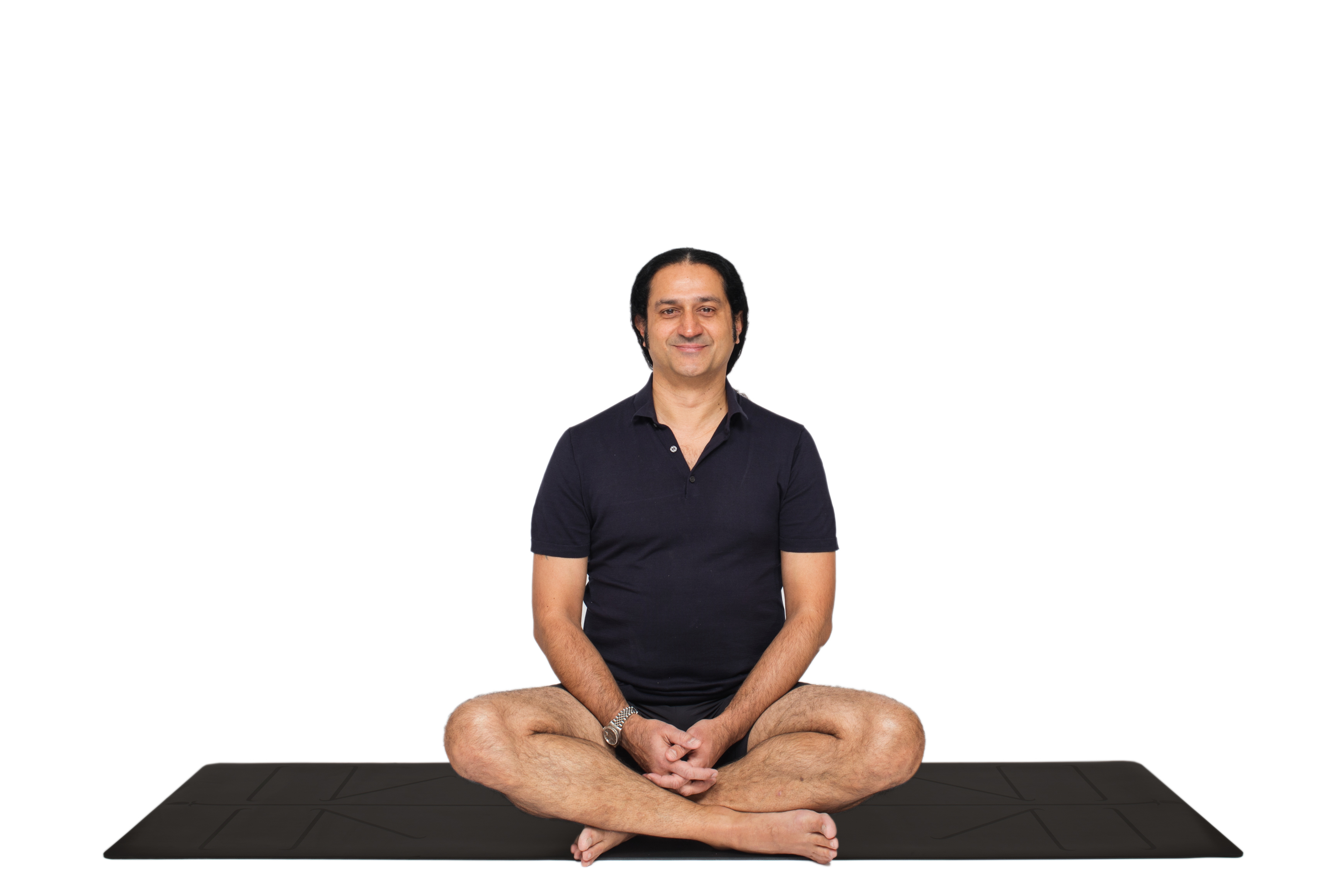
The Architecture: Swastikasana
Sit in Swastikasana (not a fake cross-legged slump). Your abdomen must be completely open and relaxed, with your shoulders locked back and down.
The Resistance: Engaging the Throat Motor
Engage the throat motor. Inhale deeply and slowly through both nostrils while slightly constricting the glottis.
The Fullness: Antar Kumbhaka
Hold the oxygen in your lungs for exactly 5 seconds.
The Neurological Valve: Left Nostril Exhalation
Now, close your right nostril. Exhale entirely through the left nostril. Why the left? The left nostril is neurologically wired to the parasympathetic system (cooling/lunar energy). By exhaling through the left, you instantly kill off any overactive sympathetic (stress) energy in the body.
The Void: The Absolute Emptiness
After exhaling completely, hold your breath (with lungs empty) for another 5 seconds. Then, continue the cycle.
The Master's Warning
Do NOT do this if you are a beginner. If you attempt forced breath retention (Kumbhaka) in a weak, collapsed body, you will damage your nervous system and induce more panic. Do not play games with your respiratory biomechanics. Go to a legitimate yoga school and learn from a highly qualified teacher. Or, if possible, come to Yogveda Yoga, where we fix your architecture before we let you control your breath.
Author Master Shahid Khan


Comments