
What is Nadi Shodhana Pranayama? The Clinical Calibration of the Nervous System.

The Wellness Illusion of "Alternate Nostril Breathing"
Watch the end of a typical "McYoga" class. Students slump forward with collapsed spines, haphazardly pinch their noses, and breathe heavily while the instructor calls it a "relaxing cool-down."
Let us be clinically honest: Nadi Shodhana is not a fluffy relaxation trick. Mechanically blocking your airways while your chest is collapsed does not calm you down—it suffocates your Vagus Nerve. True Nadi Shodhana is a highly precise, neurological control instrument. It is the surgical calibration of your brain hemispheres and your autonomic nervous system.
The Anatomy of Control: The Autonomic Nervous System (ANS)
To master Nadi Shodhana, you must understand your Autonomic Nervous System (ANS). This is your body's unconscious autopilot, divided into two opposing survival mechanisms:
The Sympathetic Nervous System (The Gas Pedal): This is your "fight-or-flight" mode. It spikes your heart rate, dumps cortisol, and prepares the body for stress. In yoga, this is Pingala Nadi, directly hardwired to your right nostril and left brain hemisphere.
The Parasympathetic Nervous System (The Brake Pedal): This is your "rest-and-digest" mode. It lowers blood pressure, slows the heart, and repairs cells. This is Ida Nadi, directly hardwired to your left nostril and right brain hemisphere.
In the modern world, most people are chronically stuck in sympathetic (right-side) survival mode. The system is burning out. Nadi Shodhana is the mechanical override. By isolating the airflow through each nostril, you force absolute, mechanical balance (homeostasis) between these two extreme systems.
The Architecture: The Hand as a Mechanical Valve
The hand position is not a symbolic gesture; it is an anatomical tool. In the Yogveda system, the thumb and ring finger act as precise calipers to control the airflow.
The Golden Rule: There is zero pressure here. You do not forcefully pinch the nose shut. The fingers rest like a feather on the cartilage just above the nostril flare to microscopically throttle the airflow.
The Clinical Execution: The Yogveda Standard
To perform this neurological calibration, your physical architecture must be flawless.
Locked Swastikasana
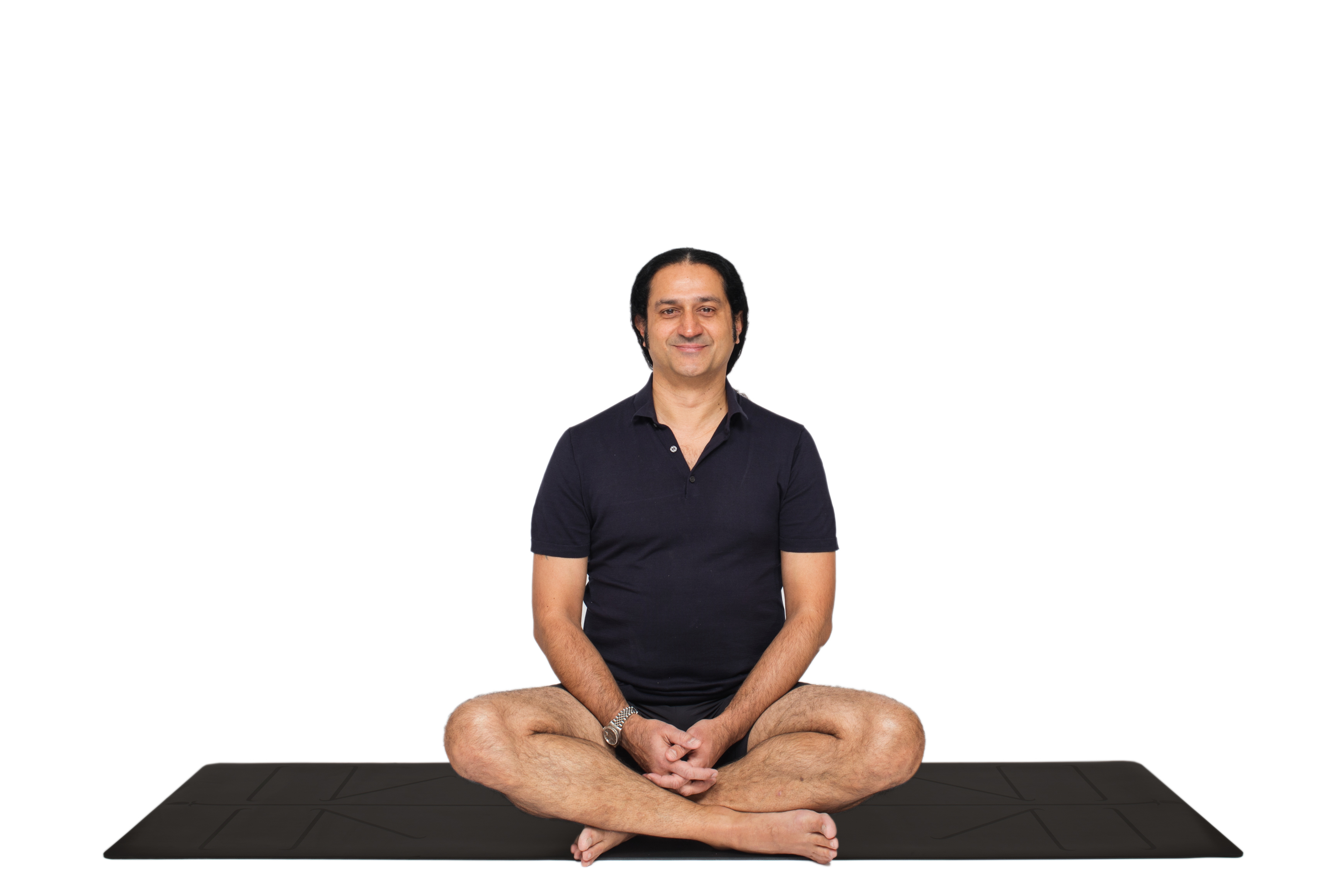
Sit in perfect Swastikasana. The spine is a perfectly straight antenna. If you drop your head down even one centimeter to reach your hand, you block the energy flow. Bring the hand to the face, never the face to the hand. The chest and shoulders remain absolutely motionless.
The Calibration Cycle with Kumbhaka
The breath in Nadi Shodhana must be entirely silent and invisible. The true neurological power of this practice lies in the absolute internal control of the breath retentions (Kumbhaka) without physically pinching the nose.
Gently close the right nostril with the thumb. Inhale slowly and silently through the left nostril.
Hold the inhaled breath for 5 seconds (Antar Kumbhaka). (Do not pinch the nose with your fingers; the hold is internal).
Open the right nostril and exhale slowly through the right side.
Hold the breath out with empty lungs for 5 seconds (Bahya Kumbhaka).
Inhale through the right nostril.
Hold the inhaled breath for 5 seconds (Antar Kumbhaka).
Open the left nostril and exhale slowly through the left side.
Hold the breath out with empty lungs for 5 seconds (Bahya Kumbhaka). (This constitutes one full clinical cycle).
The Master's Warning
Nadi Shodhana requires absolute subtlety. Do NOT attempt these internal breath retentions (Kumbhaka) if you are a beginner. This clinical science is not for casual "YouTube practitioners" or anyone sitting in a collapsed, "home-office style" slump. If you attempt breath retention in a weak, caved-in body, you will actively harm your nervous system and induce panic. If you are gasping for air or if your breath is making a scratching sound, you have exceeded your capacity. Come to Yogveda Yoga to learn the true science of neurological calibration before you misdirect your system.
Author Master Shahid Khan


Comments