
The Katha Upanishad: The Boy Who Met Death
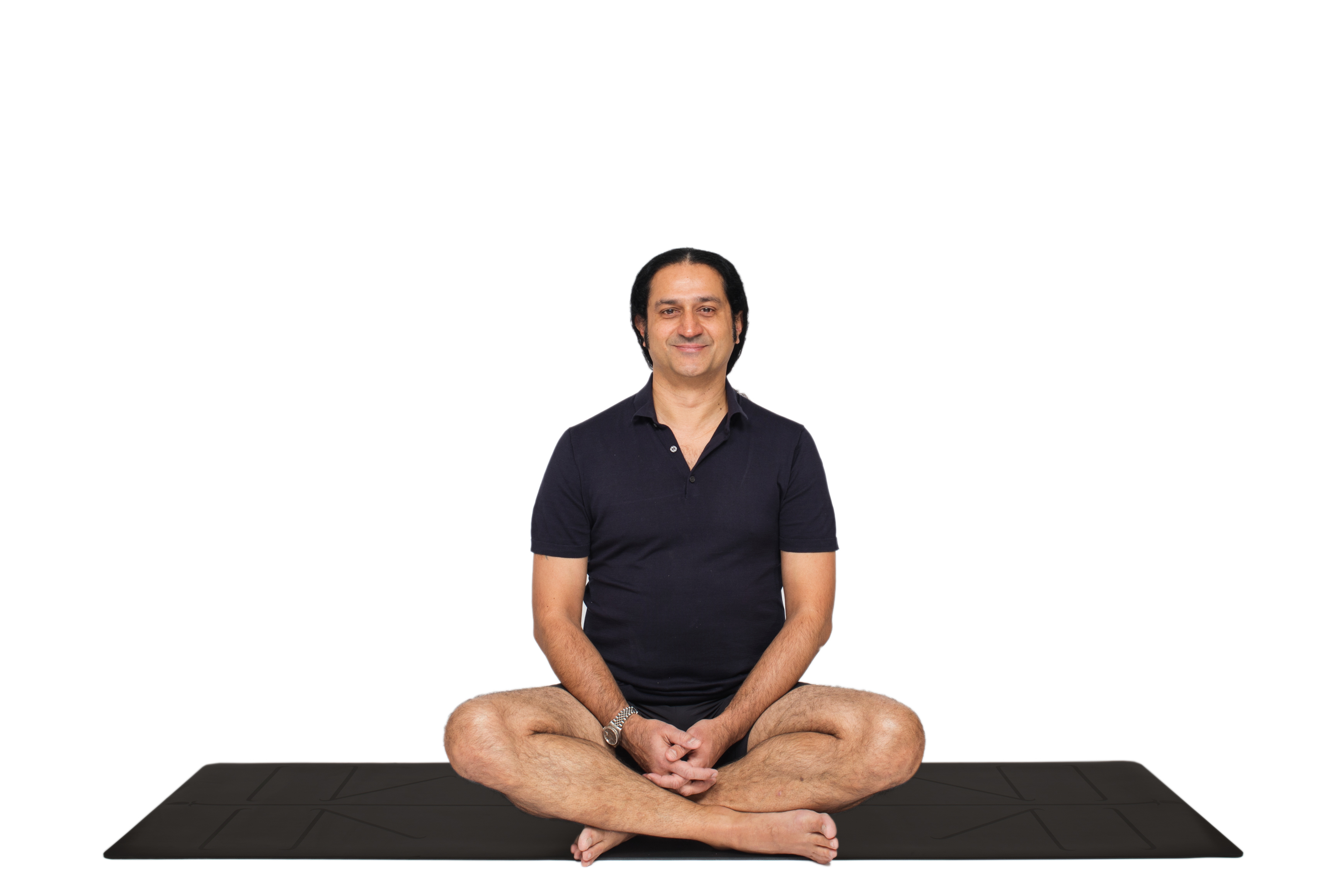

Modern society is obsessed with the endless pursuit of happiness and material desires. We are taught that living moment-to-moment, acting on every fleeting whim of the mind, is the ultimate expression of "freedom."
Master Shahid Khan calls this a delusion. That is not freedom; it is absolute slavery to the senses.
You can only live this chaotic lifestyle if, somewhere deep in your mind, you think you are going to live forever. But that is not true. Death—Yama—comes for everyone. No amount of money or insurance policies will save you. Money is of no use to a dead person.
If you want to know how to face this reality and build true, unshakable discipline, you must look away from modern wellness and turn to the ancient Katha Upanishad. Here is the story of a boy who demanded the truth.
1. The Father's Hypocrisy
Written over two millennia ago, the Upanishad tells the story of a young boy named Nachiketa. His father, seeking worldly wealth and divine favor, performed a massive ritual, promising to give away all his possessions.
But Nachiketa saw the reality: his father was hoarding the true wealth for himself and only giving away old, nearly dead cows that had worked their entire lives, given their last milk, and were about to die. Disgusted by this pursuit of material greed masquerading as spirituality, the boy first confronted his father about the worthless state of these dying cows.
When his father ignored the truth, the boy pierced his hypocrisy with a final question: "To whom will you give me?"
Frustrated and enraged by the boy's relentless pursuit of truth, his father snapped: "I give you to Death!" Taking his father at his word, Nachiketa walked directly into the underworld.
2. The Dialogue with Death: The Ultimate Question
Nachiketa waited at the door of Yama (the Lord of Death) for three days without food or water. When Death finally arrived, he recognized the terrifying physical and mental discipline of the boy. To test his resolve, Yama offered him the ultimate worldly distractions.
"Ask for wealth, endless life, and extreme luxury," Yama offered. "I will give you chariots, gold, and desires no mortal can ever attain. Choose any comfort you wish, but do not ask me about death."
This is the exact same bargain the modern world offers you today: Take this comfort, take this distraction, and don't look at your collapsing reality.
Nachiketa rejected all of it with a clinical, unyielding response: "
These things endure only until tomorrow. And the constant consumption of these comforts only wears out the vigor of the senses. Even the longest life is incredibly short. Keep your chariots, your wealth, and your fleeting pleasures to yourself."
The boy refused to be bought off by temporary biological highs. He looked directly at Death and demanded the only thing that mattered: "There is this doubt: when a man dies, some say he still exists, and some say he does not. I want to know the absolute truth.
What is death? What happens after the physical body collapses?"
3. The Revelation: The Nature and Location of the Soul (Atman)
Seeing that the boy's intellect could not be corrupted, Death finally reveals the deepest secret of human existence: the reality of the Atman (the true Self or Soul).
"The knowing Self is not born, nor does it die," Death explains. "It sprang from nothing, and nothing sprang from it. It is unborn, eternal, everlasting, and primeval. It is not killed when the physical body is killed."
But Death does not just explain what the soul is; he tells the boy exactly where it is located. The Atman does not exist in the chaotic thoughts of the mind, nor is it generated by the logical processing of the brain. Yama reveals:
"Smaller than the smallest, greater than the greatest, the Self is seated in the cave of the heart of every creature. The Purusha (the being), the size of a thumb, resides in the very center of the physical body."
This is a profound physical anchor. Death teaches that you are not your decaying physical vessel, nor are you your panicking mind. You are the silent observer seated in the center of the chest. But to access this "cave of the heart," you must first master the chaotic physical vessel it resides in.
4. Preyas vs. Shreyas: The Ultimate Choice
To reach this realization, Death reveals the fundamental choice every human faces: the choice between Preyas (the pleasant) and Shreyas (the good, the truth).
Preyas (The Pleasant)
This is the path of immediate gratification, comfort, and distraction. It feels good in the moment, but it keeps you ignorant, weak, and trapped in suffering.
Shreyas (The Truth)
This is the path of true Yoga. It is rarely comfortable. It requires strict discipline, facing harsh realities, and letting go of illusions.
You cannot reach the truth by chasing what is pleasant. The pursuit of a "perfect, comfortable life" is an illusion that ultimately destroys you.
5. The Metaphor of the Chariot
To explain how to navigate this difficult existence and prepare for the ultimate reality, the Upanishad uses the metaphor of a chariot. This is the authentic, ancient science of self-mastery:
The Chariot (The Body)
Your physical body is the chariot. If it is weak, neglected, or untrained, the journey is impossible.
The Horses (The Senses)
Your five senses are the horses pulling the chariot. They are wild. They want to chase every pleasant thing (Preyas) they see.
The Reins and the Charioteer (Mind and Intellect)
The reins are your Mind (Manas), and the Charioteer holding those reins is your Intellect and Discrimination (Buddhi).
The Passenger
The passenger sitting quietly in the chariot is your true Soul (Atman).
6. The Failure of the Modern Mind (The Power of the Child)
It is no coincidence that the ultimate truth of the Upanishad was revealed to a young boy, not an adult. Why? Because the modern adult mind is entirely corrupted. We build fake personas, rationalize our weaknesses, and lie to ourselves to maintain comfort.
A child is pure, innocent, and uncorrupted by the fake constructs of society. A child’s inquiry is the absolute purest form of truth—an unyielding demand for reality that adults are too terrified to make. (This is the exact same principle as why only a child could point out that "The Emperor Has No Clothes," a clinical reality we will dissect in next week's blog.)
Nachiketa possessed an uncorrupted intellect—the perfect Charioteer. Here is the harsh reality the Katha Upanishad exposes: If your Charioteer (your Intellect) is clouded by adult delusions and your reins (your Mind) are loose, the wild horses (your senses) will drag your chariot into absolute chaos.
This is the state of the modern human. We are dragged around by our senses, constantly reacting to our environment, our desires, and our fears. Jumping around on a yoga mat to pop music does not train the Charioteer. A weak, corrupted intellect cannot control wild senses.
7. The Yogveda Path: Mastering the Chariot
True Yoga is the systematic training of the Charioteer.
Physical Discipline
Through the strict application of ancient Hatha Yoga, we train the physical chariot to be strong, immovable, and capable of enduring reality.
Mastering the Reins
Through intense focus and breath control (Pranayama), we pull back the reins on the wandering mind. We stop chasing the illusion of Preyas.
Dhyana (Absolute Silence)
Only when the Charioteer has absolute, unyielding control over the horses can the chariot finally stand still. This stillness is Dhyana. Only in this absolute silence can the passenger—the true Self—be realized.
8. The Conquest of Death (How the Story Ends)
The Katha Upanishad does not end with Nachiketa feeling "relaxed" or returning to a life of superficial comfort. Having received this absolute truth and the strict science of Yoga directly from the Lord of Death, Nachiketa attained supreme realization.
By mastering the Chariot, he successfully anchored his awareness in the cave of the heart, separating his true Self (Atman) from the biological decay of his physical body. He became free from all impurities, free from the chaotic cycle of suffering, and literally conquered Death. He achieved ultimate, unshakable liberation.
Stop choosing comfort. Choose the truth.
👉 Yogveda Asana Lesson : Build the physical presence to distinguish between what is real in the body and what is just a feeling.
👉Yogveda Yoga Teacher Training in Bern: Deepen your understanding of Patanjali's philosophy of mind and truth.
Author, Master Shahid Khan


Comments