
Mastering Yoga Asanas: The Biomechanics of Standing Postures
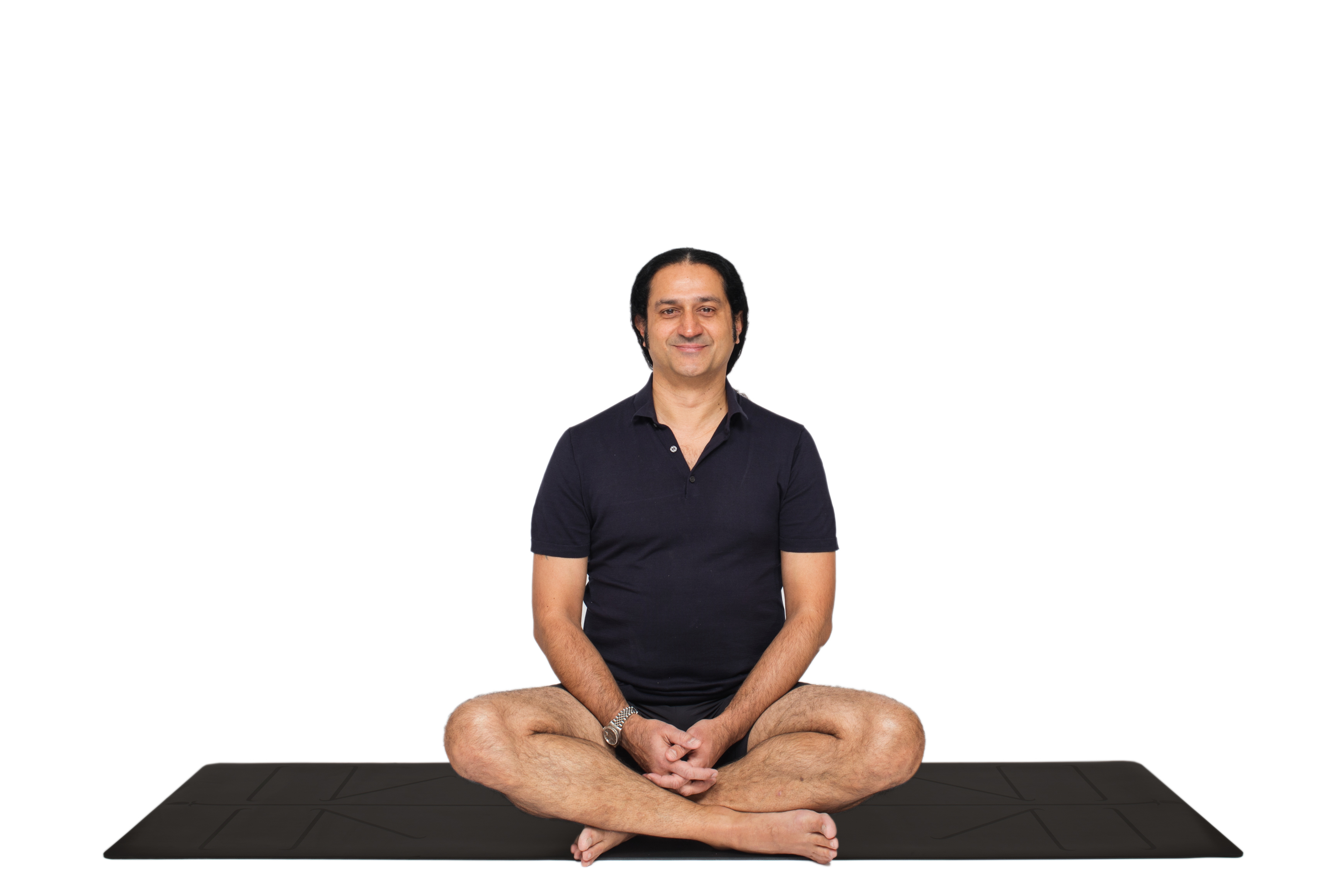

Are you doing a Warrior Pose to "channel your inner strength," or are you engineering a load-bearing structure to defy gravity?
Modern wellness yoga treats standing postures like a mystical experience, telling you to "plant your feet in Mother Earth and reach your arms to Father Sky." Master Shahid Khan considers this ridiculous. You are not a tree; you are a biomechanical structure.
If your foot is misaligned by a single centimeter, the kinetic chain breaks, the knee joint absorbs destructive shear force, and the lumbar spine collapses under the weight of gravity. A standing posture is not about "feeling grounded." It is the strict, clinical application of ground reaction force to stack your bones and achieve joint centration.
In the Yogveda Yoga 4-week cycle, we have systematically prepared the structure. We stretched the posterior chain, expanded the anterior chain, and applied spiral torque to the spine. Now, we must bear weight. Standing Postures are the ultimate test of structural integration.
The Mechanical Rule: Skeletal Stacking and the Kinetic Chain
You cannot build a stable skyscraper on a crooked foundation. In a standing posture, the feet are your structural anchors.
The force of gravity pushes down, but by pressing the feet correctly into the floor, we generate upward kinetic energy (ground reaction force). This energy must travel seamlessly up through the straightened bones of the legs, lock into a neutral pelvis, and extend the spine axially. If a joint is bent or misaligned, that upward force hits a roadblock, creating massive friction and leading to joint degradation (osteoarthritis).
The End of Guesswork: The Yoga Mat Geometry
This is exactly why guessing your foot placement is clinically unacceptable. You cannot "feel" perfect alignment; you must measure it.
To execute Yogveda standing mechanics, we rely on strict geometric coordinates. This is the clinical purpose behind the Swiss-designed alignment grid of The Yoga Mat. By using the grid's precise intersecting lines, practitioners physically lock their heels, arches, and metatarsals into the exact mathematical angles required to protect the knees and hips. It forces honest, structural geometry.
The Biological Payload: Bone Density and Nervous System Shielding
When the bones are perfectly stacked and bearing load against gravity, the biological response is immediate:
Osteogenesis (Bone Density): The mechanical stress placed on perfectly aligned leg bones stimulates osteoblasts, actively increasing bone mineral density and fighting osteoporosis.
Pelvic Stabilization: Standing poses violently recruit the deep stabilizers of the hips and glutes, correcting the pelvic tilts that cause 90% of modern lower back pain.
CNS Preparation: By demanding extreme balance and proprioception, standing poses neurologically wire the Central Nervous System (CNS) for the ultimate challenge: Inversions.
The Week 4 Syllabus: Structural Geometry
Here is the strict structural progression of Standing Postures taught in Yogveda Yoga. Each level builds cumulative stability, engineered to safely bear maximum load.
Level 1: The Foundation
Tadasana (Mountain Pose): The absolute blueprint of vertical joint centration and axial extension.
Utkatasana (Chair Pose): Generating ground reaction force through deep hip and knee flexion.
Vrksasana (Tree Pose): Foundational single-leg pelvic stabilization.
Trikonasana (Triangle Pose): Straight-leg structural loading and lateral spine extension.
Virabhadrasana II (Warrior II): Open-hip lunge mechanics demanding precise knee tracking and external femur rotation.
Level 2: The Integration
Tadasana, Utkatasana, Vrksasana, Trikonasana, Virabhadrasana II: Reinforcing the foundational geometry under prolonged load.
Parsvakonasana (Extended Side Angle Pose): Deep lateral extension over a fully loaded, bent-knee structure, demanding a perfect kinetic line from the anchored back foot to the fingertips.
Level 3: The Mastery
Tadasana, Utkatasana, Vrksasana, Trikonasana, Parsvakonasana: Advanced structural endurance.
Virabhadrasana I, II, & III: The full kinetic spectrum of lunge mechanics—mastering closed-hip, open-hip, and gravity-defying horizontal load.
Ardha Chandrasana (Half Moon Pose): The pinnacle of structural mastery. Defying gravity on a single leg while maintaining perfect lateral extension and pelvic rotation.
Stop reaching for Father Sky and start stacking your bones. If you are a practitioner or a teacher ready to elevate beyond wellness fluff and learn the hard mechanics of joint centration, study the 200h academic standard at Yoga University Switzerland.
👉 Yogveda Asana Lesson : Build the physical presence to distinguish between what is real in the body and what is just a feeling.
👉Yogveda Yoga Teacher Training in Bern: Deepen your understanding of Patanjali's philosophy of mind and truth.
Author, Master Shahid Khan


Comments