
Vaisheshika Darshana: The Classical Physics of Matter, Motion, and Atomic Structure
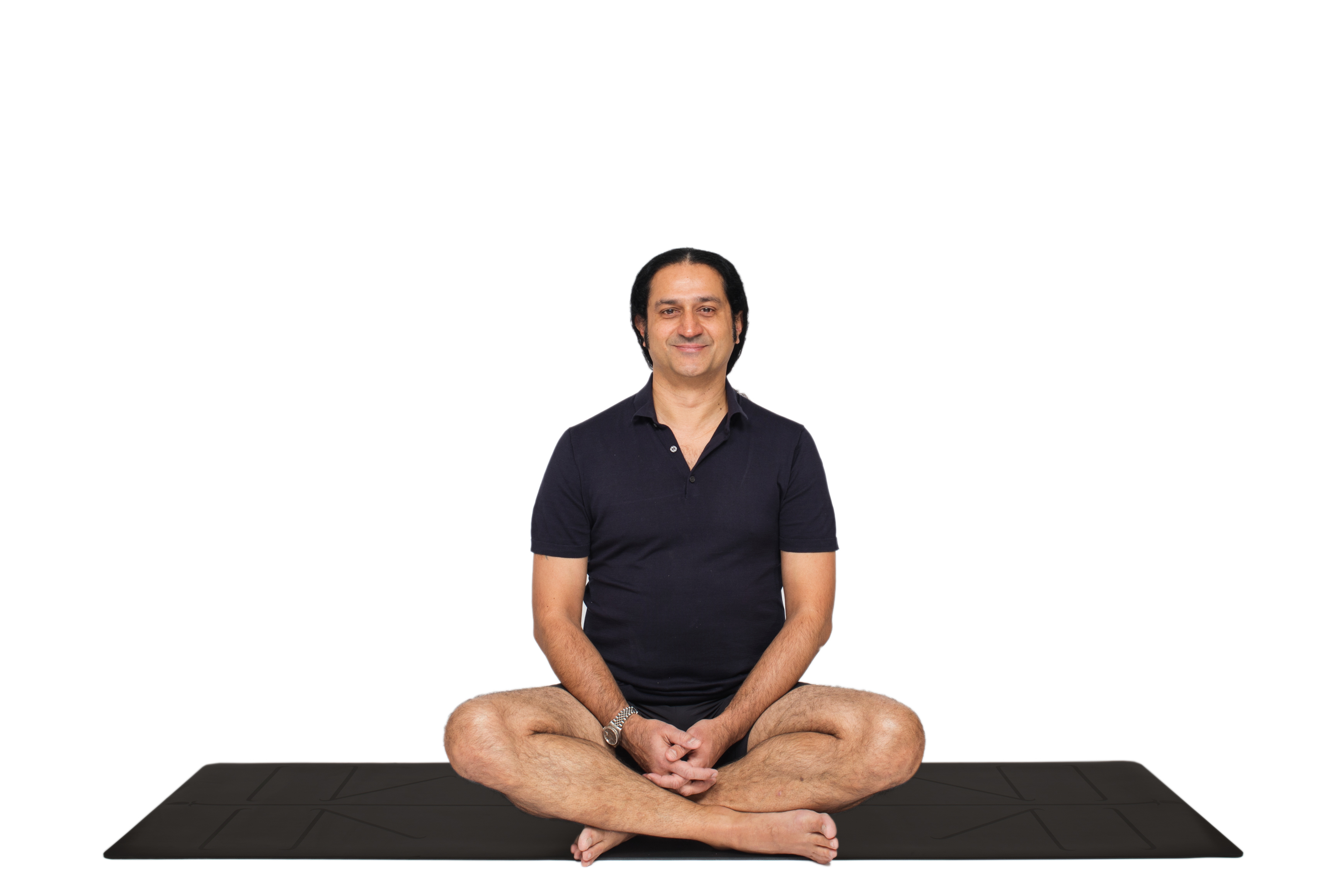

In the scientific framework of Master Shahid Khan’s Yogveda Yoga, physical reality is governed by the laws of mechanics, thermodynamics, and atomic structure. Following the logical foundation established by Nyaya Darshana, its sister school—Vaisheshika Darshana—focuses on the physics of the material universe, the properties of matter, and the natural forces acting upon physical systems.
What is Vaisheshika Darshana?
The word Vaisheshika comes from Vishesha, meaning "particularity" or "atomic differentiation." While other systems of philosophy examine reality from a spiritual perspective, Vaisheshika Darshana studies the physical world through a reductionist lens—understanding complex matter by breaking it down into its smallest, indivisible parts (Paramanu, or atoms).
Vaisheshika Darshana is a system of classical physics and material categorization. It proves that the physical world exists objectively, operating under measurable laws of cause, effect, spatial relationship, and energy transformation.
The Founder: Sage Kanada, the Father of Physics
The core principles of this system were written by Sage Kanada in the Vaisheshika Sutras. Long before modern atomic theory developed in the West, Sage Kanada established the world's first systematic atomic framework.
His name, "Kanada," translates to "atom-eater," reflecting his work in breaking physical reality down to its ultimate particle (Paramanu). Sage Kanada showed that the universe is an orderly physical mechanism governed by natural laws and material interactions.
Epistemology: How Vaisheshika Darshana Verifies Physical Reality
Unlike systems that rely on non-physical sources, Vaisheshika Darshana uses only two valid means of knowledge (Pramanas) to analyze physical reality:
1. Pratyaksha (Direct Observation): Direct measurement of physical properties such as mass, density, temperature, pressure, and spatial coordinates.
2. Anumana (Logical Inference): Deducing unobservable atomic or mechanical processes from observed physical changes.
The 7 Padarthas: The Categories of Material Reality in Vaisheshika Darshana
To classify the physical universe, Vaisheshika Darshana divides all matter and phenomena into 7 Padarthas (categories of reality):
Dravya (Substance): The foundational material or substrate in which properties and motion exist.
Guna (Quality): The physical attributes belonging to a substance (detailed below).
Karma (Motion): The kinetic forces and physical movements occurring within a substance.
Samanya (Universal Class): The common physical property that unites distinct objects (such as the shared property of "substance" across all physical matter).
Vishesha (Particularity): The unique atomic property that makes one element or material state different from another.
Samavaya (Inherence): The permanent connection between a physical substance and its internal properties.
Abhava (Non-Existence): The physical absence or vacuum of a state, property, or motion.
The 24 Gunas: Objective Attributes of Matter in Vaisheshika Darshana
Academic Note: In Vaisheshika Darshana physics, Guna refers to 24 objective physical attributes of matter. These must not be confused with the Tri-Gunas (Sattva, Rajas, Tamas) of Sankhya philosophy. Sankhya’s Tri-Gunas are psychological and energetic qualities, whereas Vaisheshika’s Gunas are measurable physical parameters such as mass, viscosity, velocity, and temperature.
Sage Kanada originally listed 17 Gunas in the Vaisheshika Sutras, which were later expanded by the commentator Prashastapada to 24. These qualities fall into four physical categories:
1. Sensory Physical Qualities
Physical properties observed through the senses:
1. Rupa (Form/Color): Visual appearance and geometry.
2. Rasa (Taste): Chemical composition and solubility.
3. Gandha (Smell): Particulate properties tied to atomic density.
4. Sparsha (Touch/Temperature): Tactile properties, including heat and friction.
5. Shabda (Sound): Acoustic vibrations moving through a physical medium.
2. Quantitative and Spatial Qualities
Attributes defining spatial position, scale, and dimension:
6. Sankhya (Number): The numerical count of physical particles.
7. Parimana (Dimension): Volume, mass density, or physical size.
8. Prithaktva (Distinctness): The boundary separating one physical object from another.
9. Sanyoga (Conjunction): The mechanical joining of separate physical objects.
10. Vibhaga (Disjunction): The separation of connected objects.
11. Paratva (Proximity): Spatial or temporal closeness.
12. Aparatva (Remoteness): Spatial or temporal distance.
3. Mechanical and Fluid Qualities
Properties governing fluid mechanics, gravity, and elasticity:
13. Gurutva (Gravity/Mass): The mass or weight inherent in matter that causes downward gravitational force.
14. Dravatva (Fluidity): The ability of liquids to flow.
15. Sneha (Viscosity/Cohesion): Surface tension and internal attraction that hold fluids together.
16. Samskara (Momentum/Elasticity): Mechanical energy, divided into three forms:
Vega: Kinetic momentum keeping an object in motion.
Sthitasthapakata: Elastic recoil—the ability of a stretched material to return to its original shape.
Bhavana: Latent physical or structural memory in a system.
4. Observer-Coupled Qualities
Attributes explaining how conscious force (Atman) exerts mechanical work upon matter through a processor (Manas):
17. Buddhi (Cognition): Information processing and system awareness.
18. Sukha (Equilibrium): A state of physical balance and low entropy.
19. Dukha (Disorder): Structural distress, friction, or high entropy.
20. Iccha (Intention): Directional force toward a movement.
21. Dvesha (Resistance): Mechanical friction or opposition to force.
22. Prayatna (Effort): The internal energy application required to create physical movement.
23. Dharma (Structural Order): Force application that produces physical stability and alignment.
24. Adharma (Structural Disorder): Force application that leads to structural breakdown.
The 9 Dravyas: The Fundamental Substrates of Existence
In Vaisheshika Darshana, a substance (Dravya) is the foundation in which properties and actions exist. Sage Kanada identifies 9 fundamental Dravyas, divided into 5 physical states of matter and 4 non-physical foundations:
The 5 Physical States of Matter (Bhutani)
1. Prithvi (Solid State): Characterized by high density, structural rigidity, and resistance to deformation.
2. Ap (Liquid State): Characterized by fluidity, cohesion, and viscosity.
3. Tejas (Thermal State): Characterized by heat, energy transformation, and molecular activity.
4. Vayu (Gaseous State): Characterized by expansion, pressure differentials, and kinetic movement.
5. Akasha (Space): The spatial volume that provides clearance and room for matter to exist and move.
The 4 Non-Physical Foundations
6. Kala (Time): The temporal dimension governing rate of change, velocity, and duration.
7. Dik (Space/Direction): Spatial orientation vectors within a three-dimensional field.
8. Atman (Observer): The conscious field that directs energy within a physical system.
9. Manas (Signal Processor): The internal processing mechanism that converts inputs into directed mechanical force.
The 5 Types of Karma: Kinematics and Motion in Vaisheshika Darshana
In Vaisheshika physics, movement (Karma) is the kinetic response of matter to an applied force. Sage Kanada defines 5 universal types of motion:
1. Utkstepana (Upward Motion): Vertical movement opposing gravitational force.
2. Avakstepana (Downward Motion): Vertical movement aligning with gravitational force.
3. Akunchana (Contraction): Inward compression toward a central axis.
4. Prasarana (Expansion): Outward stretching or extension away from a central axis.
5. Gamana (Locomotion): Complex, multidirectional movement through space.
Paramanavada: Atomic Physics and Thermal Transformation
The core of Sage Kanada’s scientific contribution is Paramanavada (atomic theory). Kanada proved that physical matter is made of eternal, indivisible units called Paramanu (atoms).
The Nature of the Atom (Paramanu-Svarupa)
In Vaisheshika Darshana physics, an atom (Paramanu) possesses four fundamental properties:
Indestructible (Nitya): While physical objects break down, individual atoms cannot be created or destroyed. Mass and energy are conserved at the atomic level.
Indivisible (Niravayava): The atom has no internal parts or sub-layers. It is the final limit of physical reduction.
Spherical Dimension (Parimandalya): An atom possesses an infinitesimal, point-like spherical dimension.
Qualitative Differentiation: Unlike ancient Greek models where all atoms were uniform, Vaisheshika atoms carry elemental properties (Earth atoms carry mass, Water atoms carry liquidity, Fire atoms carry heat, Air atoms carry kinetic force).
Combination of Atoms
A single atom cannot exist on its own in the visible world:
Two atoms combine to form a Dvyanuka (dyad).
Three dyads combine to form a Tryanuka (triad).
Only at the triad level does matter gain enough volume and mass to become visible and measurable.
Historical Parallel: Paramanu and Modern Physics
To give a complete picture: Sage Kanada's Paramanavada is the world's first classical model of elemental physics, closely paralleling John Dalton's atomic theory (1808), which described atoms as indivisible spheres that combine to form compounds.
While 20th-century quantum physics later discovered subatomic particles (protons, neutrons, and electrons) inside the atom, Kanada's framework was built to explain classical mechanics and material physics—how solid particles, fluids, heat, and pressure interact to construct the observable physical world.
Heat Transformation: Pilu-paka vs. Pithara-paka
Vaisheshika physics explains how heat (Tejas) transforms matter using two distinct models:
Pilu-paka (Atomic Transformation): High heat breaks the internal bonds between constituent atoms (Paramanu), changing their internal structure to create a completely new material.
Pithara-paka (Structural Transformation): Heat changes the outer shape, flexibility, or elasticity of a physical structure without destroying its subatomic bonds.
Applying Vaisheshika Darshana Physics in Master Shahid Khan's Applied Biomechanics
In Master Shahid Khan’s Yogveda Yoga, the fundamental laws of physics are not theoretical concepts; they are the core engine of practice. Asana and Pranayama are not arbitrary stretches or mystical routines—they are precise mechanical interactions with physical forces. Without an understanding of classical physics, physical conditioning remains superficial and short-lived.
Movement and breath are analyzed strictly through biophysics, kinematics, and pressure dynamics, integrating three universal constants:
1. Gravity (Gurutva): Load Vectors and Mass Alignment
Gravity (Gurutva) is a constant downward acceleration acting on physical mass (Prithvi). Asanas are structured vector adjustments designed to either align with, resist, or neutralize gravitational load. By managing mass, internal friction, and fluid dynamics (Dravatva and Sneha), we decompress dense physical structures and prevent gravity from causing structural collapse.
2. Seasonal Thermodynamics (Kala): Temperature and Viscosity Cycles
Time (Kala) governs seasonal shifts, ambient temperature, and biological cycles. The physical properties of matter—specifically fluid flow (Dravatva) and tissue viscosity (Sneha)—change dramatically between seasons. Master Shahid Khan's system adapts both Asana and Pranayama to seasonal thermodynamics: cold, dense conditions require higher thermal generation (Tejas) to overcome structural rigidity, whereas hot conditions demand pressure management to prevent fluid depletion.
3. Entropy and Structural Decay (Adharma vs. Dharma): Anti-Entropic Reversal
Entropy (Adharma) is the natural physical law that dictates unmaintained systems move toward disorder, friction, and structural breakdown. Without intentional physical work (Prayatna), the body succumbs to mechanical degradation. Asanas and Pranayama function as directed anti-entropic interventions. By calibrating air pressure gradients (Vayu) within spatial volume (Akasha), leveraging elastic recoil (Samskara), and generating targeted heat (Tejas), we reverse structural entropy and restore system equilibrium (Dharma).
The Physical Sequence of Recalibration
Assessment of Material Properties (Dravya & Guna) → Application of Directed Motion (Karma) → Thermal Structural Remodeling (Pilu-paka) → Restoration of Physical Equilibrium (Samavaya)
Join Yogveda Asana, Pranayama Classes and Yoga Workshops to Cure and Learn More
Transforming a physical system requires an uncompromising understanding of the physics governing matter. You cannot permanently alter a structure if you ignore the fundamental laws of pressure, motion, energy, and atomic organization.
By using Master Shahid Khan's applied biomechanics, we integrate the atomic physics of Vaisheshika Darshana with modern biophysics, fluid mechanics, and kinematics. We recalibrate internal pressure dynamics, restore structural equilibrium, and free physical systems from chronic stress.
Join Yogveda Asana, Pranayama classes and Yoga Workshops to cure and learn more about your unique biology. Stop leaving your health to chance. Train with anatomical accuracy, master the physics of matter, and live longer.
👉 Yogveda Asana Lesson : Build the physical presence to distinguish between what is real in the body and what is just a feeling.
👉Yogveda Yoga Teacher Training in Bern: Deepen your understanding of Patanjali's philosophy of mind and truth.
Author, Master Shahid Khan
Yogveda Yoga Switzerland 🇨🇭


Comments