
The 6 Darshanas: The Scientific Framework of Classical Indian Philosophy
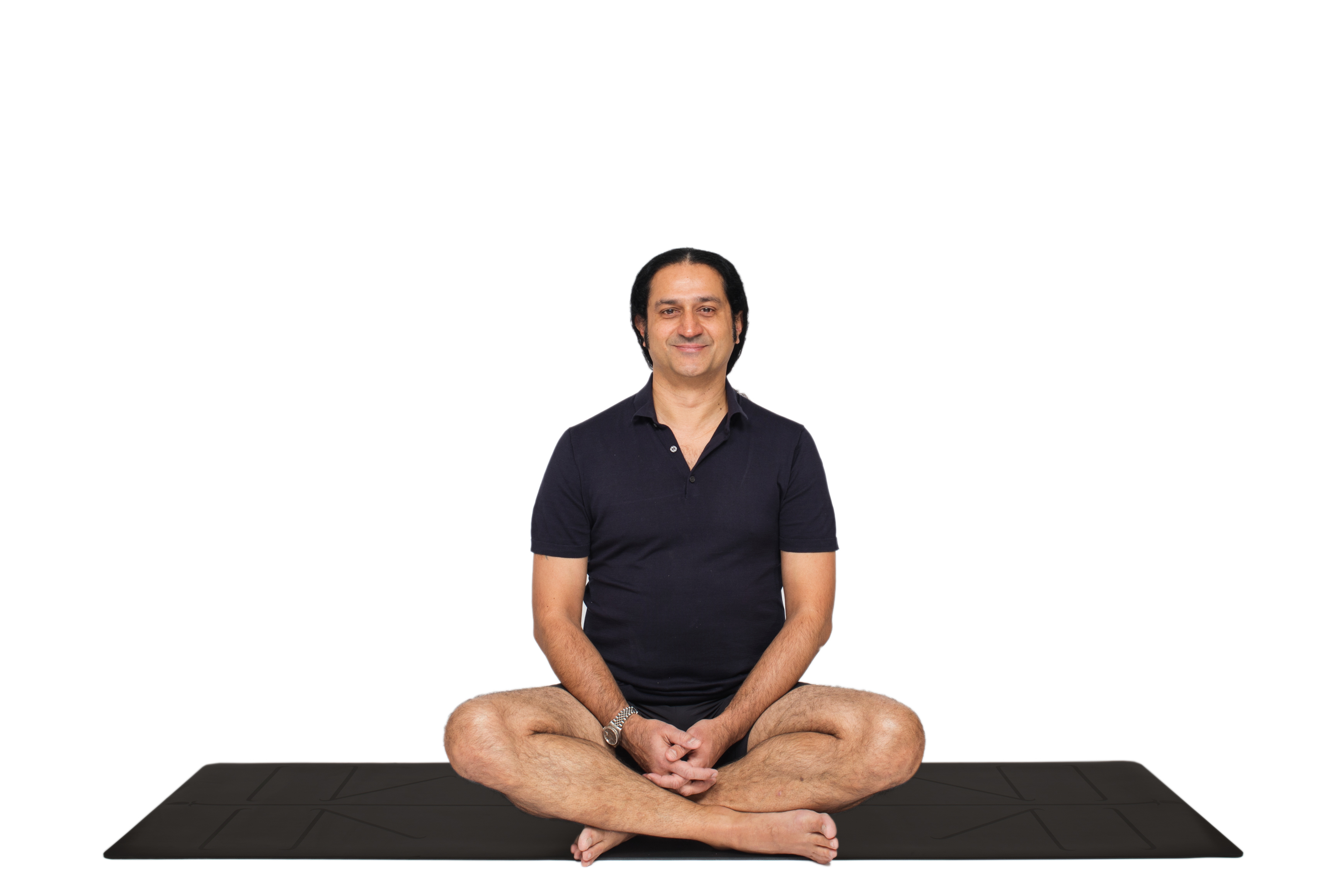

In the precise body-science of Master Shahid Khan’s Yogveda Yoga, classical Indian philosophy is not treated as vague mysticism or religious dogma. It is a systematic, empirical framework designed to analyze physical reality, human perception, and biology. At the core of this tradition sit the 6 Darshanas—the six orthodox systems of observation—alongside the heterodox Nastika traditions. Together, they form a complete scientific blueprint for human consciousness, physical mechanics, and nervous system regulation.
What is a Darshana?
The Sanskrit word Darshana is frequently mistranslated as "philosophy" or "religious doctrine." In its strict, literal sense, Darshana comes from the root drish, meaning "to see," "to observe," or "direct perception." A Darshana is not a passive belief system; it is a clinical lens or a precise methodology through which the human organism observes and tests reality.
Where modern reductionist science often isolates physical organs from the mind, classical systems recognized that understanding human health requires multiple interconnected perspectives. Each system provides a distinct logical method, physical analysis, or psychological mapping to examine physical matter and human experience without relying on blind faith.
Epistemological Foundations of the 6 Darshanas
A Darshana requires direct verifiability. Rather than accepting unproven assumptions, each of the 6 Darshanas utilizes specific epistemological tools (Pramanas), such as direct sensory perception (Pratyaksha) and logical inference (Anumana). The overarching objective is eliminating illusion and stabilizing the physical human organism.
The 6 Darshanas (The Astika Systems)
The classical tradition organizes its core methods into the 6 Darshanas (known historically as the Shad-Darshana or Astika systems). These six schools accept the foundational framework of the ancient texts and operate as complementary, paired disciplines that move from physical matter and logic to applied mind-body integration.
1. Nyaya: The Science of Logic and Reason
Nyaya establishes the strict formal rules of logic, valid reasoning, and proof (Pramana). It provides the scientific methodology required to determine what is true versus what is false, ensuring that health and biological observations are based on verifiable evidence rather than illusion.
2. Vaisheshika: The Science of Atomic Physics and Matter
Vaisheshika analyzes the physical universe through atomic theory (Paramanu). It categorizes matter, motion, and the fundamental physical elements, laying the foundation for understanding the chemical and material composition of the physical body.
3. Samkhya: The Science of Cosmology and Structural Dualism
Samkhya provides the structural blueprint of existence. It maps the interaction between pure consciousness (Purusha) and physical matter (Prakriti), categorizing the 24 elemental components (Tattvas) that build human anatomy, the senses, and the mind.
4. Yoga: The Science of Applied Biomechanics and Integration
Yoga Darshana is the practical, physical, and psychological application of Samkhya theory within the 6 Darshanas. It provides the exact mechanical techniques—such as posture alignment, respiratory motor control, and sensory withdrawal—required to silence mental fluctuations and stabilize the autonomic nervous system.
5. Mimamsa: The Science of Action and Cause-Effect Mechanics
Mimamsa examines the laws of action, duty, language, and precise cause-and-effect relationships. It analyzes how specific human behaviors, physical inputs, and environmental factors produce predictable biological outcomes.
6. Vedanta: The Science of Ultimate Reality and Non-Duality
Vedanta investigates the ultimate nature of existence (Brahman). It analyzes the fundamental consciousness underlying all physical phenomena, demonstrating the unbroken unity between the individual human organism and the universal matrix.
The Nastika Traditions: Charvaka, Buddhism, and Jainism
Alongside the 6 Darshanas, classical thought includes three major Nastika (heterodox) traditions. These systems explicitly reject dogmatic authority, demanding direct observation, radical physical evidence, or psychological deconstruction.
1. Charvaka: Radical Materialism and Empiricism
Charvaka asserts that direct sensory perception (Pratyaksha) is the only valid source of truth. It rejects unprovable metaphysics, arguing that consciousness is not an immortal floating entity, but an emergent biological property of physical matter working together.
2. Buddhism: Psychological Deconstruction and Impermanence
Buddhism focuses on rigorous psychological analysis. It dismantles the illusion of a static, unchanging self (Anatta), mapping how mental attachment, conditioning, and perpetual change (Anicca) drive human suffering and nervous system stress.
3. Jainism: Relativism and Cellular Protection
Jainism introduces Anekantavada—the doctrine that reality is multi-faceted and cannot be fully captured by a single viewpoint. It establishes strict principles of non-violence (Ahimsa) to preserve cellular life and physical equilibrium.
Why Understanding the 6 Darshanas Matters Today
In a modern wellness landscape dominated by superficial exercise trends and commercialized fitness fads, the foundational science behind classical practice has been completely lost. Physical yoga is not an isolated workout routine; it is one specific operational lens (the 6 Darshanas) working in harmony with the other master disciplines.
When you isolate physical movement from the analytical framework of the 6 Darshanas, you reduce a complete biological science to simple stretching. Master Shahid Khan's applied biomechanics restores this historical integrity, connecting physical alignment, the 3 Motors of Breath, and nervous system regulation back to these foundational laws of observation and direct proof.
Moving Beyond Commercial Trends Through the 6 Darshanas
By integrating the formal logic of Nyaya, the atomic physics of Vaisheshika, and the cosmological structure of Samkhya, asana and pranayama practice transforms into a medically precise tool. The objective is not superficial flexibility, but the physical calibration of the autonomic nervous system anchored in the 6 Darshanas.
Join Yogveda Asana, Pranayama Classes and Yoga Workshops to Cure and Learn More
To truly understand your physical body, stabilize your nervous system, and master your biology, you must understand the foundational systems that govern human perception. Over the coming series, we will break down each of the 6 Darshanas and the Nastika traditions step-by-step through a clinical, biomechanical, and practical lens.
By using Master Shahid Khan's applied biomechanics, we correct structural posture, restore the 3 Motors of Breath, and integrate mind and body. This allows you to achieve the true physical stillness and internal stability required to repair your biology.
Join Yogveda Asana, Pranayama classes and Yoga Workshops to cure and learn more about your unique biology. Stop relying on vague trends. Train with anatomical accuracy, understand the science of perception, and live longer.
👉 Yogveda Asana Lesson : Build the physical presence to distinguish between what is real in the body and what is just a feeling.
👉Yogveda Yoga Teacher Training in Bern: Deepen your understanding of Patanjali's philosophy of mind and truth.
Author, Master Shahid Khan


Comments