
Samkhya Darshana: Evolutionary Cosmology, Dualism, and the Mechanics of Manifestation
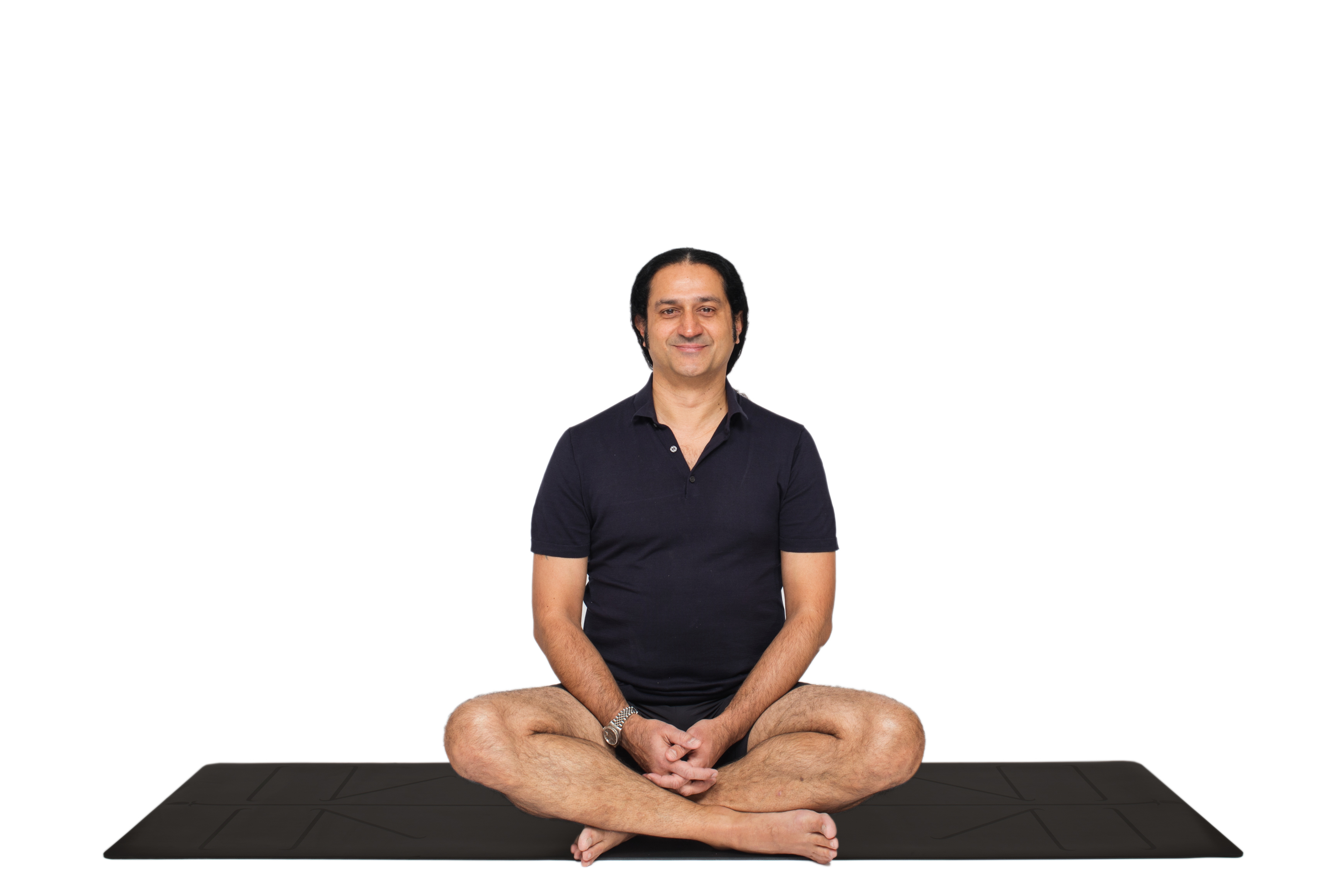

In the scientific framework of Master Shahid Khan’s Yogveda Yoga, transforming the physical body requires a clear understanding of how energy transitions into complex structure. Following Vaisheshika Darshana (which studies physical matter at the atomic level), its sister system—Samkhya Darshana—explains the complete evolutionary process (Parinamavada). It proves how reality uncoils continuously from a single primordial source into the varied forms we experience in the physical world.
What is Samkhya Darshana?
The word Samkhya translates to "exact calculation," "enumeration," or "clear discernment." Formulated by Sage Kapila (Maharshi Kapila) in the foundational Samkhya Sutras and later codified by Ishvarakrishna in the classical text Samkhya Karika, Samkhya is the oldest formal scientific philosophy in the Vedic tradition.
Unlike the atomic assembly model of Vaisheshika, Samkhya Darshana maps reality as a thermodynamic cascade. It proves that the entire universe is not built from static building blocks but evolves continuously from a single unmanifest matrix into increasing levels of density and complexity.
Dualism: Purusha and Prakriti (The Two Foundations)
At the heart of Samkhya cosmology lies an absolute, irreducible dualism (Dwaita). Reality consists of two ultimate, uncreated, and independent eternal principles:
1. Purusha (The Seed Information / The Conscious Field)
Definition: Purusha is pure conscious awareness. It is non-material, passive, eternal, immutable, and devoid of attributes (Nirguna).
Function: It is the irreducible seed information required for any creation to exist. Like a light that illuminates a room without moving the objects inside, Purusha enlivens material nature simply through its proximity (Sannidhi).
2. Prakriti (Primordial Nature / The Root Cause)
Definition: Prakriti is the unmanifest primordial substrate of Nature (Avyakta). It is the potential source of whatever form we see or experience, do not see or do not experience, whether living forms or non-living forms.
Function: Prakriti is the material matrix containing all energy, mass, pressure, thermal potential, and structural capability needed to build forms. However, Prakriti is non-conscious (Jada).
Why Purusha and Prakriti Are Separate
Consciousness (Purusha) cannot be derived from material forms (Prakriti), and material forms operate under physical laws independently of our thoughts. Therefore, Samkhya keeps them strictly separate.
The Paradox of Isolation
Separately, neither principle can act or experience anything:
Purusha alone holds the clear seed information but possesses zero kinetic energy or physical capability to execute movement or experience forms.
Prakriti alone holds infinite material and kinetic energy but zero self-awareness, intelligence, or purpose. Left entirely alone, its inherent forces cancel each other out in a state of locked unmanifest balance.
The Parable of the Lame and the Blind (Pangu-Andha Nyaya)
To explain why interaction is necessary, classical Samkhya uses the metaphor of the lame person and the blind person:
Purusha is like a lame person who possesses clear sight but cannot walk. It has vision (consciousness/information) but lacks legs (kinetic force) to move.
Prakriti is like a strong blind person who can walk but cannot see. It has mobility (material/kinetic force) but lacks eyes (consciousness/direction) to navigate.
Stranded in isolation, neither can reach their destination. Manifestation requires their intermingling.
The Intermingling: Proximity and Reflection
Manifestation is initiated when these two principles associate. However, they do not join together through physical fusion. Instead, they interact through proximity (Sannidhi) and reflection (Pratibimba):
Magnet Metaphor: Just as a strong magnet draws inert iron filings into organized patterns simply by being near them, the conscious proximity of Purusha activates unmanifest Nature.
Mirror Metaphor: Conscious awareness (Purusha) reflects into the clearest layer of Nature (Sattva). This thermodynamic disruption breaks the unmanifest equilibrium, igniting kinetic motion (Rajas) and structural mass (Tamas), starting the continuous evolutionary process (Parinama).
The Tri-Gunas: The Constitutive Forces of Nature
Crucial Academic Distinction: The Tri-Gunas of Samkhya—Sattva, Rajas, and Tamas—must not be confused with the 24 physical attributes found in Vaisheshika physics. In Samkhya, the Tri-Gunas are not properties belonging to matter; they are the three fundamental constitutive forces or dynamic vectors that build Nature (Prakriti) itself.
In the unmanifest state, these forces exist in perfect balance (Samyavastha). Proximity of Purusha breaks this balance, triggering evolution:
1. Sattva (Equilibrium / Illumination / Buoyancy): Represents lightness, clarity, reflection, optimal signal transmission, and low entropy. In biomechanics, it provides structural alignment, neurological awareness (Buddhi), and effortless efficiency.
2. Rajas (Kinetic Energy / Motion / Acceleration): Represents acceleration, heat, passion, movement vectors, and physical work. In biomechanics, it is the active kinetic driving force used during Asana or Pranayama to alter structural states.
3. Tamas (Inertia / Mass / Resistance): Represents gravity, structural density, darkness, rigid compression, and high entropy. In biomechanics, it is the stabilizing force that gives the body structural mass, but leads to locked tissues and stagnation when dominant.
The Cosmic Egg (Hiranyagarbha): The Primordial Matrix of Creation
Before the 25 Tattvas branch out into individual physical elements and sensory instruments, Samkhya cosmology identifies a critical transitional state of universal condensation: The Cosmic Egg (Hiranyagarbha or Brahmanda).
1. What is the Cosmic Egg?
The Cosmic Egg (Hiranyagarbha, literally "the Golden Embryo" or "Golden Matrix") represents the first spherical, enclosed boundary of physical potential. It is the embryonic container of all creation—the micro- and macrocosmic state where raw energy condenses into organized physical potential before expanding into explicit form.
2. The Mechanics: How Purusha, Prakriti, and the Gunas Form the Egg
The formation of the Cosmic Egg follows a precise energetic sequence:
The Informational Anchor (Purusha): Purusha acts as the central focal point—the non-material core around which the unmanifest field organizes.
The Spherical Boundary (Prakriti): Activated by proximity, Prakriti wraps around this informational center, establishing an enclosed volumetric sphere (Akasha).
The Tri-Guna Dynamic Rotation: Inside this enclosed boundary, the three Gunas enter a state of intense internal activity:
Sattva forms the luminous, intelligent core (Mahat/Buddhi), establishing internal structural order.
Rajas generates immense rotational kinetic energy and thermodynamic heat (Tejas), providing the expansion potential.
Tamas forms the outer protective layer, providing compression, mass density, and structural containment (Prithvi/Gandha).
3. Physics of the Primordial Sphere
From the perspective of classical physics and thermodynamics, the Cosmic Egg is the universal model of compressed potential energy held within a spherical pressure boundary. Matter cannot expand outward into organized forms without first being contained, pressurized, and heated within an enclosed matrix. The Golden Egg is the ultimate thermodynamic furnace from which all living and non-living forms originate.
The 25 Tattvas: The Evolutionary Chain of Manifestation
From within the pressurized matrix of the Cosmic Egg, Samkhya meticulously maps the 25 Tattvas (principles or categories of existence) through which unmanifest nature uncoils into macroscopic physical reality:
I. Root Foundations (Tattvas 1–2)
1. Purusha: Pure Consciousness / The seed information observer.
2. Prakriti: Primordial root Nature / Root unmanifest potential.
II. Cosmic and Individual Intelligence (Tattva 3)
3. Mahat / Buddhi (Intellect / Systemic Order): The first uncoiling from the Cosmic Egg. The faculty of discrimination, judgment, structural awareness, and systemic order.
III. Principle of Individuation (Tattva 4)
4. Ahamkara (Ego / Self-Identity): The principle that establishes a distinct operational boundary, separating the individual system from its environment.
The "WHY": The Tri-Guna Split at Ahamkara
The moment Ahamkara establishes an operational boundary (an internal system vs. an external environment), reality instantly splits into two interdependent fields based on Guna dominance:
Sattvika Ahamkara (The Subjective Branch): Guided by Sattva (clarity, signal processing), it creates the internal instruments required to perceive and interact with the external world (Tattvas 5–15).
Tamasika Ahamkara (The Objective Branch): Guided by Tamas (mass, density), it creates external forms, environment, and physical matter (Tattvas 16–25).
Rajasika Ahamkara (The Kinetic Catalyst): Guided by Rajas (motion), it provides the kinetic force required to drive both branches.
IV. Subjective / Cognitive Instruments (Tattvas 5–15)
5. Manas (Central Mind): The central signal processor that coordinates sensory inputs and executes motor commands.
6–10. Jnanendriyas (The 5 Sensory Functions):
6. Shrotra: Auditory processing (Hearing).
7. Tvak: Tactile processing (Touch/Temperature registration).
8. Chakshu: Visual processing (Form/Light navigation).
9. Rasana: Gustatory processing (Chemical potential).
10. Ghrana: Olfactory processing (Particulate matter detection).
11–15. Karmendriyas (The 5 Motor Functions):
11. Vak: Vocalization and expressive output.
12. Pani: Prehension, grasping, and manual manipulation.
13. Pada: Locomotion and spatial translation (movement of mass through space).
14. Payu: Excretion and systemic waste removal.
15. Upastha: Reproduction and generative action.
The "HOW": The Condensation Cascade (From Subtle to Physical, Tattvas 16–25)
Material forms do not appear instantly. They follow a precise thermodynamic condensation cascade. The Tanmatras (Tattvas 16–20) are subtle, unmanifest potentials. Through progressive increase in structural density (Tamas), these subtle potentials condense into the gross physical elements (Mahabhutas, Tattvas 21–25):
1. Shabda Tanmatra (Vibration Potential) → Akasha (Space): Acoustic vibration requires room to propagate. This defines volumetric clearance and non-resistance.
2. Sparsha Tanmatra (Friction Potential) → Vayu (Gaseous / Kinetic State): Interacting vibrations create particle collision and kinetic friction, condensing space into gas dynamics and pressure gradients.
3. Rupa Tanmatra (Form / Light Potential) → Tejas (Thermal State): Particle friction generates radiant heat and electromagnetic potential, creating the thermal state.
4. Rasa Tanmatra (Flow / Chemical Potential) → Ap (Liquid State): As thermal energy dissipates and cools, particle velocity drops. Matter enters a state of fluid cohesion, surface tension, and viscosity.
5. Gandha Tanmatra (Mass Potential) → Prithvi (Solid State): Maximum cooling and compaction force fluid cohesion into rigid structural bonds. Matter achieves maximum atomic density, structural rigidity, and load resistance.
Structural Pairing: Matching Senses, Actions, and Elements
Every sensory function (Jnanendriya) and motor function (Karmendriya) evolved specifically to interface with a corresponding physical state of matter (Mahabhuta) and its subtle potential (Tanmatra):
Physical Element (Mahabhuta) | Subtle Potential (Tanmatra) | Sensory Instrument (Jnanendriya) | Motor Instrument (Karmendriya) | Biophysical Mechanics |
1. Akasha (Space) | Shabda (Vibration) | Shrotra (Ears) | Vak (Vocalization) | Vocal cords create pressure waves through spatial volume; ears register frequency. |
2. Vayu (Gaseous) | Sparsha (Friction) | Tvak (Skin) | Pani (Handling / Hands) | Hands manipulate kinetic force and pressure; skin registers mechanical friction/shear stress. |
3. Tejas (Thermal) | Rupa (Form/Light) | Chakshu (Eyes) | Pada (Locomotion / Feet) | Feet generate kinetic heat while moving mass through space; eyes visually navigate geometry. |
4. Ap (Liquid) | Rasa (Flow/Chemical) | Rasana (Tongue) | Payu (Elimination) | Excretory organs regulate fluid volume/waste; tongue measures liquid chemistry. |
5. Prithvi (Solid) | Gandha (Density/Mass) | Ghrana (Nose) | Upastha (Generative / Pelvic) | Pelvic structures anchor mass and support structural loads; nose detects dense particulates. |
Satkaryavada: The Principle of Pre-Existent Cause
A foundational law of Samkhya physics is Satkaryavada—the principle that an effect already pre-exists within its cause before manifestation. Something cannot be created out of nothing (Nāvastuno vastu-siddhiḥ).
Oil pre-exists inside sesame seeds; curd pre-exists inside milk; the full organism pre-exists inside the Cosmic Egg.
Transformation (Parinama) is simply the uncoiling, restructuring, or change in manifestation from an unmanifest state (Avyakta) to a distinct manifest state (Vyakta).
In physical movement, structural health, joint mobility, and fluid dynamics already exist as potentials inside locked, dense tissues. Correct force application simply removes the obstacle (Tamasic stagnation) to manifest that latent equilibrium.
Yoga and Ayurveda: Practical Applications of Samkhya Philosophy
Neither Yoga nor Ayurveda developed in a theoretical vacuum; both accept Samkhya Darshana as their foundational scientific baseline. If Samkhya provides the theoretical physics and cosmology of existence, Yoga and Ayurveda provide the practical methodologies to manage human biology, mind, and movement.
1. Samkhya and Yoga: Theory vs. Practical Methodology
While Samkhya outlines the theoretical roadmap of how Purusha becomes entangled in Prakriti, Patanjali’s Yoga Darshana provides the experimental method to undo this entanglement.
Samkhya (The Theoretical Blueprint): Identifies the 25 Tattvas and proves that suffering arises when consciousness (Purusha) misidentifies with material transformations (Prakriti).
Yoga (The Practical Methodology): Provides systematic tools—Asana, Pranayama, and Samyama—to calm the mental processing unit (Manas, Ahamkara, Buddhi) and separate the unattached witness (Purusha) from physical fluctuations (Prakriti).
2. Samkhya and Ayurveda: Cosmology Applied to Biology
Ayurveda is the medical and biological application of Samkhya physics. It takes Samkhya’s 25 Tattvas and translates them directly into human physiology, pathology, and tissue repair.
Mapping the Tridoshas: Ayurveda maps the 5 physical elements (Mahabhutas) into three primary functional forces (Tridoshas):
Vata (Kinetic Force): Composed of Akasha (Space) and Vayu (Gaseous Air). Governs movement, pressure gradients, and nervous system signaling.
Pitta (Thermal Force): Composed of Tejas (Fire) and Ap (Water). Governs metabolic conversion, heat generation, and cellular digestion.
Kapha (Structural Force): Composed of Prithvi (Solid Earth) and Ap (Water). Governs physical mass, lubrication, fluid cohesion, and structural integrity.
Therapeutics and Diagnosis: Ayurveda uses Samkhya's theory of pre-existent cause (Satkaryavada) and the Tri-Gunas to diagnose disease. Disease is viewed as a disruption in the balance of Sattva, Rajas, and Tamas within biological tissues, treated by restoring elemental equilibrium.
Together, Samkhya serves as the theoretical science, Yoga as the physical and mental discipline, and Ayurveda as the medical healing art—forming a unified, complete system of human science.
Applying Samkhya Principles in Master Shahid Khan's Applied Biomechanics
In Master Shahid Khan’s Yogveda Yoga, Samkhya Darshana provides the dynamic blueprint for reversing physical degeneration, structural collapse, and systemic fatigue.
Human movement, breath control, and nervous system health are managed strictly through a continuous shift across the Tri-Guna spectrum:
1. Reversing Tamasic Postural Collapse
Physical stiffness, dense fascial adhesions, chronic stress, and systemic fatigue represent a dominance of Tamas (inertia, mass compression, rigidity). Under Tamasic dominance, internal system friction rises, oxygen turnover drops, and the body succumbs to entropy (Adharma).
2. Utilizing the Principle of the Cosmic Egg in Pressure Management
In applied biomechanics, the body operates through nested spherical enclosures—the thoracic cavity, the pelvic bowl, and individual cellular structures. Just as the Cosmic Egg contains pressure and heat before uncoiling, we utilize controlled spatial containment (Akasha) and pressurized air differentials (Vayu) within the thoracic sphere during Pranayama to generate metabolic heat (Tejas). This internal thermodynamic pressure softens dense, Tamasic fascial layers from the inside out.
3. Applying Rajasic Vectors for Transformation
To break Tamasic rigidity, targeted Rajas (kinetic force, directed movement, pressure manipulation) must be introduced. Using conscious effort (Prayatna) and the 3 Motors of Breath, we generate metabolic heat (Tejas) and induce structural transformation.
4. Restoring Sattvic Equilibrium
The ultimate goal of Asana and Pranayama is not constant agitation (Rajas), but returning the physical system to Sattva—a state of low entropy, effortless alignment, clear nervous system signaling, and fluid tissue hydration.
The Physics of Conscious Movement vs. Blind Force
Blind Force Application (Prakriti without Purusha): Working out mechanically without conscious neurological attention strains joints, creates tissue damage, and increases systemic friction.
Unexecuted Intent (Purusha without Prakriti): Attempting to relax or visualize health without physical work (Prayatna), kinetic force vectors, or pressure management yields zero structural modification in dense tissues.
Yogveda Recalibration (Purusha guiding Prakriti): Permanent structural transformation occurs only when focused neurological awareness (Purusha) directly guides kinetic force, air pressure, and metabolic heat (Prakriti).
The Sequence of System Recalibration
Tamasic Rigidity (Dense Tissue) → Pressurized Spherical Heat (The Cosmic Egg Mechanics) → Rajasic Motion (Directed Asana/Pranayama) → Thermodynamic Uncoiling (Satkaryavada) → Sattvic Equilibrium (System Alignment)
Join Yogveda Asana, Pranayama Classes and Yoga Workshops to Cure and Learn More
Transforming your body requires an uncompromising understanding of the physics governing matter and energy. You cannot force a physical body into health through superficial exercise alone; you must systematically guide it from Tamasic rigidity through Rajasic transformation into Sattvic equilibrium.
By using Master Shahid Khan's applied biomechanics, we integrate the evolutionary laws of Samkhya Darshana with modern biophysics, kinesiology, and neurology. We recalibrate internal pressure dynamics, restore the 3 Motors of Breath, and free your body from chronic stress.
Join Yogveda Asana, Pranayama classes and Yoga Workshops to cure and learn more about your unique biology. Stop leaving your health to chance. Train with anatomical accuracy, master the physics of matter, and live longer.
👉 Yogveda Asana Lesson : Build the physical presence to distinguish between what is real in the body and what is just a feeling.
👉Yogveda Yoga Teacher Training in Bern: Deepen your understanding of Patanjali's philosophy of mind and truth.
Author, Master Shahid Khan
Yogveda Yoga Switzerland 🇨🇭


Comments