
Post-Heat Exhaustion: How to Fix Your Tired Body After a Summer Crash
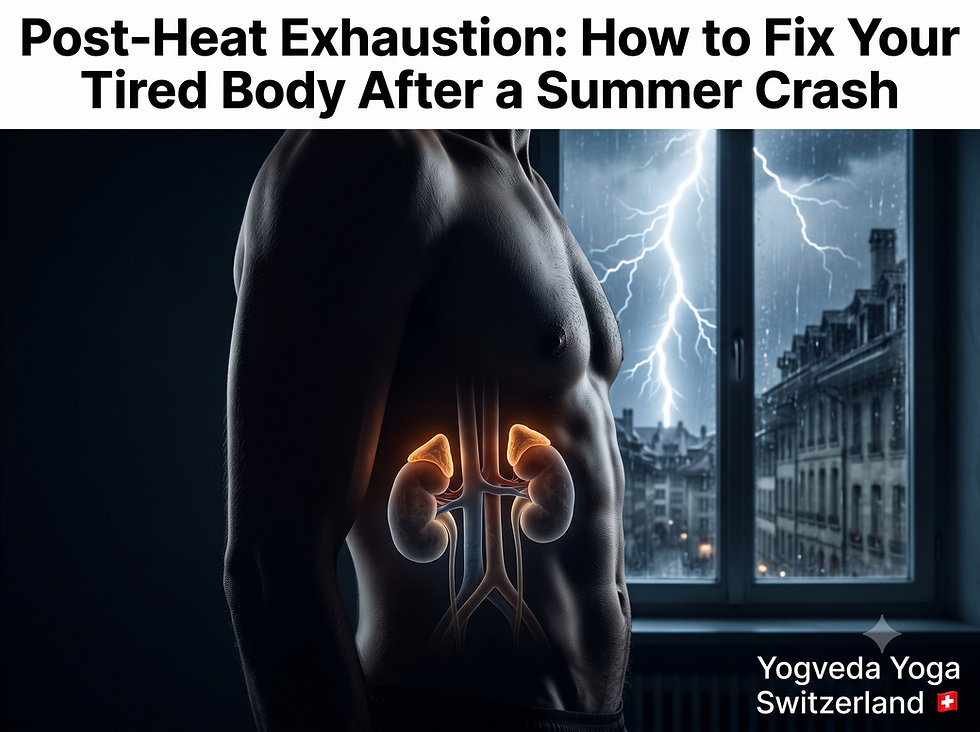
The sky finally cracks. A massive summer thunderstorm rolls in, breaking a two-week heatwave, and the temperature drops a glorious ten degrees. You open your windows, expecting to feel instantly full of energy.
But the next morning, you can barely drag yourself out of bed.
Your arms and legs feel like lead. You get dizzy when you stand up. Your brain is in a thick fog, and you suddenly feel a scratchy "summer cold" coming on. You haven't done any heavy workouts, so why does your body feel like it just ran a marathon?
Because internally, it did. You have just hit the hidden aftermath of hot weather: post-heat exhaustion. To fix this deep fatigue, you cannot rely on coffee or willpower. You have to understand how the heat drained your body's internal resources, and how to safely rebuild them.
The Hidden Marathon: How Post-Heat Exhaustion Runs Your Glands Dry
To understand why you crash after the heatwave breaks, you have to look at what your body was secretly doing while you were just sitting on the couch trying to stay cool.
Your Heart Was Running a Non-Stop Race
For days on end, your body was fighting a desperate battle to keep you from overheating. To push heat out through your skin, your blood vessels stayed wide open. To keep your blood pressure from dropping too low, your heart was forced to beat faster and harder—24 hours a day.
Exhaustion of the Stress Glands
To keep your heart racing at this emergency speed, your brain called on your adrenal glands (the two tiny stress glands that sit on top of your kidneys). These glands constantly pumped out stress hormones like cortisol and adrenaline to keep your internal cooling system running. But these glands are only meant for short emergencies, not week-long marathons. By the time the cool air arrives, your stress glands are completely empty, leaving you in a state of total post-heat exhaustion.
The Deflated System: Dizziness and Summer Colds
The moment the cool weather hits, your brain realizes the emergency is over and tells your stress glands to stop working. But because they are totally exhausted, they don't just go back to normal—they completely crash.
Why You Get Dizzy When You Stand Up
During the heatwave, your stress hormones kept your blood vessels tight enough to push blood all the way up to your brain. When those hormones suddenly vanish, your blood vessels lose their tightness and become lazy. When you stand up from a chair or get out of bed, your blood vessels fail to squeeze quickly enough. Blood pools down in your legs, your brain loses oxygen for a split second, and you get a sudden dizzy spell or "head rush."
The Sudden Immune System Drop After Post-Heat Exhaustion
Cortisol is a stress hormone, but it also acts as your body's natural shield against inflammation. When your exhausted body stops making cortisol, your defenses drop instantly. Any hidden virus or bacteria can now attack your system. This is the exact reason why so many people catch a heavy, annoying cold the very day a summer heatwave ends.
The Food Trap: How Heavy Carbs Worsen Post-Heat Exhaustion
When you feel completely wiped out, it is incredibly tempting to reach for heavy comfort foods like pasta, bread, pizza, or sugary treats to get a quick energy boost. This is a massive mistake that will only lock you into your fatigue.
How Heavy Carbs Suck the Body Dry
Heavy carbohydrates act like a sponge in your digestive tract. To break them down, your body has to pull fluids away from your muscles, brain, and bloodstream, and flood them into your stomach. These heavy carbs literally suck the water right out of your body, leaving you even more dehydrated, deflated, and thoroughly exhausted than before.
Nourish to Overcome Post-Heat Exhaustion
Instead of moisture-stealing foods, your body desperately needs highly nourishing, naturally hydrating options. Choose watery, easy-to-digest vegetables, light warm soups, and fresh fruits. They deliver vital nutrients and real energy without demanding that your body hand over its last remaining water reserves just to process your lunch.
The "Detox" Mistake: Do Not Try to "Sweat It Out"
The commercial fitness industry loves to give terrible advice when you feel sluggish: "Feeling lazy? Go sweat it out! Take a hot yoga class or do a high-intensity workout to get your energy back."
Why Forcing Exercise Shatters Your System
Pushing an exhausted system into a sweaty, high-intensity workout is like driving a car that has absolutely no oil. You will force your empty stress glands to squeeze out their last remaining drops of energy. You might feel a fake, jittery buzz for an hour, but by the afternoon, your nervous system will shatter, leaving you trapped in deep fatigue and sickness for weeks.
The Yogveda Solution: Rebuilding Your System Safely
To recover from post-heat exhaustion, you must stop spending energy and start rebuilding it. Using the practical tools of yoga science, we activate the three distinct motors of breath and absolute stillness to nurse your system back to health.
Motor 1: Alternate Nostril Breathing (Nadi Shodhana Pranayama)
Your nervous system is currently confused—bouncing between total exhaustion and random spikes of anxiety. By gently closing one nostril at a time and switching the airflow back and forth with Nadi Shodhana Pranayama, you manually balance the two sides of your brain. This rhythmic breathing tells your brain stem that you are completely safe, forcing your stress glands to go completely dormant so they can finally rest and refill their hormone levels.
Motor 2: Throat Control (Ujjayi Breathing)
Air only ever fills your lungs. Despite what your local "McYoga" studio tells you, you do not have lungs in your stomach. But when you take a deep breath with that soft, whispering sound in your throat (Ujjayi Breathing), you slow down the movement of air. This throat control immediately triggers a calming reflex that slows your heart rate down from its panicked pace, saving your body from wasting precious cellular energy.
Motor 3: Deep Diaphragm Breathing to Stop Dizziness
To balance your blood pressure and stop the dizziness without forcing your tired stress glands to work, you must use your main breathing muscle—the diaphragm. When you take a deep breath, this large muscle shifts downward and gently presses on the organs in your belly, which is why your stomach naturally expands outward. This gentle downward pressure helps move the blood that has pooled in your lower body and legs, sending it back up toward your heart and head so your blood pressure stabilizes naturally.
Absolute Stillness (Savasana) to Heal Post-Heat Exhaustion
True yoga for recovery is about stopping all movement, not flowing through active poses. Every time you move a muscle, it creates internal friction and heat. By lying completely still in Savasana on a firm floor or bed, supported comfortably by pillows, your muscle activity drops to absolute zero. With zero energy being wasted and your heart rate stabilized by your breath, your body finally enters deep repair mode, reboots your immune system, and cures your post-heat exhaustion from the inside out.
👉 Yogveda Asana Lesson : Build the physical presence to distinguish between what is real in the body and what is just a feeling.
👉Yogveda Yoga Teacher Training in Bern: Deepen your understanding of Patanjali's philosophy of mind and truth.
Author, Master Shahid Khan



Comments