
Nyaya Darshana: The Science of Logic, Epistemology, and Valid Proof
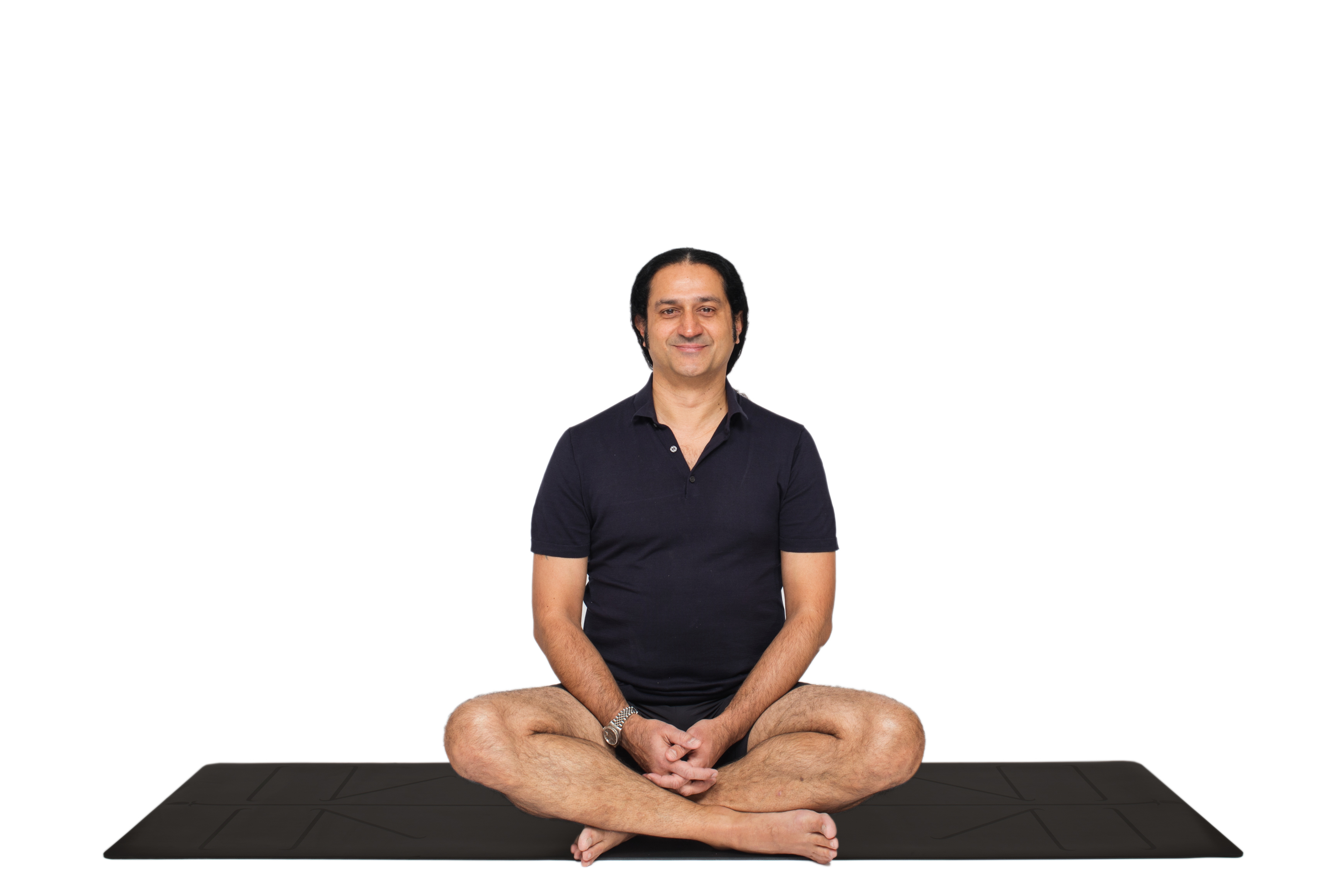

In the precise body-science of Master Shahid Khan’s Yogveda Yoga, every understanding of human biology is rooted in strict laws of verification. As we examine the observational lenses of classical Indian philosophy, we begin with the logical foundation of all knowledge: Nyaya Darshana. Founded by Sage Gautama (Akshapada Gautama), this school asks the fundamental question: How do we know what is true? Before any physical posture, breathing technique, or biomechanical adjustment can be applied, we must first establish the formal rules of valid logic and scientific proof.
What is Nyaya Darshana?
Nyaya Darshana is the classical system of formal logic, epistemology (the theory of knowledge), and scientific debate. The word Nyaya literally translates to "that which leads into an object" or "just rule." Far from unproven assumptions or emotional claims, this discipline demands that any statement regarding the universe, the mind, or the human body must be verified through unshakeable methods of proof.
Within our university-level teaching framework, this school provides the cognitive machinery required to separate sensory illusion from physical reality. When a student or patient presents with chronic cervical tension, shallow breathing, or nervous system exhaustion, this system allows us to clinically diagnose the actual root cause rather than relying on guesswork.
The 16 Padarthas: The Categories of Logical Inquiry
In the founding text, Gautama’s Nyaya Sutras, the entire framework of reality and reasoning is organized into 16 Padarthas (subjects or categories of logical inquiry). Understanding these categories provides the scientific structure needed to examine both philosophy and human biology:
1. Pramana (Means of Knowledge): The valid tools used to acquire true knowledge.
2. Prameya (Objects of Knowledge): The twelve real objects to be known, including Atman (self), body, senses, mind, activity, and suffering.
3. Samsaya (Doubt): The state of uncertainty arising from conflicting observations.
4. Prayojana (Purpose): The motive or objective behind an action or inquiry.
5. Drishtanta (Observable Example): An undisputed fact or example accepted by both scholar and observer.
6. Siddhanta (Established Tenet): A proven doctrine or fundamental law established through rigorous investigation.
7. Avayava (Components of Syllogism): The five steps of formal logical demonstration.
8. Tarka (Hypothetical Reasoning): Counterfactual reasoning used to test hypotheses by showing the absurdity of opposites.
9. Nirnaya (Final Verdict): The definitive verdict reached after removing doubt through valid proof.
10. Vada (Honest Discourse): A discussion conducted solely to arrive at objective truth.
11. Jalpa (Debate): A debate focused on winning and defending a position rather than establishing pure truth.
12. Vitanda (Cavil): Destructive criticism aimed at refuting an opponent's argument without offering a counter-thesis.
13. Hetvabhasa (Logical Fallacies): Pseudo-reasons or logical flaws that appear valid but lead to error.
14. Chhala (Equivocation): Verbal trickery or intentional misinterpretation of terms.
15. Jati (Futile Objections): Misleading objections based on false analogies.
16. Nigrahasthana (Points of Defeat): The structural failure or misunderstanding that ends a formal argument.
The 4 Pramanas: Epistemological Foundations of Truth
To distinguish valid knowledge (Prama) from error (Bhrama), Nyaya Darshana defines four precise means of obtaining valid knowledge (Pramanas). These four pillars form the epicenter of any scientific diagnostic process:
1. Pratyaksha (Direct Sensory Perception)
The immediate, uncorrupted observation of a physical phenomenon through the senses. Classical Nyaya divides perception into specific stages:
Nirvikalpaka Pratyaksha (Indeterminate Perception): The raw, immediate sensory perception of an object before the mind assigns names, categories, or conceptual judgment.
Savikalpaka Pratyaksha (Determinate Perception): The structured cognitive processing where the mind recognizes the object's identity, attributes, and structural relationships.
Laukika vs. Alaukika Perception: Distinguishing standard sensory contact from higher cognitive or refined observational perception (Yogaja).
2. Anumana (Logical Inference)
Inferring an unobservable truth from a visible cause. Nyaya categorizes inference structurally:
Purvavat Inference: Inferring an unobserved effect from an observed cause (e.g., inferring upcoming tissue hypoxia from observed diaphragmatic restriction).
Shesavat Inference: Inferring an unobserved cause from an observed effect (e.g., inferring prior trauma or joint misalignment from current asymmetrical muscle recruitment).
Samanyatodrishta Inference: Inference based on general, non-causal observation or universal correlations.
Svarthanumana vs. Pararthanumana: Internal inference for one's own understanding versus formal inference structured for demonstration to others.
3. Upamana (Analogy and Comparison)
Understanding an unknown condition by comparing it to a known structural principle. For instance, comparing the hydraulic pressure wave of breath inside the torso to a closed fluid system in classical physics.
4. Shabda (Verbal Testimony / Expert Authority)
Knowledge derived from a verified, trustworthy source (Apta). In our context, this refers to the historical laws of the Patanjali tradition and proven principles of clinical anatomy.
The Five-Membered Syllogism in Applied Biomechanics
To prove a scientific hypothesis, Nyaya Darshana utilizes a complete five-step model (Pancha-Avayava) that directly connects theoretical logic to the physical, observable world.
Master Shahid Khan integrates this classical protocol directly into physical diagnostic evaluation:
1. Pratijna (The Hypothesis): Stating the proposition to be proven.
Example: This human organism is locked in a state of sympathetic nervous system overload.
2. Hetu (The Reason / Cause): Identifying the observable cause.
Example: Because the throat motor of breath is restricted and the cervical spine is compressed forward.
3. Udaharana (The Universal Example): Stating the general rule with a verifiable instance.
Example: Wherever the cervical spine is compressed and breathing is shallow, systemic vascular tone and heart rate increase.
4. Upanaya (The Application): Applying the universal rule to the specific case at hand.
Example: This specific cervical spine exhibits exact biomechanical compression and shallow throat breathing.
5. Nigamana (The Conclusion): The final, proven assertion.
Example: Therefore, this human organism is indisputably locked in a sympathetic stress loop that must be biomechanically corrected.
Logical Fallacies (Hetvabhasa) and the Causal Chain to Liberation (Apavarga)
Postural faults and chronic muscle tension are frequently caused by sensory illusions within the brain (Hetvabhasa). When the central nervous system misinterprets a collapsed posture as "normal," it commits a logical fallacy of reasoning.
Nyaya Darshana maps a precise causal chain showing how logical clarity restores biological function:
Tattva-Jnana (True Knowledge) → Destruction of Mithya-Jnana (False Knowledge) → Cessation of Pravritti (Improper Action) → Resolution of Duhkha (Suffering/Disorder) → Apavarga (Systemic Liberation)
By applying direct perception (Pratyaksha) and logical inference (Anumana), we break down these perceptual errors. Acquiring true knowledge of reality (Tattva-Jnana) eliminates false movement patterns, quiets the autonomic nervous system, and resolves chronic physical disorder (Duhkha), leading to systemic balance (Apavarga).
Join Yogveda Asana, Pranayama Classes and Yoga Workshops to Cure and Learn More
Resolving chronic joint pain, postural collapse, and nervous system fatigue requires more than passive stretching or blind faith. You require a scientific diagnostic approach built on the unshakeable laws of logic and applied biomechanics.
By using Master Shahid Khan's applied biomechanics, we merge the timeless logic of this classical school with the precision of modern neurology. We correct the 3 Motors of Breath, realign the spine, and free your nervous system from chronic stress.
Join Yogveda Asana, Pranayama classes and Yoga Workshops to cure and learn more about your unique biology. Stop leaving your health to chance. Train with anatomical accuracy, master the laws of logic, and live longer.
👉 Yogveda Asana Lesson : Build the physical presence to distinguish between what is real in the body and what is just a feeling.
👉Yogveda Yoga Teacher Training in Bern: Deepen your understanding of Patanjali's philosophy of mind and truth.
Author, Master Shahid Khan
Yogveda Yoga Switzerland 🇨🇭


Comments