
Waking Up at 3 AM? Your Endocrine System is Crashing.

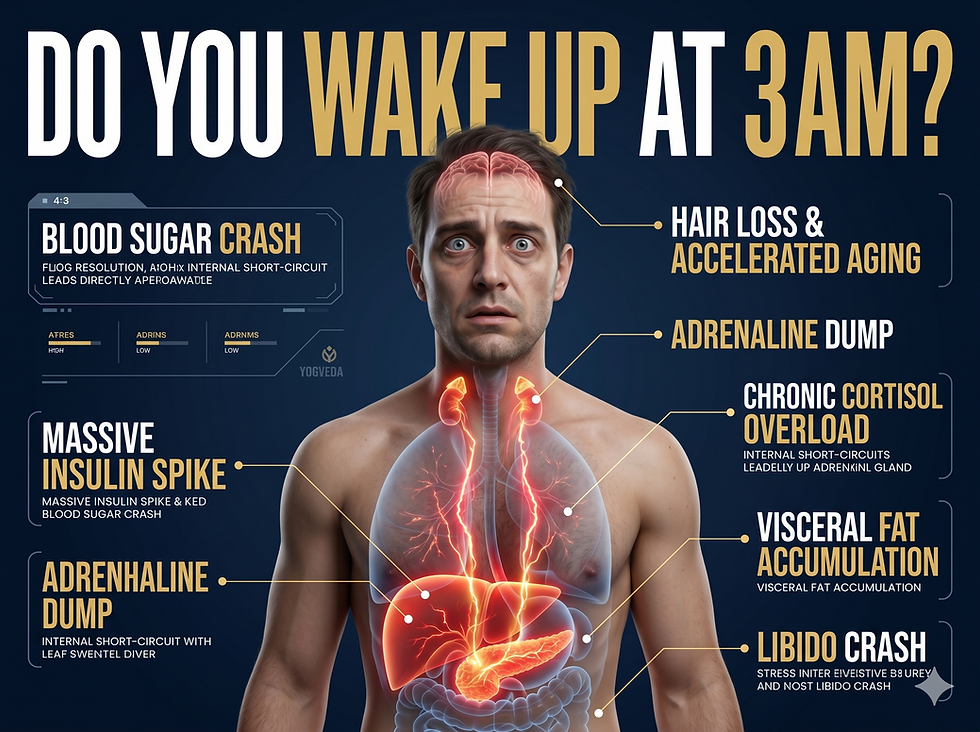
Do you consistently wake up between 2:00 AM and 4:00 AM, wide awake, with your heart pounding and your mind racing?
The modern wellness industry loves to romanticize this. Spiritual influencers will tell you that the "veil is thin," that the universe is trying to send you a message, or that you are undergoing a profound spiritual awakening.
Master Shahid Khan considers this dangerous misinformation and a scientific fallacy.
The universe is not waking you up; your adrenal glands are. You are not experiencing enlightenment; you are experiencing a severe nocturnal blood sugar crash and a violent stress response. Romanticizing physiological dysfunction prevents you from fixing it.
If you wake up at 3 AM, here is the exact biochemical sequence of what is actually happening inside your body. It is a biological equation: Junk Food ➔ Spiked Insulin ➔ Adrenaline ➔ Cortisol.
1. The Trigger: Sugars and Carbs
The cycle does not start at 3 AM; it starts hours before you go to bed. When you eat sugars, simple carbohydrates, or junk food late in the day, you flood your bloodstream with glucose. Your body is not designed to process this heavy metabolic load right before sleep.
2. The Reaction: Spiked Insulin
To handle the sudden influx of junk food, your pancreas overreacts and pumps a massive spike of insulin into your bloodstream. As you fall asleep, this excess insulin aggressively sweeps the glucose out of your blood. It works too well. By the middle of the night, your blood sugar plummets to dangerously low levels (hypoglycemia).
3. The Emergency Protocol: Adrenaline & Cortisol
Your brain consumes massive amounts of energy to survive. When your blood sugar crashes while you are sleeping, the brain registers this as an acute, life-threatening emergency. To prevent you from slipping into a coma, your Central Nervous System (CNS) hits the panic button.
It triggers your adrenal glands to dump stress hormones directly into your system:
Adrenaline (Epinephrine): This is the chemical shock that snaps your eyes open at 3:00 AM. It is why your heart is pounding, why you feel "hyper-aware," and why your mind starts racing with anxieties.
Cortisol: Cortisol floods your system to violently force your liver to dump its emergency stores of glucose back into the blood to save the brain. Because your body is now locked in a chemically induced "fight or flight" survival state, going back to sleep is neurologically impossible until the cortisol clears your system.
The Long-Term Cost: Why Chronic Cortisol Destroys You
Waking up at 3 AM is just the immediate symptom. If your body is trapped in this nocturnal cortisol cycle, the long-term biological damage is catastrophic. Cortisol is a survival hormone; it is not meant to be elevated chronically.
Weight Gain and Visceral Fat
Cortisol actively makes you fat. It signals the body to store energy for the perceived "emergency," specifically as visceral fat (belly fat). Visceral fat cells have up to four times more cortisol receptors than subcutaneous fat. Furthermore, cortisol actively breaks down muscle tissue for quick glucose, slowing your basal metabolic rate.
The Root Cause of Burnout
When the CNS is forced to trigger adrenaline and cortisol every night, the Hypothalamic-Pituitary-Adrenal (HPA) axis becomes dysregulated. You are locked in a constant state of sympathetic overdrive. This perpetual neurological stress is the exact biological root cause of adrenal fatigue and clinical burnout. Your battery never recharges.
Accelerated Aging, Hair Loss, and a Libido Crash
When your body is fighting a daily survival war, it shuts down "non-essential" biological functions—like cellular regeneration and reproduction. High cortisol breaks down collagen and pushes hair follicles into a resting phase (telogen effluvium), causing rapid hair shedding and accelerated skin aging. Simultaneously, it suppresses the production of sex hormones (testosterone and estrogen), leading to a severe and sudden drop in sexual drive.
Mental Decline and Social Withdrawal
High cortisol is neurotoxic. Chronic exposure physically degrades the hippocampus (the brain region responsible for memory and emotional regulation) while enlarging the amygdala (the fear center). This results in severe anxiety, emotional reactivity, depression, and ultimately, social isolation, as your brain lacks the neurological bandwidth to handle social interactions.
The Clinical Yogveda Solution: Regulating the System
Meditating at 3 AM will not fix a blood sugar and cortisol crisis. To sleep through the night, you must rehabilitate your endocrine system and your autonomic nervous system.
At Yogveda Yoga, we do not treat sleep issues with "good vibes." We use biological protocols and applied biomechanics:
The Metabolic Rule (The Cure): Stop eating after 6:00 PM, or only have a light soup. Absolutely no sugars or heavy foods in the evening. This single habit prevents the massive insulin spike that triggers the 3 AM adrenaline crash.
Food Advice Session: Request a personalized food advice session with Master Shahid Khan to properly repair your metabolic baseline.
Evening Regulation: Join the Yogveda Yoga evening classes in Bern. We use deep, geometrically precise forward extensions to mechanically compress the abdominal organs, stimulate the pancreas, and force the nervous system out of chronic fight-or-flight overdrive, permanently lowering your baseline cortisol.
Stop romanticizing your body’s cry for help. Take action:
👉 Yogveda Asana Lesson : Build the physical presence to distinguish between what is real in the body and what is just a feeling.
👉Yogveda Yoga Teacher Training in Bern: Deepen your understanding of Patanjali's philosophy of mind and truth.
Author, Master Shahid Khan


Comments