
What is Pranayama? Why the Modern Practice is a Lie, and How Yogveda Rebuilt It.
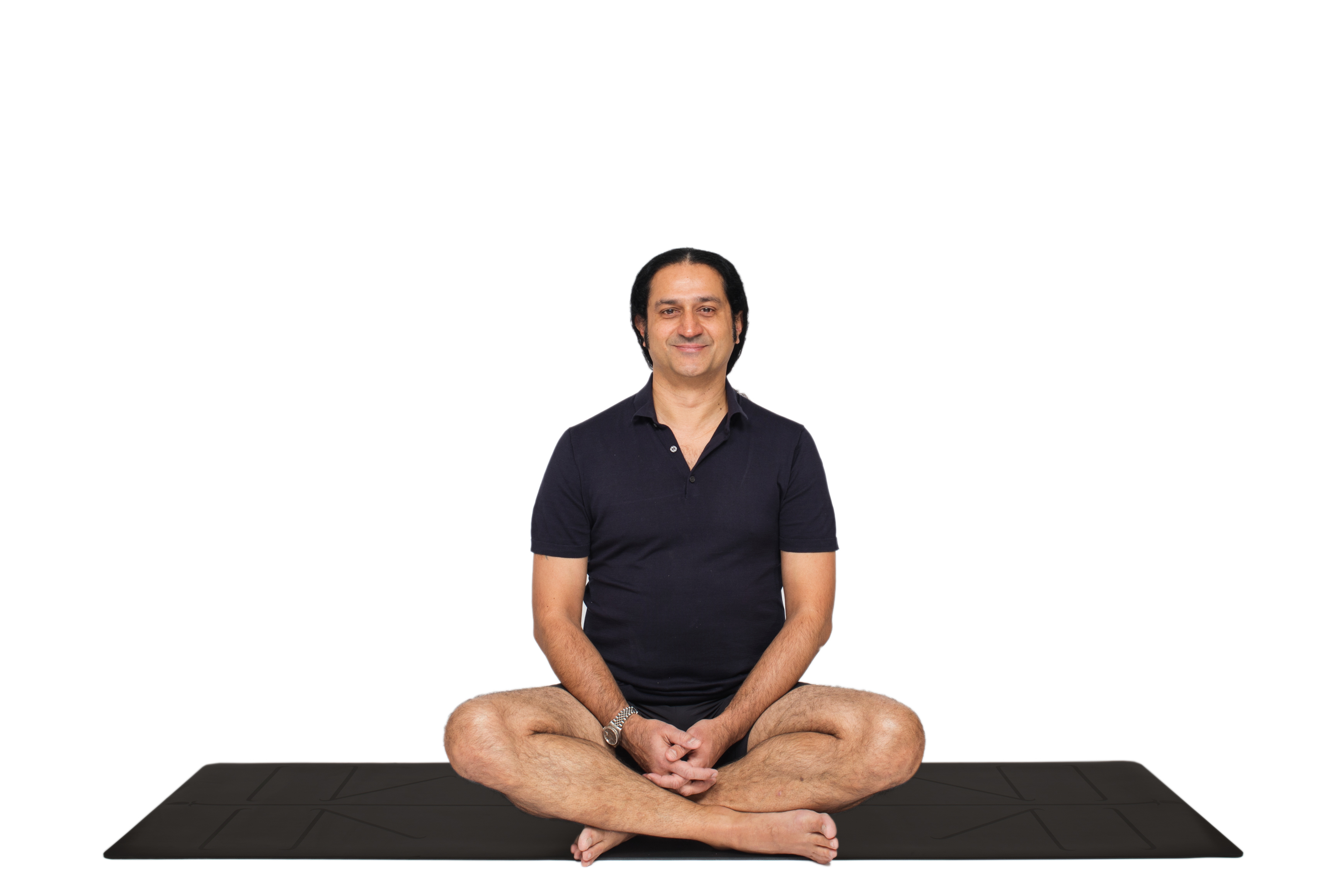

The "Cross-Legged" Illusion and the Crushed Diaphragm
The modern wellness industry has reduced the ancient, powerful science of Pranayama to a fluffy relaxation exercise. You walk into a typical yoga class, and the instructor tells you to sit "cross-legged" with your feet placed in front of each other, close your eyes, and "just take a deep breath."
Let us be clinically honest: This sitting posture does not exist in true Yoga. Placing your feet in front of each other on the floor forces your pelvis to tilt backward and presses your entire upper body forward into a slump. This violently compresses your diaphragm and traps your lungs in a cage of collapsed bone. You cannot pour a powerful current of air through a crushed pipe.
The Catastrophe of Shallow Breathing: Building a Biological Swamp
When you attempt to breathe in this collapsed, fake posture, the biological consequences are devastating:
Muscular Atrophy: Your diaphragm and primary breathing muscles become profoundly weak from disuse.
Heart Weakness: Because your lungs are not expanding fully, the pressure required to pump highly oxygenated blood drops, directly weakening your heart muscles over time.
Chronic Anxiety: Shallow, restricted chest breathing instantly triggers the sympathetic nervous system, locking your brain into a constant, low-grade state of panic.
The Swamp Inside You: This is the most horrifying reality of shallow breathing. When you do not fully expand and empty your lungs, stale air remains trapped at the bottom of your respiratory system. These dark, unventilated, moist cavities become a biological swamp. Without the powerful force of deep oxygenation to clear them out, mold and fungal infections literally begin to grow in your sinuses and your lungs.
The Ancient Rule: Patanjali’s Warning (Yoga Sutras 2.49 - 2.54)
The ancient texts were not confused about this. In the Yoga Sutras, the sage Patanjali laid out the absolute, non-negotiable sequence of human transformation:
Sutra 2.49: Tasmin sati shvasa prashvasayoh gati vicchedah pranayamah.
(Only once the physical posture—Asana—has been secured, can the regulation of the breath—Pranayama—begin).
Sutras 2.50 & 2.51: Patanjali describes the mechanical mastery of the breath—the inhale, the exhale, the retention, and the ability to transcend them entirely, making the breath long and subtle.
Sutras 2.52 to 2.54: Here is the ultimate goal. When the breath is mastered, Tatah kshiyate prakasha avaranam (the veil covering the inner light is destroyed). The mind becomes fit for absolute concentration (Dharana), and the senses withdraw from external chaos (Pratyahara).
You cannot achieve the mental clarity of Sutra 2.52 if your lungs are full of mold and your heart is weak. Architecture comes first.
Master of Modern Pranayama: The Unrivalled Yogveda System
Master Shahid Khan recognized a brutal reality: modern human bodies are far too structurally compromised to perform ancient Pranayama without mechanical intervention. To solve this, he developed a completely new, revolutionary system that is unrivalled anywhere in the world. The Yogveda Pranayama method merges the deep wisdom of Patanjali with the hardcore, structural biomechanics needed to reconstruct the modern respiratory system.
Here is how Master Shahid Khan reverse-engineers your breathing apparatus in a 1-hour Yogveda Pranayama class in Bern:
Part 1: Open Your Breathing Space
Before you can breathe, you must unlock the cage. You lie down using a precise bridge under your lower back and a specialized neck support. This forcibly relaxes the spine, releases deep neck tension, and physically pries open your ribcage, creating the three-dimensional space your lungs need.
Part 2: Strengthen Your Breath (Diaphragmatic Resistance)
Breathing requires immense muscular strength. While lying on your back over the structural bridge, Master Shahid Khan places four 4-kilo weights (16 kilos total) directly onto your abdomen. You must push against the gravity of the iron to inhale. This heavy resistance training rebuilds your weak breathing muscles and dramatically increases lung function.
Part 3: Enhance Exhalation
Most anxiety and stale air are trapped because people do not know how to empty their lungs. You use a clinical breath trainer in your mouth to create resistance on the exhale. This strengthens the exhalation muscles, forces out the stale carbon dioxide (clearing out the "swamp"), and gives you absolute control over your nervous system.
Part 4: The True Pranayama Execution
Only now—when the spine is unlocked, the diaphragm is strong, and the lungs are clear—does true Pranayama begin. Master Shahid Khan guides you through specific, traditional Pranayama techniques. Because your mechanical blockages are gone, these exercises can finally penetrate your nervous system, destroying the veil of ignorance (Sutra 2.52) and bringing you profound mental clarity.
The Reality Check: Stop Suffocating in Plain Sight
Do not waste your time taking shallow breaths in a collapsed body. To experience the true power of your nervous system, you must reconstruct the engine. Master Shahid Khan's system is the only method that treats breath as the deep, structural science it is meant to be.
Author Master Shahid Khan


Comments