
The Hamstring Paradox: Why Your Lower Back Pain Starts in Your Legs.
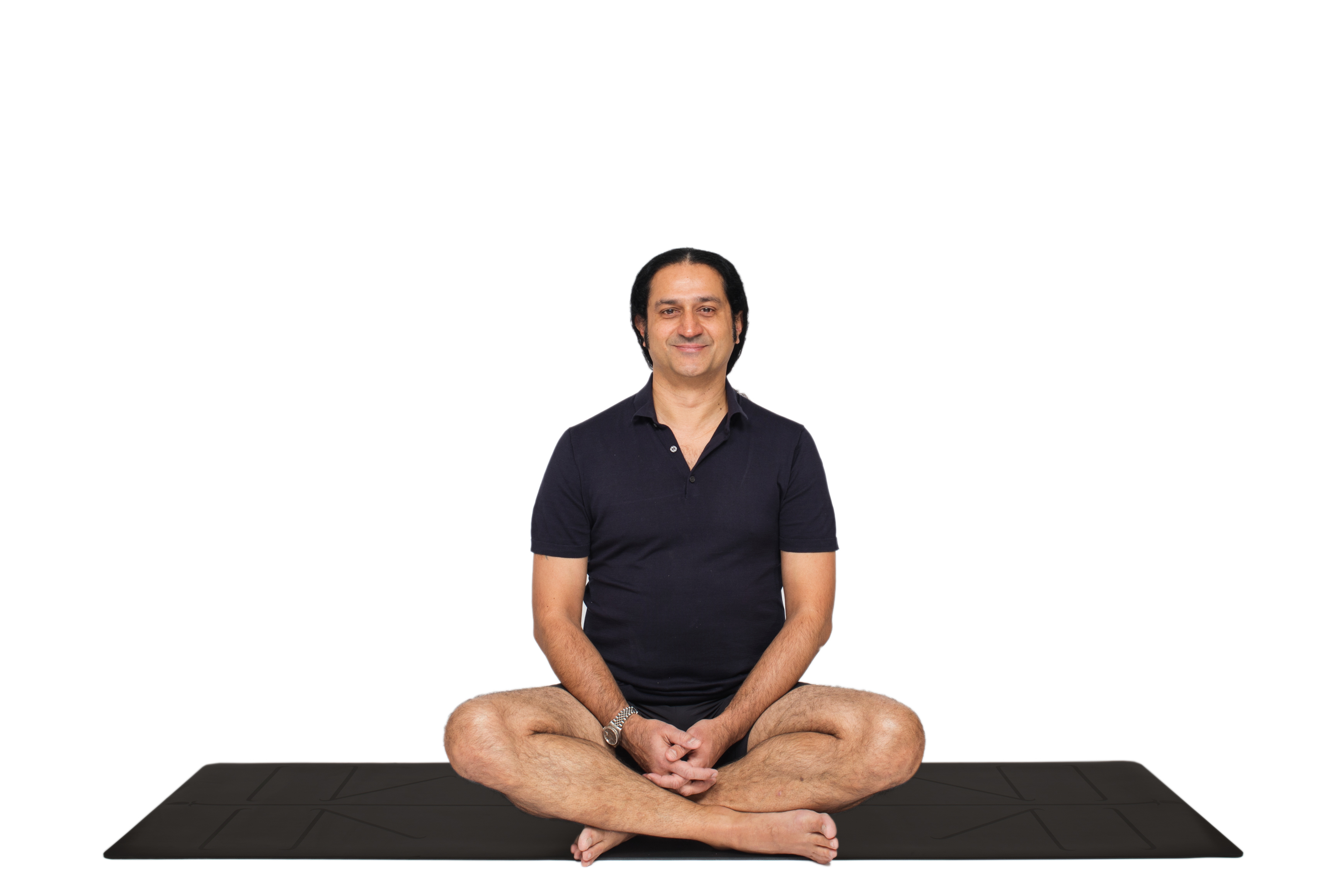

The Mechanical Vice Grip: Short Hamstrings, the Psoas, and the Spine
Ask any desk worker in Bern what their biggest physical limitation is, and the answer is almost always the same: "My hamstrings are tight, and my lower back hurts." Their immediate instinct is to bend over and aggressively stretch the backs of their legs, or go to a Pilates class to "lengthen" them.
Let us look at the clinical biomechanics: When your hamstrings are chronically short and contracted, they act like thick steel cables pulling down on your ischial tuberosity (your sit bones). This constant downward pull forces your pelvis into a posterior tilt (tucking the tailbone under).
When the pelvis tucks under, it completely erases the natural, shock-absorbing curve of your lumbar spine. Simultaneously, your psoas muscle (the deep hip flexor attached to the front of your lumbar vertebrae) is tight from sitting all day, pulling your spine forward. Your lower back is now caught in a brutal mechanical vice grip: the hamstrings pull the pelvis down from the back, and the psoas pulls the spine forward from the front. The result? Crushed spinal discs, chronic pain, and severe structural decay.
Why Gyms, Pilates, and The Fitness Industry Complex Will Not Help You
The Fitness Industry Complex completely misunderstands this kinetic chain. If you go to the gym and use a seated hamstring curl machine, you are isolating and further shortening a muscle that is already contracted, severely worsening your pelvic tilt.
If you go to a Pilates class, you will spend an hour lying on your back pulling on straps, passively stretching the muscle without any relationship to gravity or ground reaction force. Neither of these approaches fixes the root architectural problem. You cannot fix a collapsing roof (the spine and pelvis) if the foundation of the house is crooked.
The Yogveda Architecture: The 12-Week Clinical Protocol
In the Yogveda Yoga system, Master Shahid Khan does not treat the body in isolated, disconnected parts. To truly release the hamstrings and save the lumbar spine, you must rebuild the entire kinetic chain from the floor up.
This is why Yogveda requires a strict, progressive 12-Week Yearly Program to systematically reconstruct the lower body's architecture:
Weeks 1 to 4: Feet Opening.
Everything starts with Ground Reaction Force. If your foot arches are collapsed, your tibia rotates, and your entire leg alignment is broken. We spend four weeks purely rebuilding the structural integrity and weight-bearing capacity of the feet.
Weeks 5 to 8: Ankle and Achilles Tendon.
Once the feet are stable, we move up to the primary shock absorbers. We release the chronic tension in the Achilles tendon and restore the true mechanical hinge of the ankle joint, which is required for any safe forward movement.
Weeks 9 to 12: The Hamstrings.
Only after the feet and ankles are structurally sound do we target the hamstrings. Because the foundation is now stable, we use active eccentric loading (creating tension while lengthening) to safely realign the pelvic anchor and free the lower back from the mechanical vice grip.
The Master's Warning
Do not force your body into shapes it does not have the architectural foundation to support. Yanking on short hamstrings with passive stretching while your feet and ankles are weak will only result in torn ligaments and a destabilized spine. Stop wasting time with isolated gym workouts dictated by the Fitness Industry Complex. Come to Yogveda Yoga in Bern to learn the precise biomechanics of the kinetic chain and rebuild your body from the ground up.
Author Master Shahid Khan


Comments