
The Yajurveda: The Science of Applied Action, Biomechanics, and Transformation
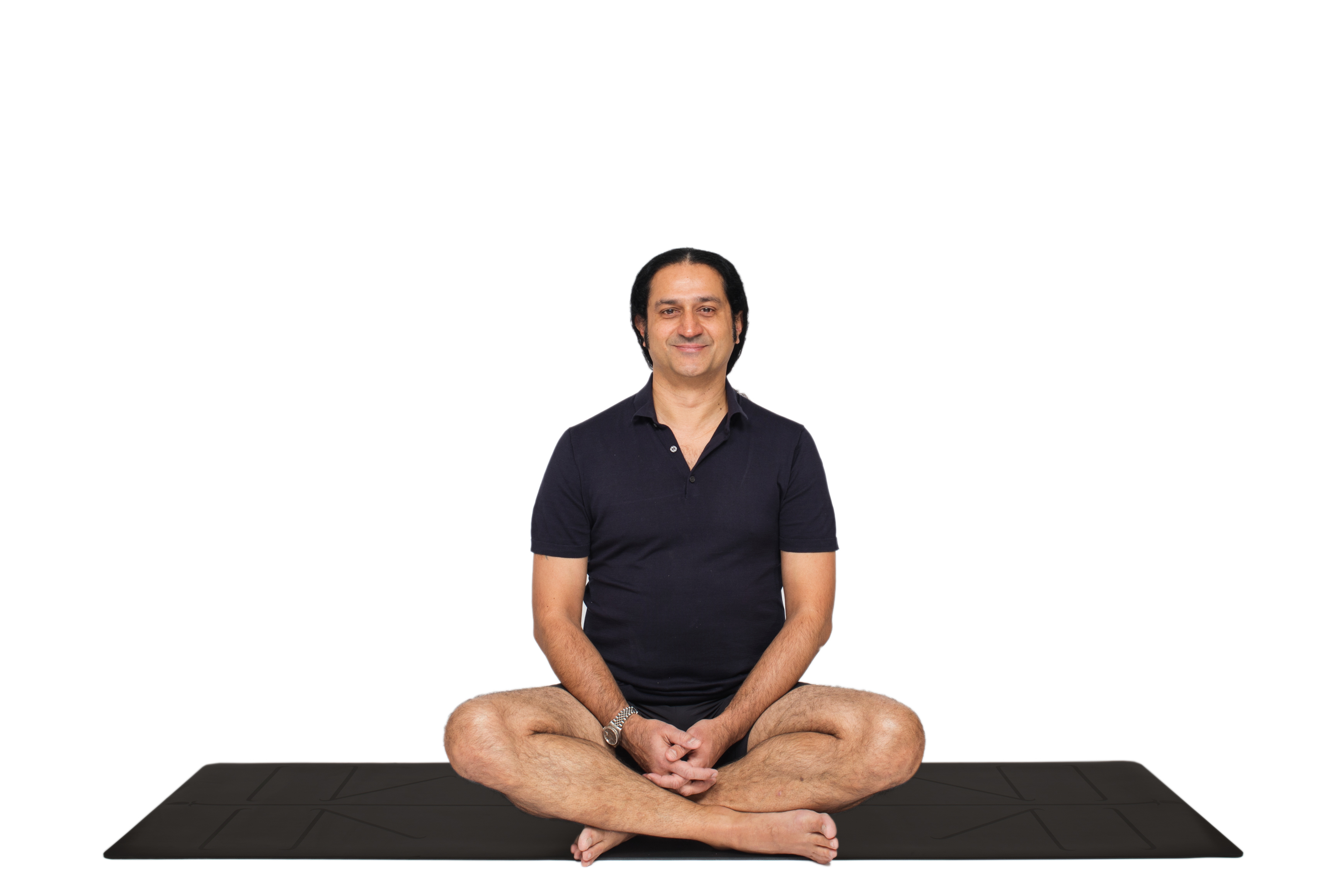

To understand how ancient Vedic science transitions from abstract theory into physical reality, we must examine the mechanics of human action. If the Rigveda provides foundational data (Cognition) and the Sāmaveda provides acoustic frequency (Respiration), the Yajurveda provides kinetic execution—the precise, measurable science of purposeful movement and applied action (Soma / Physicality).
Far from being a primitive catalog of religious sacrifices, the Yajurveda is an ancient, empirical manual for geometric precision, metabolic care, and Yajurveda Biomechanics.
What is the Yajurveda and How Was It Structured?
The word Yajurveda comes from the Sanskrit root Yaj, which means "to act," "to transform," or "to align with natural law through effort." A Yajus is a specific instruction or procedural formula for executing an action.
Dimension | Historical & Textual Fact |
Historical Period | Codified during the Later Vedic Period (c. 1200 BCE – 900 BCE). |
Main Branches | Divided into two major traditions: Shukla (White / Clear) Yajurveda and Krishna (Black / Mixed) Yajurveda. |
Mathematical Appendices | Contains the Shulba Sutras—the earliest known texts on complex geometry (including early proofs of the Pythagorean theorem), used to mathematically calculate and construct exact physical spaces. |
The Two Traditions
The division into two branches reflects an early historical effort to keep scientific pedagogy organized:
Shukla (White / Clear) Yajurveda: Preserved by Sage Yajnavalkya. It is called "clear" because it strictly separates the procedural formulas (Samhita) from the explanatory commentaries (Brahmanas). The famous Isha Upanishad forms its 40th and final chapter.
Krishna (Black / Mixed) Yajurveda: Preserved in the Taittiriya, Maitrayani, and Katha traditions. It is called "mixed" because the action formulas and the philosophical explanations are woven together in a continuous text.
Deconstructing Mainstream Search Results: Priests, Rituals, and Sacrifices
If you run a standard web search today, the official definition of the Yajurveda is often listed as: "A guide containing prose formulas and mantras used by priests during sacrificial rituals."
While this is the mainstream accepted definition, it represents a severe historical mistranslation. When 19th-century colonial scholars translated the Yajurveda, they lacked the vocabulary of thermodynamics, Yajurveda Biomechanics, and cognitive science. To understand the Yajurveda accurately, we must deconstruct three specific words:
1. The "Priest" was actually a Technician (The Adhvaryu)
In the Yajurvedic system, the person executing the action was called the Adhvaryu. This individual was not a "priest" mediating between humans and a sky-god. The Adhvaryu was a process engineer and a mathematician. Their job was to measure space using the Shulba Sutras (geometry), track time, and ensure that every physical action was executed with absolute structural precision.
2. The "Ritual" was an Algorithmic Procedure (Yajus)
A ritual, in the religious sense, is an action performed out of blind faith. In Vedic science, the procedures outlined in the Yajurveda are physical algorithms. A Yajus is a step-by-step instruction manual for executing an action to achieve a predictable result based on cause-and-effect (Kārya-Kāraṇa).
3. The "Sacrifice" was Energy Transformation (Yajna)
The most damaging mistranslation in Vedic history is reducing the word Yajna to "sacrifice"—evoking images of burning objects to please the heavens. In the physics of the Yajurveda, Yajna is the science of energy transformation—represented as internal and external fire (Agni) burning away cellular and mental impurities:
Cosmic Yajna: The natural cycle of environmental thermodynamics.
Biological Yajna: Cellular metabolism (Jāṭharāgni)—the breakdown of nutrients to synthesize ATP energy.
Somatic Yajna: Purposeful physical work (Pauruṣa) executed with structural focus to prevent biological decay.
Key Verses: The Mechanics of Action, Mind, and Vedāntic Epistemology
1. The Full Poorna Madha Verse: The Law of Energy Conservation
This complete two-line verse found in both the Isha Upanishad and Brihadaranyaka Upanishad establishes the fundamental laws of energy:
Oṁ pūrṇam adaḥ pūrṇam idam pūrṇāt pūrṇam udacyate |Pūrṇasya pūrṇam ādāya pūrṇam evāvaśiṣyate ||Oṁ śāntiḥ śāntiḥ śāntiḥ
Translation (Full): "That [unmanifest source] is whole, this [manifest universe] is whole; from wholeness, wholeness arises. Extracting wholeness from wholeness, wholeness alone remains. Om, Peace, Peace, Peace."
Scientific Deconstruction: Thousands of years before modern physics, this complete verse established the laws of thermodynamics and energy conservation in a closed system. Line one describes the emergence of physical manifestation. Line two completes the mathematical equation: the underlying source remains complete and balanced even after extracting the manifest universe.
2. Cognitive Intent Precedes Physical Action (Shiva Sankalpa Sukta)
Yajjāgrato dūram udaiti daivaṁ tadu suptasya tathaivaiti |Dūraṅgamaṁ jyotiṣāṁ jyotirekaṁ tanme manaḥ śivasaṅkalpam astu ||(Shukla Yajurveda 34.1)
Translation: "May my mind, which travels far when awake and does the same when asleep—the one light among all lights—be filled with an auspicious, clear resolve (Shiva Sankalpa)."
Scientific Deconstruction: Physical action does not originate in skeletal muscles; it originates in neural intent. Before a precise movement can be executed, the central nervous system must be anchored by an unconditioned cognitive intent.
3. Active Living and Psychological Freedom (Isha Vasya Upanishad)
Kurvanneveha karmāṇi jijīviṣec chataṁ samāḥ |Evaṁ tvayi nānyatheto'sti na karma lipyate nare ||(Isha Upanishad / Shukla Yajurveda 40.2)
Translation: "A person should desire to live a hundred years by actively performing purposeful work. When you act in proper alignment with your true nature, action does not cling to or burden you."
Scientific Deconstruction: Physical activity is biologically non-negotiable for human longevity. When you act in alignment with your true, unconditioned nature, work leaves no psychological stress (karma lipyate).
4. The Pañca-Kośa Model and its Vedāntic Continuum (Taittiriya Upanishad)
The Taittiriya Upanishad, located within the Krishna Yajurveda, introduces the Pañca-Kośa model—a systemic map of human biology:
Annamaya Kośa: Gross anatomy (muscles, bones, joints, and cellular tissue).
Prāṇamaya Kośa: Respiration and the autonomic nervous system.
Manomaya Kośa: The limbic system, emotional reactivity, and sensory processing.
Vijñānamaya Kośa: The prefrontal cortex, executive function, and critical discernment (Viveka).
Ānandamaya Kośa: Deep physical homeostasis and unconditioned awareness.
The Vedāntic Continuum: Because the Upanishads represent Vedānta (literally "the culmination of the Vedas"), this section marks where kinetic mechanics evolve into cognitive inquiry. Later scholars (like Ādi Śaṅkara) adopted this exact framework as Vedānta's primary analytical tool to discern unconditioned consciousness from conditioned biological tissue (Ātmā-Anātmā-Viveka).
Applied Movement in Yogveda Yoga
The Yajurvedic focus on precise action (Yajus) and spatial geometry (Shulba Sutras) connects directly to modern Yajurveda Biomechanics.
In Master Shahid Khan’s Yogveda Yoga, an Asana is not a random stretch. It functions like a physical Yajus—an exact, mathematically precise mechanical action designed to protect the joints, decompress the spine, and balance the nervous system. The proprietary Yogveda Yoga Mat, designed by Master Shahid Khan, serves as a tangible scientific alignment grid—helping practitioners position their skeletal structure correctly to avoid biomechanical compensation, joint shear, and physical injury.
Preview: How the Science of Action Decayed into Religion
How did such an exact science of movement, mathematics, and energy transformation decay into temple cults and passive god-worship?
The answer lies in historical institutional destruction: the violent collapse of the ancient monastic universities (Takshashila, Nalanda) and the loss of the formal debate culture (Shāstrārtha).
On August 15th, we will publish an extensive historical study on this topic: how the loss of scientific dialectics led to the degradation of intellect (Buddhi Bhrashti), how radical texts like the Ashtavakra Gita were misinterpreted, and how the empirical science of Moksha was turned into a religious cult of passive begging.
Action Over Passive Wishing
The Yajurveda rejects passive begging, superstition, and fatalism:
Results Require Direct Effort (Pauruṣa): Wishing or praying cannot fix structural weakness or poor health. Only purposeful, active effort produces real results.
Precision Protects Biology: Careless movement creates physical friction and joint shear. Moving with exact Yajurveda Biomechanics transforms practice into a regenerative process.
The Body is the Foundation: Without a strong, healthy physical body (Annamaya Kośa), you cannot build a clear mind or achieve lasting balance.
Join Yogveda Asana and Pranayama classes, as well as Yoga workshops in Switzerland, to heal and learn more about your unique biology.
👉 Yogveda Asana Lesson : Build the physical presence to distinguish between what is real in the body and what is just a feeling.
👉Yogveda Yoga Teacher Training in Bern: Deepen your understanding of Patanjali's philosophy of mind and truth.
Author, Master Shahid Khan
Yogveda Yoga Switzerland 🇨🇭


Comments