
The Chandogya Upanishad: The Ancient Blueprint for Infinite Joy and Self-Realization

We spend much of our lives searching for answers, peace, and fulfillment in the external world. We look to careers, relationships, material success, and even external spiritual guides to give us a sense of completeness. But this outward search inevitably leaves us feeling restless, because we are looking for an infinite feeling within finite things.
Thousands of years ago, the ancient sages of India recognized this fundamental human dilemma and compiled the Chandogya Upanishad.
As one of the oldest and most revered of the Mukhya (principal) Upanishads, embedded in the melodic Sama Veda, it shifts the focus entirely away from the external world.
The Chandogya Upanishad does not offer empty comforts; it provides a profound, philosophical blueprint for self-realization. Its core message is one of ultimate empowerment: the ultimate reality of the universe is not something outside of you—it is the very essence of your own being.
The Core Message: Moving from the Finite to the Infinite
The Chandogya Upanishad marks a pivotal transition in ancient Indian thought—moving away from outward religious rituals and sacrifices, and turning intensely inward toward meditation, breath (Prana), and the philosophy of the mind. It teaches that true freedom and joy cannot be found in temporary worldly achievements, but only through direct realization of the Self (Atman) and the universal consciousness (Brahman).
To understand the depth of this text, we must look at its most profound philosophical highlights and the timeless stories it uses to awaken the mind.
Philosophical Highlights and Key Chapters
The later chapters of the Chandogya Upanishad contain some of the most celebrated dialogues in all of Eastern philosophy. They act as stepping stones, guiding the seeker from intellectual knowledge to ultimate spiritual truth.
Chapter 6: The Story of Svetaketu and "Tat Tvam Asi"
This chapter contains one of the most famous and foundational stories in all of spiritual literature: the dialogue between the sage Uddalaka Aruni and his son, Svetaketu.
Svetaketu is sent away to study the sacred texts. After twelve years of rigorous academic training, he returns home full of intellectual pride and arrogance. His father, seeing his swollen ego, asks him a single, ego-shattering question: “Did you ask for that teaching by which the unheard becomes heard, the unperceived becomes perceived, and the unknown becomes known?”
Svetaketu is baffled. He realizes that despite knowing all the scriptures, he does not know the fundamental truth of existence. Uddalaka then guides his son through a series of brilliant, practical metaphors to explain the invisible essence of the universe:
The Banyan Seed: Uddalaka asks Svetaketu to break open a tiny seed from a massive Banyan tree. Inside, Svetaketu sees almost nothing. His father explains that from that invisible, subtle essence—that "nothingness"—the massive tree arises.
The Salt in the Water: Uddalaka tells his son to dissolve a chunk of salt in a bowl of water overnight. The next morning, he asks Svetaketu to hand him the salt. Svetaketu cannot; it has vanished. But when his father tells him to taste the water from the top, the middle, and the bottom, Svetaketu realizes the salt is present in every single drop. It cannot be seen, but it is undeniably there.
Uddalaka explains that the ultimate reality of the universe (Brahman) is exactly like that salt. It is an invisible, subtle essence that permeates everything. He culminates this teaching with the supreme declaration: Tat Tvam Asi ("Thou Art That" or "You are That").
This sutra declares the absolute oneness of the individual self (Atman) with the universal consciousness. You are not a fragmented, isolated being; your deepest core is the fabric of the universe itself.
Chapter 7: Bhooma Vidya (The Knowledge of the Infinite)
In this chapter, the divine sage Narada approaches the great teacher Sanatkumara. Narada is a master of all worldly knowledge—he knows the Vedas, astronomy, mathematics, and the arts—yet he admits he is still plagued by sorrow.
Sanatkumara explains that intellectual, worldly knowledge is finite, and therefore cannot provide lasting peace. He introduces the concept of the Bhooma—the infinite, boundless, and all-pervading reality. Sanatkumara teaches a profound truth: “Yo vai bhuma tat sukham, nalpe sukham asti” (That which is infinite is joy; there is no joy in the finite). True happiness and immortality are only found when one expands their consciousness to realize the infinite Bhooma, transcending the limits of the ego.
Chapter 8: Atma Vidya (The Science of the Self)
The final chapter details the true nature of the Atman (the Self). The Upanishad describes a "small space within the lotus of the heart" (Daharavidya) where the entire universe resides.
It explains that realizing this inner Atman is the only way to free a person from sorrow, old age, death, and suffering. However, this realization requires deep discipline. The chapter outlines the necessity of Brahmacharya—a lifestyle of dedication, purity, and focused studentship—alongside dedicated meditation. The Atman is described as free from evil, free from old age, free from death, and free from grief. Discovering it is the ultimate goal of human existence.
The Sacred Sutras and the Chant of OM
The Chandogya Upanishad opens with a deep reverence for the sacred syllable OM, referred to as the Udgitha. It teaches that OM is the closest vibration to the ultimate reality.
"Sarvam khalvidam Brahma" (All this is indeed Brahman) - Another foundational sutra from the text (Chapter 3), reminding us that every single aspect of reality, both seen and unseen, is an expression of the divine consciousness.
By meditating on the breath (Prana) and calming the mind, the practitioner actively harmonizes their physical body, aligns their nervous system, and begins the inward journey from the distractions of the senses to the silence of the Atman.
Learn More About the Upanishads at Yogveda in Bern
You hold the subtle essence of the universe within you. Embrace the profound reality of Tat Tvam Asi. If you are ready to drop passive spiritual concepts and want to truly learn more about the practical, life-altering philosophy of the Upanishads, join us at Yogveda Yoga in Bern Switzerland.
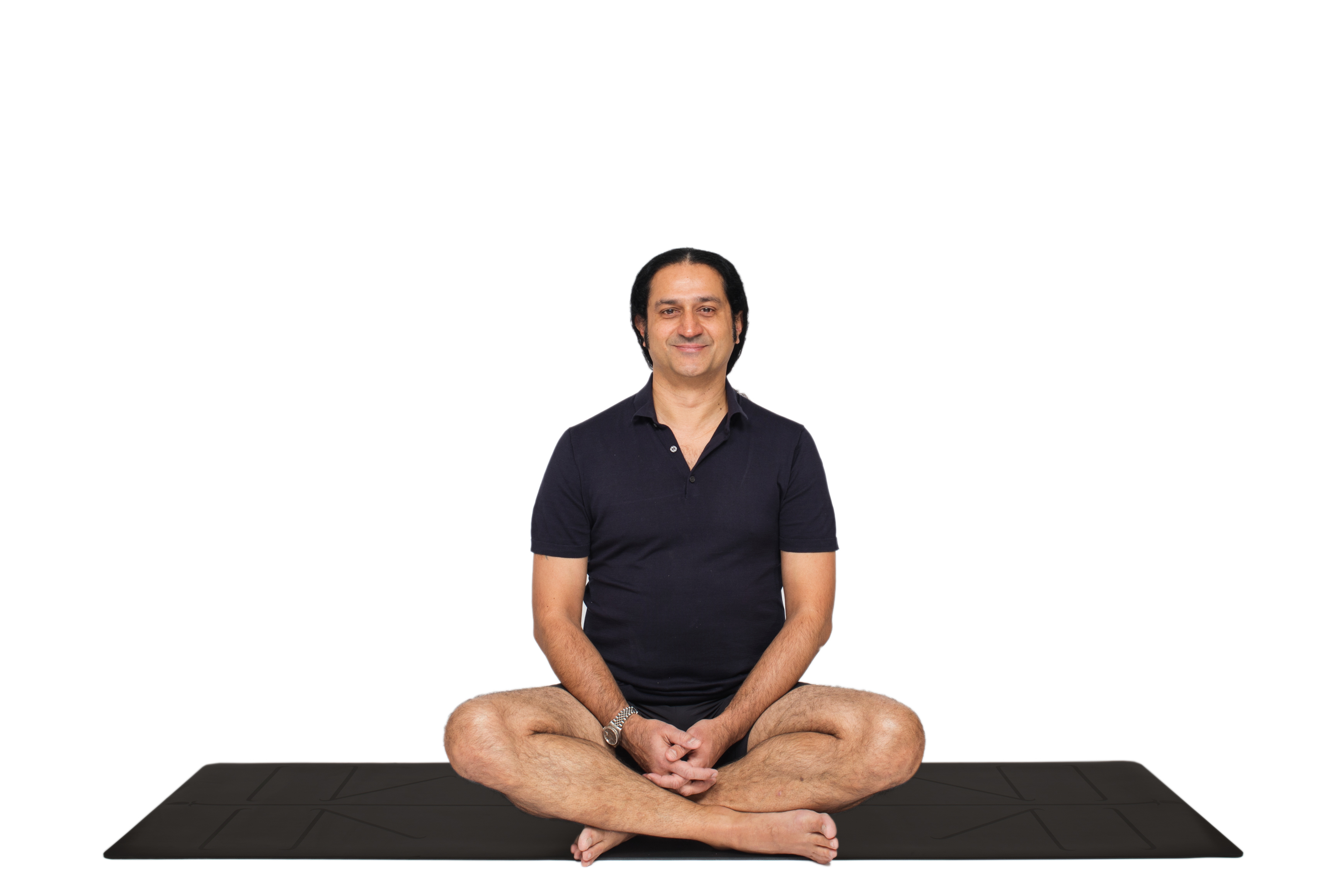
Under the traditional guidance of Master Shahid Khan at our Bern studio, you will not find comfortable distractions. You will find the precise attention to breath control, mental focus, and dedicated awareness required to truly quiet the mind and ground these ancient teachings into daily life.
Stop looking outside of yourself for verification or peace. Learn more about the Upanishads at Yogveda in Bern with Master Shahid Khan. Step onto the mat, and begin the active, rewarding work of discovering the boundless truth that has always resided within you.
👉 Yogveda Asana Lesson : Build the physical presence to distinguish between what is real in the body and what is just a feeling.
👉Yogveda Yoga Teacher Training in Bern: Deepen your understanding of Patanjali's philosophy of mind and truth.
Author, Master Shahid Khan


Comments