
You Are Already Complete: The Advaita Vedanta Core of Yogveda Yoga
Updated: Apr 2

If you step into a modern yoga studio, you will hear a constant demand to "experience" spiritual awakening. People chase profound feelings, energetic highs, and mystical states of mind.
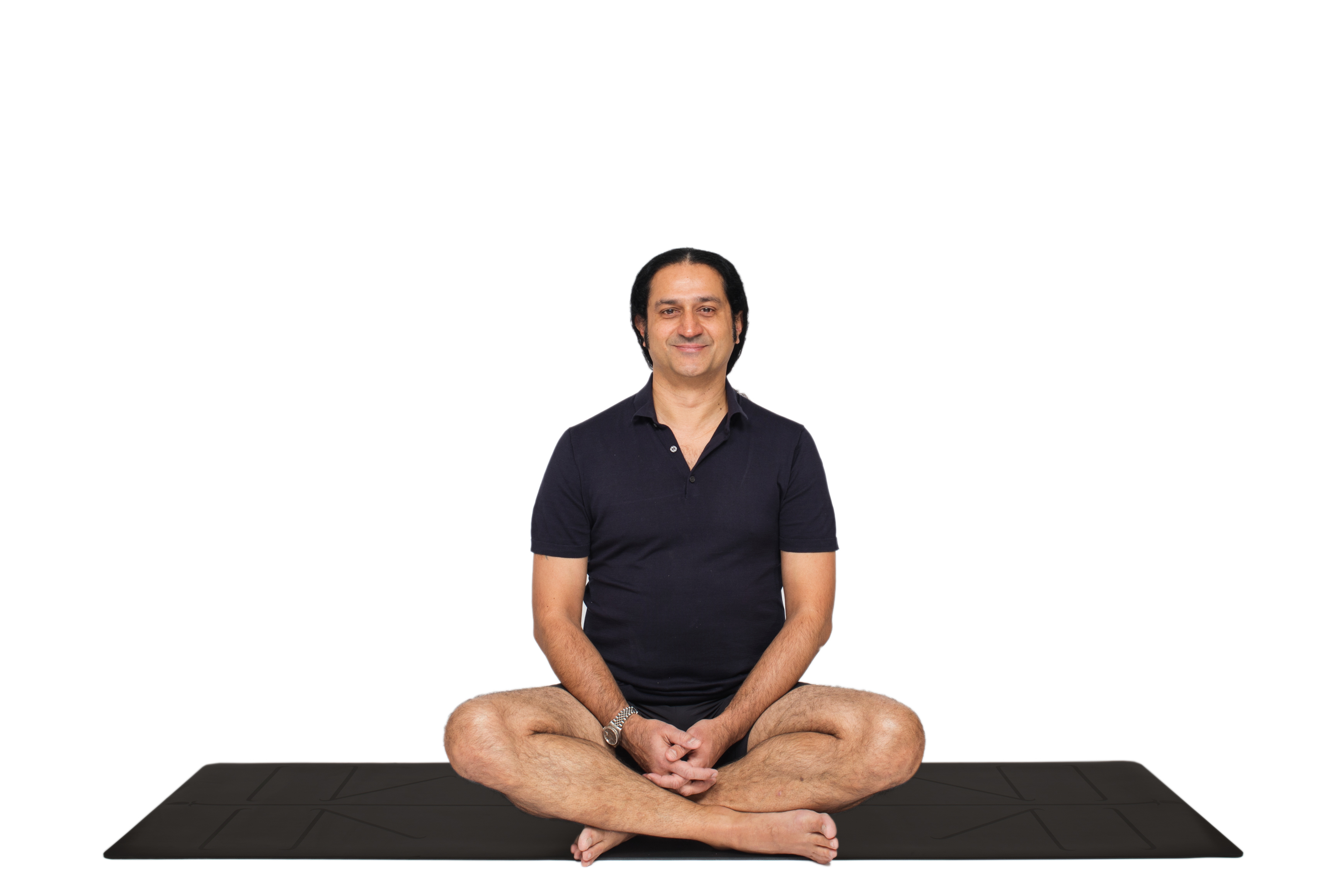
At Yogveda Yoga in Bern, Master Shahid Khan does not teach you how to chase spiritual highs.
While our curriculum heavily utilizes the mechanics of Samkhya philosophy and Patanjali’s Yoga Sutras, the uncompromising, absolute foundation of Master Shahid Khan’s teaching is Advaita Vedanta (Non-duality)—the supreme philosophy derived directly from the ancient Upanishads.
To truly understand the Yogveda system, you must understand the difference between the ultimate reality and the teaching method used to point you toward it.
The Teaching Method: Why Patanjali?
If the ultimate truth is Advaita Vedanta—the reality that there is no separation—why does Master Shahid Khan spend so much time teaching the dualistic, step-by-step mechanics of Patanjali's Ashtanga Yoga?
Because it is logical, and the human mind demands logic.
Patanjali provides a brilliant, accessible pedagogical tool. The average human mind is too chaotic and identified with its suffering to grasp absolute non-duality. Patanjali offers a systematic science that anyone can understand: correct the body (Asana), correct the breath (Pranayama), and correct the mind (Dharana/Dhyana). Patanjali even splits Samadhi into logical, progressive stages so the intellect can comfortably grasp the process of turning inward.
It is a systematic dismantling of ignorance. We use the clinical mechanics of Patanjali to clean and stabilize the biological vehicle so the mind can finally become quiet.
The Ultimate Reality: The Upanishads and The Advaita Test
But Patanjali's mechanics are just the ladder. The absolute foundation is Advaita Vedanta, sourced from the Upanishads—the final, most profound chapters of the ancient Vedas. The Upanishads do not offer mechanical techniques; they offer the ultimate revelation of reality.
On certain occasions, to test the students who have become spiritually ripe, Master Shahid Khan will drop the mechanics entirely and put out the uncompromising truth of the Upanishads: You are already complete, and absolutely nothing is needed.
No postures, no breathwork, no effort, no "healing." The root cause of all your human suffering and neurosis is the illusion of separation. You suffer because you believe you are an isolated, broken fragment that needs to be fixed. Advaita destroys this delusion. You are already the whole.
The Myth of the Spiritual "Experience"
The biggest trap in modern spirituality is the belief that you must "experience" this oneness.
This is false. There is nothing to experience.
As Patanjali himself reveals in the final chapter, the Kaivalya Pada, an "experience" is ultimately just another Vritti—another fluctuation of the mind. If you are experiencing something, there is still an "I" (the ego) experiencing an "Object" (the spiritual high). This is still duality.
True liberation does not come from collecting spiritual experiences. It comes from Viveka Khyati—unwavering, razor-sharp discriminative discernment. When you use Viveka Khyati to finally see through the illusion of the mind, even the desire for spiritual experience dissolves.
This profound letting go leads to Dharma Megha Samadhi (the "Cloud of Virtue" Samadhi), where the final residues of karma and the illusion of incompleteness are washed away entirely. You do not gain a new experience; you simply rest in the realization of what you have always been.
The mechanics prepare the mind for the realization that the mechanics were never actually needed.
👉 [Click here to join Master Shahid Khan’s classes at Yogveda Yoga in Bern and discover the uncompromising reality of true Yoga.]
Note: We are preparing to dive directly into the ancient source code. Look forward to our upcoming blog series where we will break down the uncompromising wisdom of the Upanishads.
Author Master Shahid Khan


Comments