
Vedanta Darshana: The Science of Non-Dual Reality, Badarayana’s Brahma Sutras, and Bio-Somatic Alignment
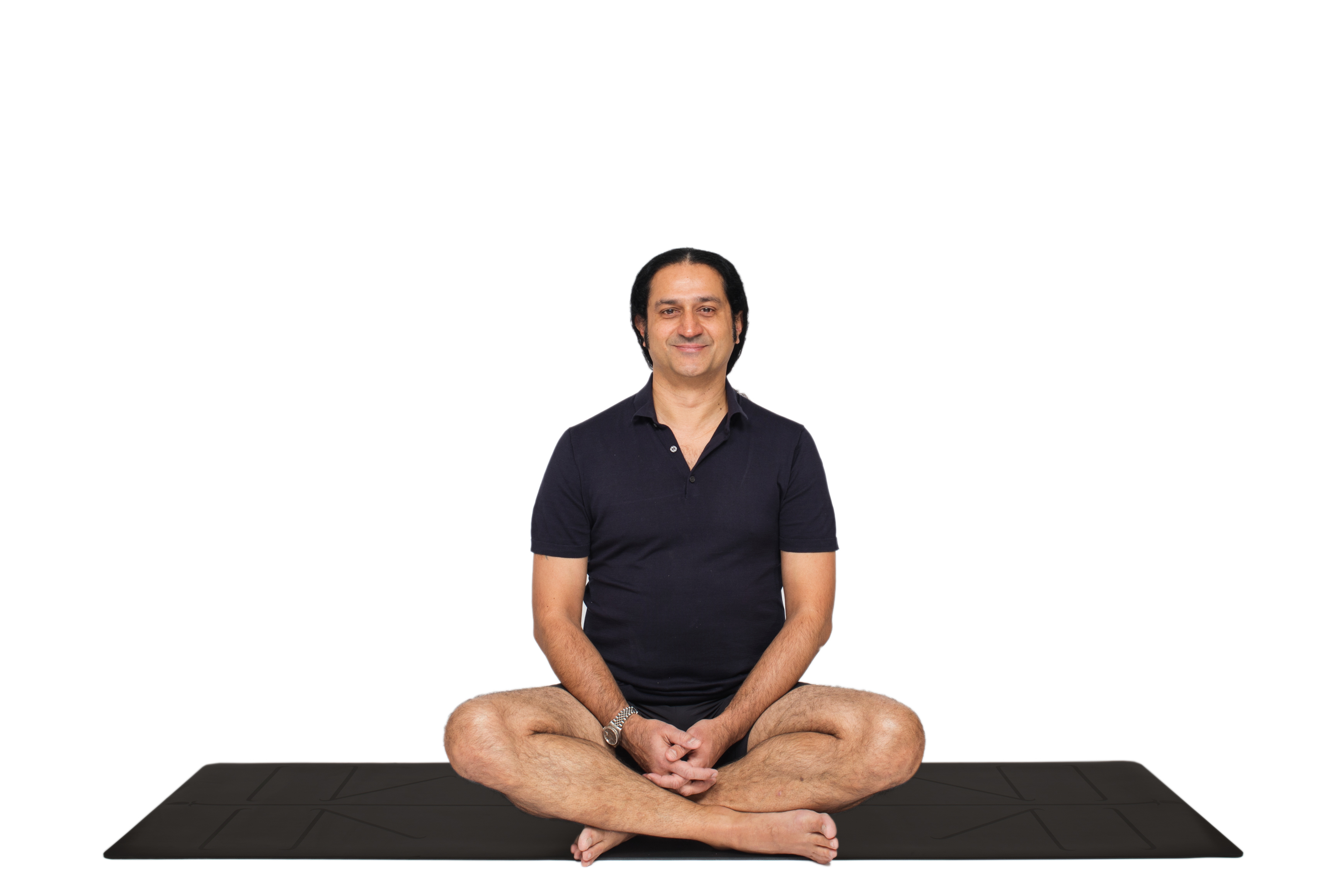

In the academic curriculum of Master Shahid Khan’s Yogveda Yoga, Vedanta Darshana (historically designated as Uttara Mimamsa) is examined as the definitive science of non-dual reality (Advaita), cognitive exegesis, and human ontology.
While Purva Mimamsa investigates the procedural mechanics of action (Karma-Kanda), Vedanta systematically investigates the underlying substrate of existence (Jnana-Kanda). Formulated by Sage Badarayana in the foundational Brahma Sutras, Vedanta demonstrates that human suffering, chronic physical tension, and psychological anxiety stem from a single root cause: Adhyasa—the cognitive superimposition of a limited physical identity onto infinite awareness.
Badarayana opens his text with a decisive command for scientific inquiry:
Athato Brahma Jijnasa
"Now, therefore, begins the systematic, rational inquiry into Brahman."
The Architectural Foundation: Prasthanatrayi and the Major Schools
Vedanta is anchored in three canonical pillars known as the Prasthanatrayi. Any valid Vedantic statement must be verified across all three source texts.
The Triple Canon (Prasthanatrayi)
Shruti-Prasthana (The Upanishads): Revealed philosophical texts (such as the Chandogya, Brihadaranyaka, Mandukya, and Katha) that provide direct intuitive insights into ultimate reality.
Smriti-Prasthana (The Bhagavad Gita): Practical teachings detailing the integration of non-dual understanding within daily action (Karma Yoga), emotional devotion (Bhakti Yoga), and mental discipline (Raja Yoga).
Sutra-Prasthana (The Brahma Sutras): Composed by Sage Badarayana (Vyasa) in 555 logical aphorisms to resolve apparent contradictions across the Upanishads and dismantle dualistic objections.
Primary Commentators and Exegetical Schools
Over centuries, master commentators (Acharyas) wrote definitive treatises (Bhashyas) on the Prasthanatrayi, establishing three primary schools of interpretation:
Adi Shankaracharya (788–820 CE) – Advaita Vedanta (Absolute Non-Dualism): Proved that ultimate reality is unconditioned, non-dual consciousness (Nirguna Brahman). Shankara established that the universe and individual self are non-different from this single substrate.
Ramanujacharya (1017–1137 CE) – Vishishtadvaita Vedanta (Qualified Non-Dualism): Argued that individual souls (Jivas) and the physical universe (Jagat) are real, distinct attributes of a personal God (Saguna Brahman).
Madhvacharya (1199–1278 CE) – Dvaita Vedanta (Dualism): Maintained an uncompromising dualism, asserting five eternal, irreducible differences (Pancha-Bheda) between God, individual souls, and matter.
In Yogveda Yoga, primary emphasis is placed on the analytical rigor of Sage Badarayana and Adi Shankaracharya.
Core Metaphysics: Brahman, Atman, and the Four Great Statements
Vedanta establishes a clear distinction between the uncaused substrate of existence and its temporary physical appearances.
Nirguna vs. Saguna Brahman
Badarayana defines ultimate reality in Brahma Sutra 1.1.2:
Janmadyasya Yatah
"Brahman is that uncaused substrate from which proceeds the origin, sustenance, and dissolution of the universe."
Advaita Vedanta analyzes Brahman on two levels:
Nirguna Brahman: The absolute, unconditioned reality—devoid of attributes, physical limits, or change. It is defined ontologically as Sat-Chit-Ananda (Sat = eternal existence, Chit = pure awareness, Ananda = frictionless equilibrium).
Saguna Brahman (Isvara): Reality as perceived through human faculties. When unconditioned consciousness is viewed in relation to the governed universe, it appears as an intelligent, creative force.
Atman: The Unchanging Witness (Sakshi)
Vedanta proves that your innermost identity (Atman) is not the anatomical body, the nervous system, or the fluctuating mind. These are changing instruments. The Atman is the constant, unaffected observer (Sakshi) behind all physiological and mental events.
Brahman ≡ Atman
The conscious observer at the core of human existence is identical to the universal substrate of reality.
The Four Great Statements (Mahavakyas)
Vedanta condenses its entire epistemological framework into four key equations drawn from the Upanishads:
Tat Tvam Asi ("That Thou Art" – Chandogya Upanishad): Directly informs the seeker of their non-dual nature.
Aham Brahmasmi ("I am Brahman" – Brihadaranyaka Upanishad): The internal realization of universal identity.
Prajnanam Brahma ("Consciousness is Brahman" – Aitareya Upanishad): Establishes awareness as the primary substrate.
Ayam Atma Brahma ("This Self is Brahman" – Mandukya Upanishad): Affirms the total identity of individual and universal consciousness.
The Pathology of Suffering: Adhyasa, Maya, and Causality
Why do human beings experience physical degeneration, anxiety, and structural limitation if their nature is non-dual? Adi Shankara addresses this in his famous Adhyasabhashya (Introduction to the Brahma Sutras).
Adhyasa: The Root Cognitive Error
Adhyasa is the cognitive error of superimposition—perceiving properties on an object where they do not belong (like mistaking a coiled rope for a snake in dim light).
Shankara demonstrates that human suffering arises from a fundamental Subject-Object confusion:
Subject (Pure Observer) ⟺ Object (Body, Mind, Musculoskeletal Pain)
When an individual says, "I am broken," "I am anxious," or "I am aging," they are erroneously superimposing the temporary, physical conditions of the Object (body/mind) onto the untouched Subject (awareness).
Maya and Its Twin Forces
The cosmic principle that creates the appearance of multiplicity is Maya, which operates through two specific forces:
Avarana Sakti (The Concealing Power): Veils the underlying non-dual reality, hiding the fact that consciousness is undivided.
Vikshepa Sakti (The Projecting Power): Actively projects the illusion of separate objects, physical forms, space, time, and physical limitation onto the hidden substrate.
Vivartavada: Apparent Transformation
To explain how the universe arises, Shankara established the doctrine of Vivartavada (apparent transformation). Unlike Parinamavada (actual transformation, like milk turning into yogurt), Vivartavada proves that the underlying substrate appears as the physical world without undergoing any real structural change—just as water appears as waves, ice, or steam without ceasing to be H₂O.
Anatomical Enclosures: Tri-Sharira and Pancha Kosha
To understand how non-dual awareness becomes entangled in physical limitation, Vedanta maps the human being through three nested bodies (Tri-Sharira) and five functional sheaths (Pancha Kosha).
   ┌────────────────────────────────────────────────────────────────────────┐
   │                  THE ANATOMICAL & ENERGETIC MAP                        │
   └───────────────────────────────────┬────────────────────────────────────┘
                                       │
     ┌─────────────────────────────────┼─────────────────────────────────┐
     ▼                                 ▼                                 ▼
┌─────────────────────────┐ ┌─────────────────────────┐ ┌─────────────────────────┐
│ STHULA SHARIRA          │ │ SUKSHMA SHARIRA         │ │ KARANA SHARIRA          │
│ (Physical Body)         │ │ (Subtle/Nervous Body)   │ │ (Causal Body)           │
├─────────────────────────┤ ├─────────────────────────┤ ├─────────────────────────┤
│ • Annamaya Kosha        │ │ • Pranamaya Kosha       │ │ • Anandamaya Kosha      │
│   (Physical/Fascial)    │ │   (Breath/Nervous)      │ │   (Bliss/Substrate)     │
│                         │ │ • Manomaya Kosha        │ │                         │
│                         │ │   (Mental/Emotional)    │ │                         │
│                         │ │ • Vijnanamaya Kosha     │ │                         │
│                         │ │   (Intellect/Ego)       │ │                         │
└─────────────────────────┘ └─────────────────────────┘ └─────────────────────────┘
1. Sthula Sharira (Physical Body)
Covers the Annamaya Kosha (Food Sheath)—the gross anatomical structure composed of bone, skeletal muscle, fascia, and organs. It is subject to birth, growth, decay, and physical trauma.
2. Sukshma Sharira (Subtle Body)
Covers three distinct functional sheaths:
Pranamaya Kosha (Vital Energy Sheath): The respiratory system, autonomic nervous system, and movement of internal life force (Prana).
Manomaya Kosha (Mental Sheath): The sensory processing mind (Manas), emotional reactions, and habitual desire patterns.
Vijnanamaya Kosha (Intellectual Sheath): The analytical intellect (Buddhi) and ego-identity (Ahamkara).
3. Karana Sharira (Causal Body)
Covers the Anandamaya Kosha (Bliss Sheath)—the deep seed state containing latent karmic impressions (Samskaras). It is experienced directly during deep, dreamless sleep.
The Methodology of Realization: Qualifications and Practice
Vedanta is an exacting science requiring specific cognitive and bio-somatic preparation before inquiry can begin.
Sadhana Chatushtaya (The 4 Prerequisite Qualifications)
Viveka (Discrimination): The capacity to distinguish between the eternal substrate (Nitya) and transient phenomena (Anitya).
Vairagya (Dispassion): Objective detachment from superficial physical outcomes and sensory cravings.
Shatka-Sampatti (The 6 Internal Disciplines):
Sama: Tranquility of mind.
Dama: Mastery over sensory organs.
Uparati: Withdrawal from non-essential distractions.
Titiksha: Forbearance and endurance of physical dualities (heat/cold, comfort/discomfort).
Shraddha: Informed trust in the methodology.
Samadhana: Single-pointed cognitive focus.
Mumukshutva (Longing for Freedom): An intense commitment to eliminate suffering and cognitive error.
The Three-Stage Process of Assimilation
Sravana (Systematic Hearing): Studying the non-dual texts under the guidance of a qualified teacher.
Manana (Logical Interrogation): Resolving all intellectual doubts through rigorous, objective reasoning.
Nididhyasana (Somatic Assimilation): Deep meditation and physical integration until non-dual truth is realized at the cellular level.
Vedanta in Master Shahid Khan’s Applied Biomechanics
In Master Shahid Khan’s Yogveda Yoga, Vedantic non-duality is translated directly into applied biomechanics and bio-neural regulation.
Somatic Adhyasa: Musculoskeletal Tension as Cognitive Error
Yogveda Yoga identifies chronic physical tightness, spinal compression, and postural collapse as Somatic Adhyasa:
When a person experiences lower back pain or cervical tension, the central nervous system holds chronic muscular contraction because it superimposes threat and identity onto the anatomical structure ("I am broken").
By forcing movement past structural resistance without alignment, sympathetic fight-or-flight activity increases, deepening this physical error.
De-Superimposition (Apavada) and Autonomic Regulation
Yogveda Yoga applies the Vedantic principle of Apavada (de-superimposition or systematic negation) to the physical apparatus:
Vector Precision on the Alignment Mat: Postural vectors on the Yogveda Alignment Mat align joint geometry to eliminate unnecessary muscular effort. When structural alignment is precise, mechanical stress on bones and fascia drops to zero.
Vagal Reset & Spinal Decompression: As physical friction dissolves, the autonomic nervous system shifts from sympathetic dominance into parasympathetic vagal regulation.
Non-Dual Somatic State: Pain and chronic tension melt away when the practitioner stops superimposing physical symptoms onto their core identity, experiencing the physical body (Annamaya Kosha) and nervous system (Pranamaya Kosha) as a continuous, frictionless extension of awareness.
Join Yogveda Asana, Pranayama Classes and Yoga Workshops to Heal and Learn More
True structural healing requires moving beyond superficial fitness trends and entering the non-dual science of Vedanta Darshana.
By integrating Master Shahid Khan's applied biomechanics with the analytical precision of the Brahma Sutras and Adi Shankaracharya’s non-dual exegesis, Yogveda Yoga provides a clear pathway to eliminate somatic error (Adhyasa), decompress the spine, reset the nervous system, and restore total biological equilibrium.
Nehmen Sie an Yogveda Asana-, Pranayama-Klassen und Yoga-Workshops teil, um zu heilen und mehr über Ihre einzigartige Biologie zu lernen. Experience physical alignment as a direct, tangible manifestation of universal non-dual order.
👉 Yogveda Asana Lesson : Build the physical presence to distinguish between what is real in the body and what is just a feeling.
👉Yogveda Yoga Teacher Training in Bern: Deepen your understanding of Patanjali's philosophy of mind and truth.
Author, Master Shahid Khan
Yogveda Yoga Switzerland 🇨🇭


Comments