
Pectoralis Major Anatomy in Yogveda Yoga: Breaking the Superficial Cage
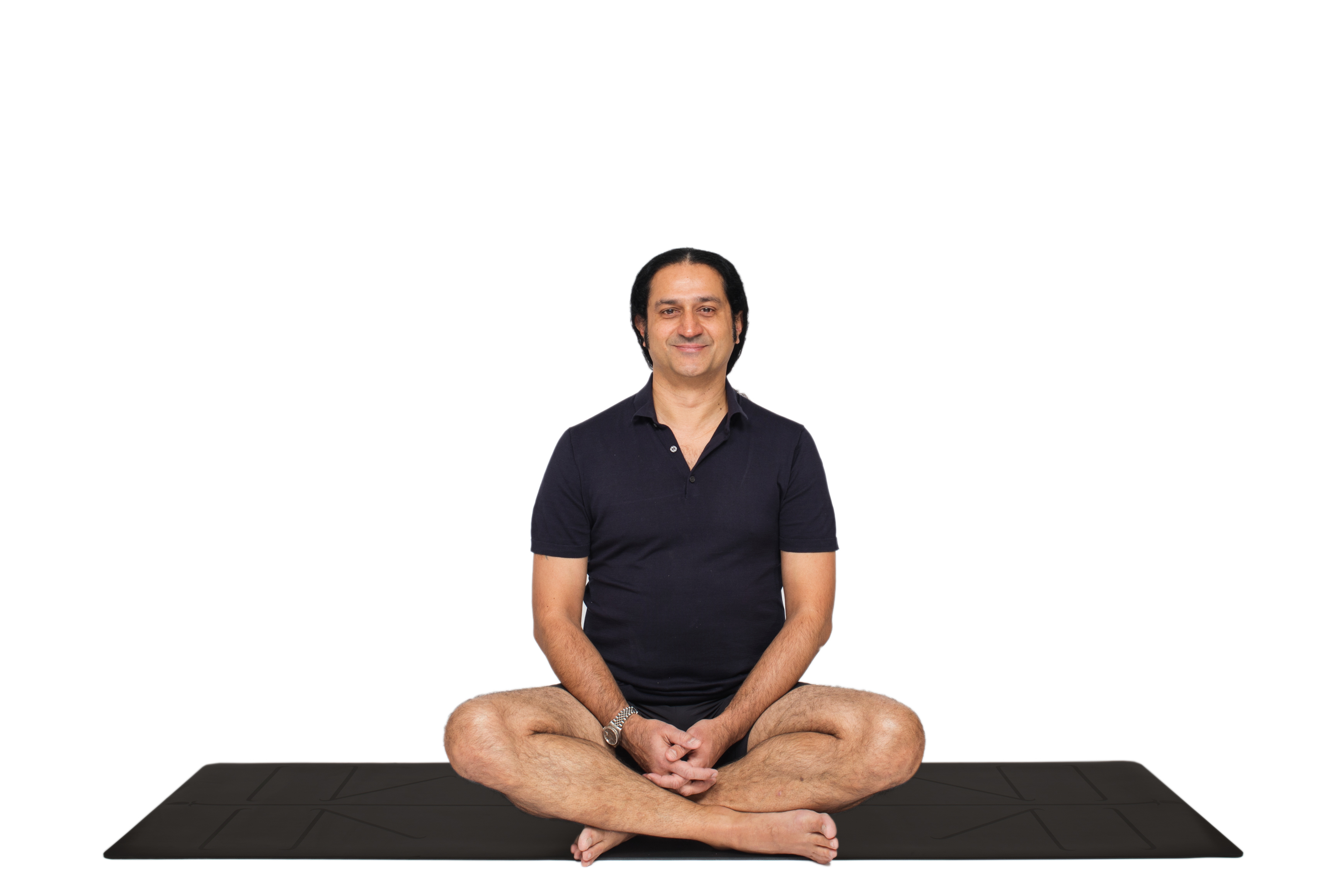

The thoracic cage is the biological engine of respiration and autonomic control. In applied biomechanical yoga science, I do not view muscles simply as tools for movement; I view them as the structural scaffolding that either facilitates or restricts our vital capacity.
This article is the third in my five-part series detailing the biomechanics of the thoracic muscles. In Part 2, I established the pectoralis minor as the deep, hidden root cause of postural collapse. Once that deep anchor is locked, the larger, superficial muscles are forced into chronic dysfunction. Therefore, I now address the pectoralis major—the massive, fan-shaped muscle that acts as the heavy superficial cage locking your posture into a compromised state.
Pectoralis Major Anatomy and Chest Muscle Biomechanics
Pectoralis Major Function and Horizontal Muscle Fibers
The pectoralis major is the largest and most superficial muscle of the anterior chest wall. Anatomically, it is divided into two primary sections: the clavicular head, originating from the collarbone, and the sternocostal head, originating from the breastbone and the cartilage of the upper ribs.
It is vital to understand the geometric orientation of these fibers. Unlike the pectoralis minor, which is an angled, upward-moving (vertical) muscle, the pectoralis major is a horizontal-moving muscle. Its broad fibers sweep horizontally across the chest, converging and twisting to attach directly to the greater tubercle of the humerus (the upper arm bone).
In fundamental human movement, its physiological duty is to adduct (pull the arm across the body), flex, and internally rotate the humerus. However, in the context of clinical yoga and global posture, its immense size and horizontal orientation mean that its resting tension physically dictates the transverse width of the entire anterior rib cage.
Rounded Shoulders Posture and Chest Muscle Tightness
In biomechanical reality, a shortened pectoralis major acts like a biological straitjacket over the front of the body. Because it attaches directly to the upper arm, chronic tightness in this horizontal muscle forcefully rotates the humerus inward and pulls the arms forward across the chest.
This condition rarely happens in isolation. As I proved in Part 2, modern forward-reaching professions first collapse the deep pectoralis minor. Once the shoulder blade is dragged forward and down, the pectoralis major loses its optimal resting length. It becomes hypertonic, thick, and shortened horizontally. It cements the rounded shoulders posture into place, burying the sternum inward. This superficial cage makes it structurally impossible to achieve a truly upright, open chest.
Yoga Backbends for Chest Opening and Pectoralis Major Stretch
In my academic curriculum of Yogveda Yoga, specifically within the highly targeted 41 to 44-week cycle, I approach the pectoralis major through its true biomechanical plane. Because it is a horizontal-moving muscle, it cannot be fully released merely by elevating the arms. The most effective structural chest opening is achieved through deep, active yoga backbends.
To break this superficial cage, I utilize highly specific asanas: Bhujangasana (Cobra Pose), Dhanurasana (Bow Pose), Vrischikasana (Scorpion Pose), and Ustrasana (Camel Pose). However, a critical biomechanical warning must be applied here to avoid the "false stretch." Because the pectoralis major attaches to the upper arm bone, if a practitioner simply leans back into a backbend without stabilizing their shoulder blades, the muscle does not actually stretch. Instead, the head of the humerus simply pops forward in the joint space, leading to anterior humeral glide and shoulder impingement.
In the Yogveda methodology, the shoulder blades (scapulae) must first be forcefully retracted and depressed—anchored firmly down and back against the rib cage. Only once this posterior anchor is locked can the practitioner actively drive the sternum forward and upward. This deliberate geometric opposition directly eccentrically loads the horizontal fibers of the pectoralis major. The muscle is forced to lengthen under tension across the expanding thoracic vault, tearing down the restrictive superficial scaffolding without compromising the shoulder joint.
Diaphragmatic Breathing Mechanics and Autonomic Nervous System
When the pectoralis major is locked in a chronic state of horizontal contraction, it physically restricts the anterior and lateral expansion of the rib cage. For the diaphragm to execute a full, natural descent, the ribs must be able to expand outward in a 360-degree radius.
A hypertonic pectoralis major acts as a heavy, restrictive band across the ribs. When the rib cage cannot expand, the practitioner is forced into shallow, clavicular breathing. As I continually emphasize in my teachings, this shallow breathing pattern is a biological distress signal. It alerts the brain to a state of physical restriction, trapping the autonomic nervous system in sympathetic dominance (fight-or-flight) and blocking the restorative mechanisms of the parasympathetic state.
By applying the backbend protocols of the Yogveda 41-44 week cycle, I teach practitioners how to physically split this horizontal cage wide open. Stretching the pectoralis major restores the outward mobility of the ribs. This creates the massive structural space required for diaphragmatic breathing mechanics to function fully, completely liberating the breath and providing immediate, profound down-regulation of the nervous system.
Scientific Evidence for Posture Correction and Pectoralis Major Extensibility
The structural consequences of a shortened pectoralis major are extensively validated in clinical literature. Peer-reviewed biomechanical studies demonstrate that decreased extensibility of the pectoralis major directly correlates with increased thoracic kyphosis (rounded upper back) and anterior humeral glide (forward-set shoulders).
Furthermore, research on respiratory mechanics confirms that releasing the superficial chest musculature significantly increases maximum voluntary ventilation and overall chest wall kinematics. When the humerus is restored to a neutral position through the eccentric lengthening of the pectoralis major, the mechanical advantage of the respiratory muscles is instantly improved.
Citations:
Umehara, J., et al. (2018). Effect of pectoralis major muscle fatigue on glenohumeral kinematics and muscle activation. Journal of Electromyography and Kinesiology, 38, 14-21.
Morais, N., & Cruz, J. (2016). The pectoralis major muscle and anterior shoulder instability. Journal of Bodywork and Movement Therapies, 20(2), 281-289.
Yogveda Manifesto "Yogveda Yoga is a compiled applied science. I do not follow modern 'isms,' dogmas, or blind beliefs. Rooted strictly in the classical Darśanas and Ayurveda, and validated by peer-reviewed physiological studies, I dictate no human morality and teach no god worship. I simply provide the exact tools to study your own biological engine. Freedom is absolute self-knowledge. Study yourself to be free." — Master Shahid Khan
Yogveda Yoga Switzerland 🇨🇭 To establish an official Yogveda Yoga School in your city or country, please direct your inquiry to info@yogveda.ch.
Author: Master Shahid Khan Official Portals:


Comments