
Yoga Sutra 1.44 Meaning: The Refinement of Meditation (Savicārā & Nirvicārā)

एतयैव सविचारा निर्विचारा च सूक्ष्मविषया व्याख्याता ॥ १.४४ ॥Transliteration: etayaiva savicārā nirvicārā ca sūkṣma-viṣayā vyākhyātā
The Direct Translation: "By this exactly (the same mechanism just explained), the states of Savicārā (with subtle reflection) and Nirvicārā (void of subtle reflection), whose objects are subtle (sūkṣma), are also explained."
1. The Refinement of Perception
Meditation is not a static state; it is a progressive sharpening of the mind. In Sutras 1.42 and 1.43, Patanjali explained how to meditate on a gross physical object (sthūla), like the physical breath or the body, until the mind stops labeling it with words.
In Sutra 1.44, Patanjali explains the next natural step. As your concentration deepens, your awareness penetrates past the physical surface. The object of meditation shifts from the gross, heavy physical layer to the subtle, foundational layers of reality (sūkṣma). As the object becomes finer, your mind must become equally quiet to perceive it.
Etayaiva (एतयैव): By this exactly; by the exact same method.
Savicārā (सविचारा): With subtle reflection, analysis, or internal questioning.
Nirvicārā (निर्विचारा): Void of subtle reflection; direct absorption without analysis.
Sūkṣma (सूक्ष्म): Subtle. The invisible, foundational layers of reality that exist beneath physical matter.
Viṣayā (विषया): Objects (of concentration).
Vyākhyātā (व्याख्याता): Are explained / are described.
2. What is the Subtle Object (Sūkṣma)?
To understand this Sutra academically, we must look at Samkhya, the classical philosophy that forms the foundation of Yoga. Samkhya teaches that reality is built in layers. Beneath the physical objects we can touch are subtle layers: the subtle elements (like sound, touch, or form before they become physical), the raw sensory mind, and the underlying energy of nature itself.
When Patanjali speaks of the subtle object, imagine looking at a clay pot. The gross object is the physical pot. The subtle object is the pure concept of "form" or the microscopic essence of the clay. You are no longer observing the mechanical movement of your physical body; you are observing the underlying energy and essence that creates it.
The Friction of Subtle Analysis (Savicārā)
When your mind first touches this newly discovered, subtle reality, it instinctively tries to figure it out. Your intellect steps in to analyze and label these deeper layers. You might catch yourself thinking, "I am experiencing the subtle essence of my breath," or "This is a very deep state of meditation."
This highly refined level of intellectualizing is called Savicārā Samāpatti. Your meditation is very deep, but it is still interrupted by the friction of your own subtle thoughts and analysis.
Absorption Void of Logic (Nirvicārā)
Patanjali states that the tool to overcome this subtle friction is identical to the one you used before (etayaiva). You do not fight the subtle thoughts. You simply hold your focus on the subtle reality until the intellect gets tired and stops analyzing.
When the mind finally stops philosophizing about the subtle object and simply rests in a direct, wordless experience of it, you enter Nirvicārā Samāpatti. The mind becomes a perfectly still mirror, effortlessly reflecting the deepest layers of reality.
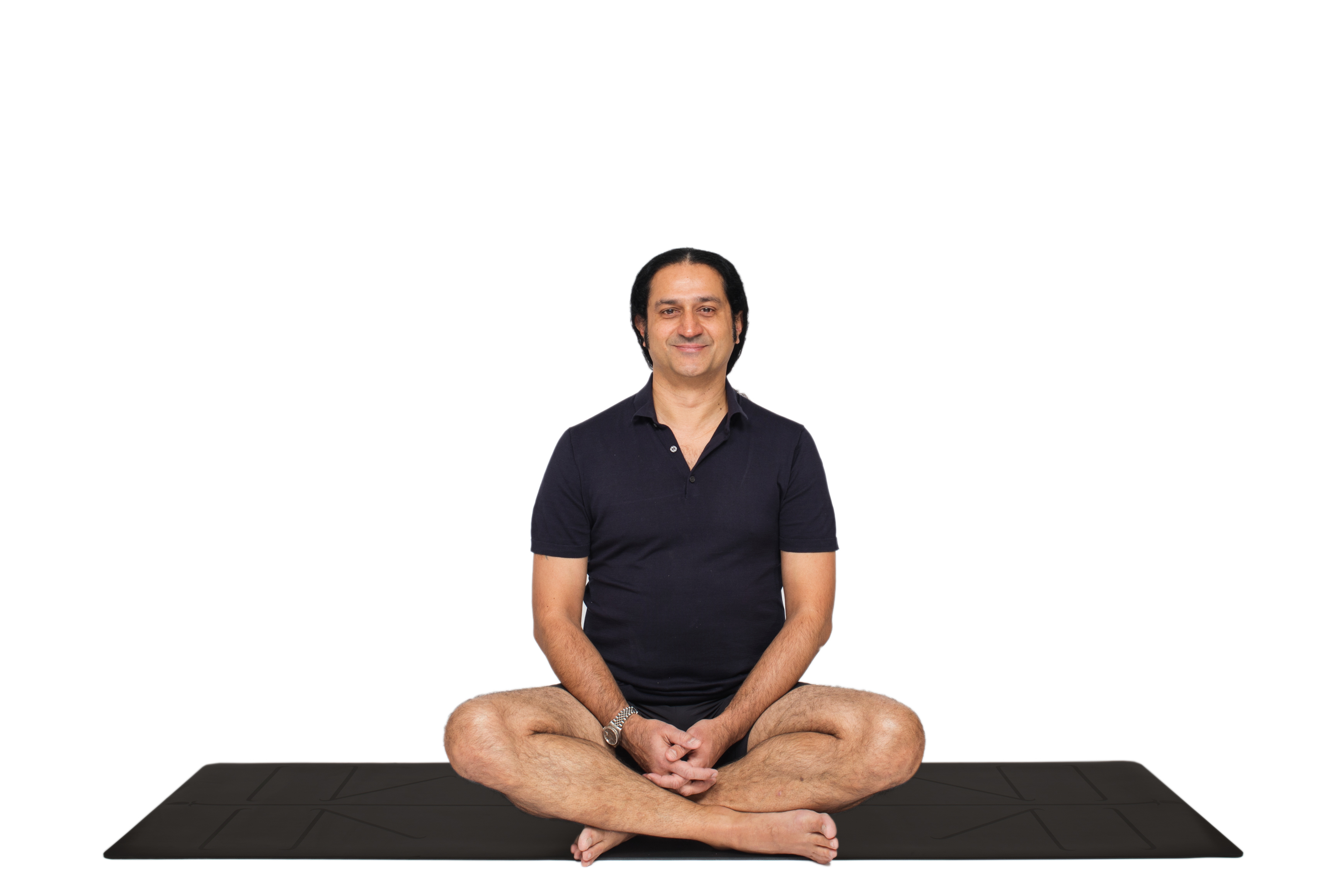
3. The Dialogue: Master Khan on the Stages of Samadhi
Student: "Master Khan, when Patanjali tells us to move from the gross to the subtle, does that mean we stop focusing on the physical world entirely?"
Master Khan: "You do not leave reality; you look closer at it. Meditation is the systematic refinement of perception. You start with a gross, physical object because it is heavy and easy for a distracted mind to grab onto. But as your concentration locks in, that physical layer loses its density. Your perception acts like a microscope zooming in."
Student: "And what we find when we zoom in is the subtle object?"
Master Khan: "Exactly. The subtle aspects of reality—the pure sensory input, the subtle elements—reveal themselves. But here is the trap: as soon as you perceive this subtle layer, your intellect will want to analyze this 'new' experience. That is Savicārā."
Student: "How do we reach the final quietness of Nirvicārā?"
Master Khan: "By doing exactly what you did before. Etayaiva—by the same method. You hold the subtle object in your awareness until the desire to analyze it fades away. You do not philosophize about the subtle reality; you simply become it."
Student: "Is this quietness the final goal of Yoga?"
Master Khan: "No. You are currently just learning the mechanics of absorption. In the upcoming sutras, Patanjali will map out the different types of Samadhi. He will take these four states—gross with logic, gross without logic, subtle with logic, and subtle without logic—and explain how all of them are still Sabija Samadhi (absorption with a seed), because they still rely on an object. This is all rigorous preparation for the ultimate, seedless state."
4. Academic Standards & Classical References
Hariharānanda Āraṇya (1983). Yoga Philosophy of Patañjali. SUNY Press.
Academic Takeaway: Āraṇya confirms that sūkṣma (the subtle) refers to the progression through the subtle elements (tanmatras) towards the unmanifest root of nature (Prakriti). He proves that meditation is the progressive refinement of the mind, moving from heavy matter to pure essence.
Edwin Bryant (2009). The Yoga Sutras of Patañjali. North Point Press.
Academic Takeaway: Bryant clarifies that the rule of etayaiva means the cognitive mechanism of clearing memory and logic applies universally. No matter how abstract or subtle the object of concentration becomes, the method of achieving direct perception remains the exact same: the cessation of intellectual friction.
Yogveda Manifesto Yogveda Yoga is a compiled applied science. I do not follow modern "isms," dogmas, or blind beliefs. Rooted strictly in the classical Darśanas and Ayurveda, I dictate no human morality and teach no god worship. I simply provide the exact tools to study your own biological engine. Freedom is absolute self-knowledge. Study yourself to be free.
Yogveda Yoga Switzerland 🇨🇭 To establish an official Yogveda Yoga School in your city or country, please direct your inquiry to info@yogveda.ch.
Author: Master Shahid Khan Official Portals:


Comments