
The Clinical Biology of Winter: Synovial Viscosity, Tapas, and the Danger of Passive Winter Stretching
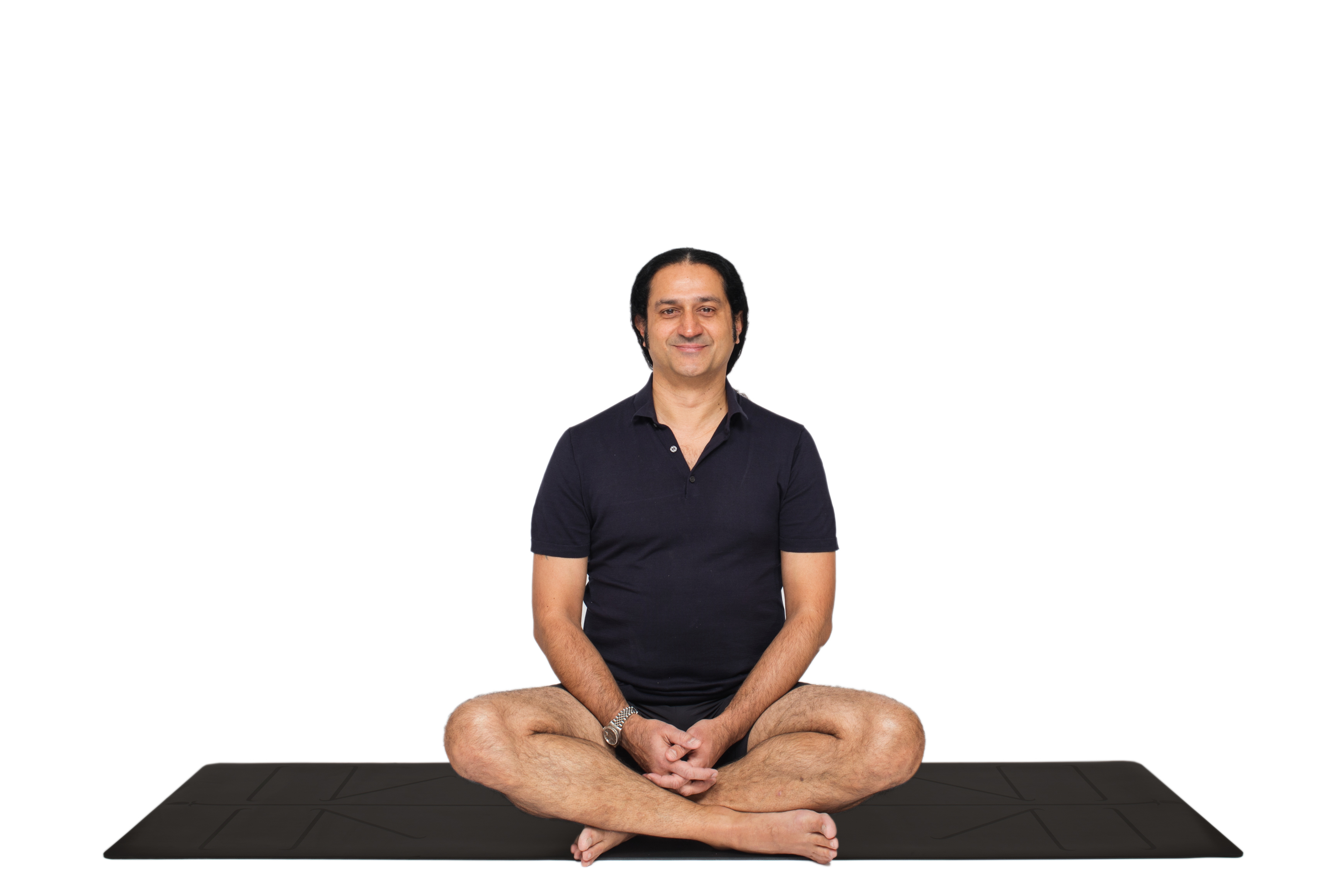

This is Part 5 – the final chapter of The Clinical Biology of Winter, a clinical series focused on how to deliberately guide your biological system to adapt and maintain structural stability when winter temperatures drop.
When winter arrives, joint stiffness becomes one of the most common physical complaints. Stiff knees, restricted hips, and rigid spinal segments are frequently treated in the commercial wellness industry as simple tightness, prompting people to force cold joints into long, passive stretches.
In clinical biomechanics, applying passive stretching to cold, unheated joints is not helpful; it is structurally risky. To understand why I do not force cold winter joints into passive end ranges in the Yogveda system, we must examine the flow properties of synovial fluid, how ligaments respond to load, and the classical Kriya Yoga principle of Tapas.
Why Joints Stiffen in Winter: Synovial Viscosity
Every major mobile joint in the human body sits inside a capsule lined by the synovial membrane, which produces synovial fluid. Rich in hyaluronan and lubricin, this joint lubricant reduces friction across articular cartilage and distributes compressive load.
Synovial fluid is temperature-sensitive and responds to shear forces. When winter temperatures drop, blood vessels in the extremities constrict to conserve warmth around vital organs. As temperature inside the joint capsule falls, synovial fluid viscosity rises. A fluid lubricant becomes thicker and more resistant to smooth flow.
Winter joint stiffness often happens not because muscles shrank overnight, but because joint fluid has grown more viscous.
Rusty Joints: Why Walking and the Gym Are Not Enough
Many people assume walking or standard gym workouts are enough to keep joints healthy in winter. They are not. A joint becomes "rusty" when it is not moved actively through all the directions it was built to perform. Each joint needs to work through its active capacity.
Walking moves the body along a narrow, repetitive path. Many gym machines lock movement into fixed planes. Other directions of motion at the hip, shoulder, spine, ankle, or wrist often remain unused. When a joint is not actively guided across its full directional capacity, fluid and tissue exchange stagnate in untouched corners of the capsule. The joint feels stiff and guarded because its full active range is not regularly used.
The Danger of Passive Winter Stretching
Forcing a cold, viscous, or underused joint into a deep passive stretch creates unfavorable mechanical stress.
Skipping Active Muscular Support
Passive stretching reduces active muscle engagement around the joint, using gravity or external leverage to reach end range. Without active muscle contraction guiding joint motion, load shifts more heavily onto the joint capsule and ligaments.
Creep, Reflex Damping, and Ligament Strain
Ligaments are dense collagen structures designed to guide bone alignment, not stretch like elastic bands. When thicker synovial fluid resists smooth gliding and a cold joint is pushed passively into deep flexion or rotation, shear stress on cartilage and tensile stress on ligaments rise.
Repeated tension without adequate recovery induces viscoelastic creep – time-dependent elongation of collagen under sustained load. This can blunt the ligamentomuscular reflex (the protective feedback loop linking ligament tension to muscle support) and contribute over time to ligament laxity and joint instability. What wellness culture calls "opening" can become structural wear.
Starving the Cartilage
Articular cartilage has no direct blood supply. It relies on imbibition – acting like a sponge that uses active compression and decompression to clear metabolic waste and draw in nutrients from synovial fluid. Passive pulling on the capsule does not provide that active pumping action.
The Yogveda Intervention: Tapas, Load, and Active Motion
Passive stretching has a deliberate role in the Yogveda system – specifically in Yogveda Restorative Yoga, where supported positions aid nervous system recovery and decompression. Forcing cold, unconditioned winter joints into deep passive stretches, however, does not solve a fluid-flow problem. Before demanding deep range of motion or passive release in winter, we must change synovial viscosity and restore active motion across each joint's full directional capacity.
Tapas: Generating Internal Heat to Clear Stagnation
In classical Kriya Yoga – as taught in Patanjali's Yoga Sutras – Tapas is a core discipline. Literally meaning heat or burning, Tapas in Yogveda Yoga is a practical physiological tool used to generate deliberate internal heat during practice.
This internal warmth raises local tissue temperature, supports vasodilation, and helps clear stagnant metabolic byproducts from cold tissues.
Isometric Load and Shear-Thinning
Synovial fluid exhibits shear-thinning: under movement, shear stress, and warmth, its viscosity drops so it flows more easily.
Before moving a cold joint through wide ranges, I use sustained isometric muscle contractions around the joint capsule. Co-contracting surrounding muscles generates local heat and compression, thinning synovial fluid and supporting cartilage nutrient exchange.
Moving Each Joint to Its Active Capacity
Once warmth and isometric tension begin to thin synovial fluid, each joint is moved actively through the directions it needs – reaching its active capacity through muscular control rather than passive pulling. Active control keeps joint tracking engaged and protects ligaments.
Combined with core heat from Yogveda Core Dynamic and breath regulation from Yogveda Pranayama, this approach helps counter winter vasoconstriction. Rather than straining ligaments for passive range, you use Tapas, active joint control, and internal heat to build resilient winter joints.
Clinical Study References
Fam, H., Bryant, J. T., & Kontopoulou, M. (2007). "Rheological properties of synovial fluids." Biorheology, 44(2), 59-74.
Solomonow, M. (2004). "Ligaments: a source of work-related musculoskeletal disorders." Journal of Electromyography and Kinesiology, 14(1), 49-60.
Sun, H. B. (2010). "Mechanical loading, cartilage degradation, and arthritis." Annals of the New York Academy of Sciences, 1211(1), 37-50.
"Yogveda is not a flexible performance; it is a clinical intervention. It is the strict biomechanical science of utilizing internal physics, respiratory resistance, and precise metabolic protocols to starve cellular pathology, eradicate systemic inflammation, and restore absolute biological homeostasis." — Master Shahid Khan
Yogveda Yoga Switzerland 🇨🇭 To establish an official Yogveda Yoga School in your city or country, please direct your inquiry to info@yogveda.ch.
Author: Master Shahid Khan Official Portals:


Comments